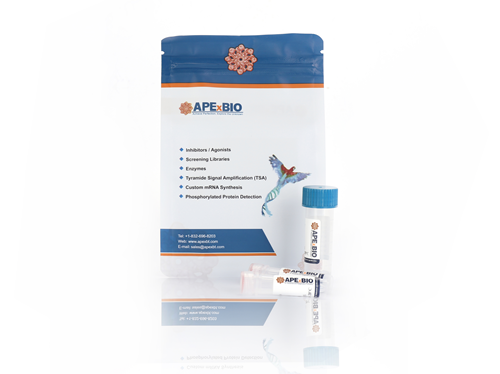
Phos binding reagent (Phosbind) Biotin
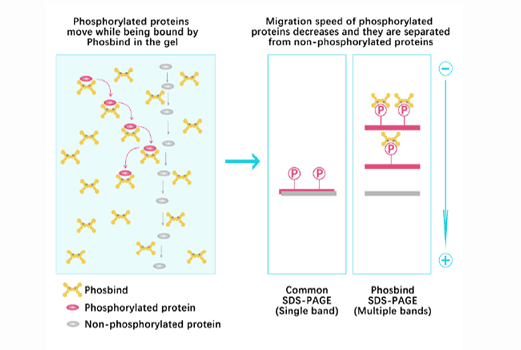
Phosbind Biotin provides a sensitive method for detection of phosphorylated proteins on a PVDF membrane. This method needs streptavidin-conjugated horseradish (HRP) and chemiluminescent detection reagent.
Protein phosphorylation is an important covalent post-translational modification that can alter the structural conformation of a protein, which then regulates the function, location and specific binding of the target protein. Many cellular processes are regulated by the reversible phosphorylation of proteins and 30% of the proteins are likely to be phosphorylated at some point during their existence.
The determination of the phosphorylation state of proteins is important for defining protein kinase substrates and revealing the activation state of signal transduction pathways. Methods for determining the phosphorylation status of proteins are thus have important implications in the understanding of diverse biological and pathophysiological processes, such as signal transduction pathways, cancer and other diseases.
Phos binding reagents (Phosbind) are specific and selective phosphate-binding reagents, and exhibit preferential ionic interactions with phosphorylated ions on phosphorylated proteins or peptides at neutral pH. Phos binding reagent is a dinuclear metal (Zn2+ or Mn2+) complex.
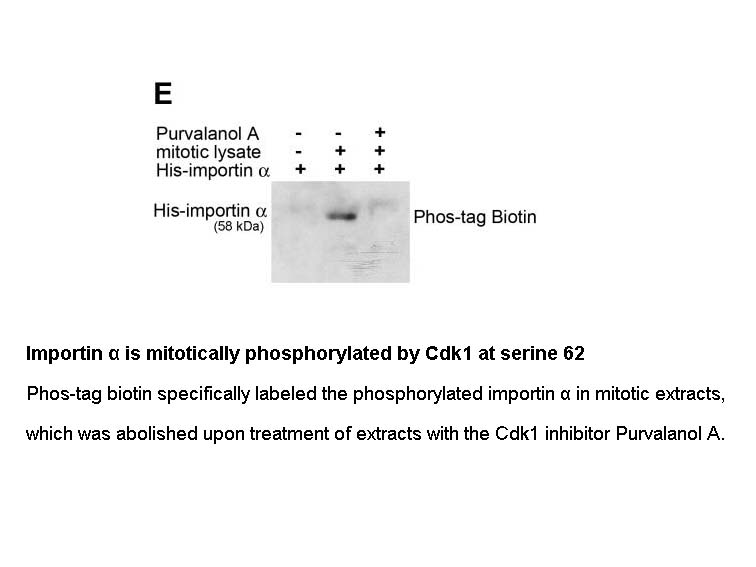
Phosbind Biotin is a specific reagent for detection of phosphorylated proteins using Western Blot and can instead of the specific phosphorylated antibodies.
- 1. Chenghang Zhan, Hao Chen, et al. "The OsCPK4–OsCNGC7 phosphorylation-centered feedback loop promotes Ca2+ influx and confers salt tolerance in rice." Plant Commun. 2026 Jun 26:101978. PMID: 42363598
- 2. Meiqi Zhou, Yilin Wang, et al. "PtrbZIP12 improves drought resistance in Populus trichocarpa by directly targeting PtrDHN and PtrPOD." Horticulture Research, 05 February 2026
- 3. Wenfang Dong, Qingjun Xie, et al. "BpMAPK3‐mediated BpWRKY53 phosphorylation enhances Betula platyphylla drought stress tolerance by increasing flavonoid content." Plant J. 2025 Mar;121(6):e70089. PMID: 40139731
- 4. Fanqiang Meng, Fengxia Lu, et al. "Acetate and auto‐inducing peptide are independent triggers of quorum sensing inLactobacillus plantarum." Mol Microbiol. 2021 Jul;116(1):298-310. PMID: 33660340
- 5. Haijing Guo, Jen-Hsuan Wei, et al. "TPX2 activation by GM130 controls astral microtubule formation and spindle orientation." bioRxiv. March 17, 2020 10.1101/2020.03.16.994426
1. Highly sensitive detection of phosphorylated proteins
2. The binding specificity of Phos binding reagent Biotin is independent on amino acid and sequence context.
3. Followed by antibody reprobing and MS analysis are applicable.
4. The procedure is almost the same as that with an HRP-conjugated antibody.
1. M. J. Hubbard, P. Cohen. On target with a new mechanism for the regulation of protein phosphorylation. Trends Biochem. Sci. 18: 172 (1993).
2. B. Agnew et al. Compositions and methods for detection and isolation of phosphorylated molecules. US Patent # 7,102,005. (September 5, 2006).
| Storage | 2-10°C |
| M.Wt | 766.95 |
| Cas No. | 753451-66-0 |
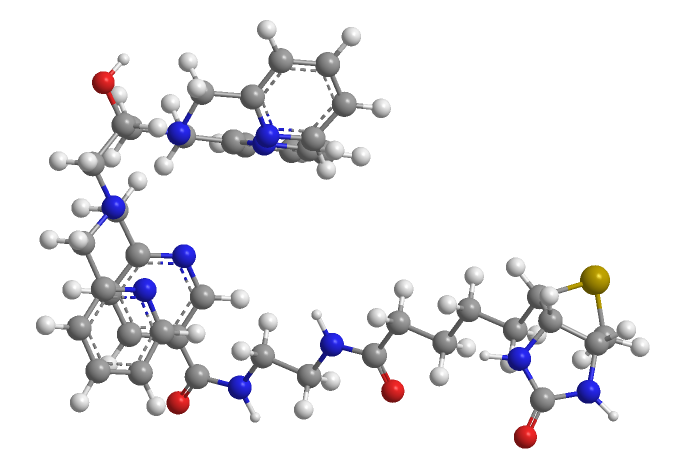
| Formula | C40H50N10O4S |
| Solubility | insoluble in H2O; insoluble in EtOH; ≥32.3 mg/mL in DMSO |
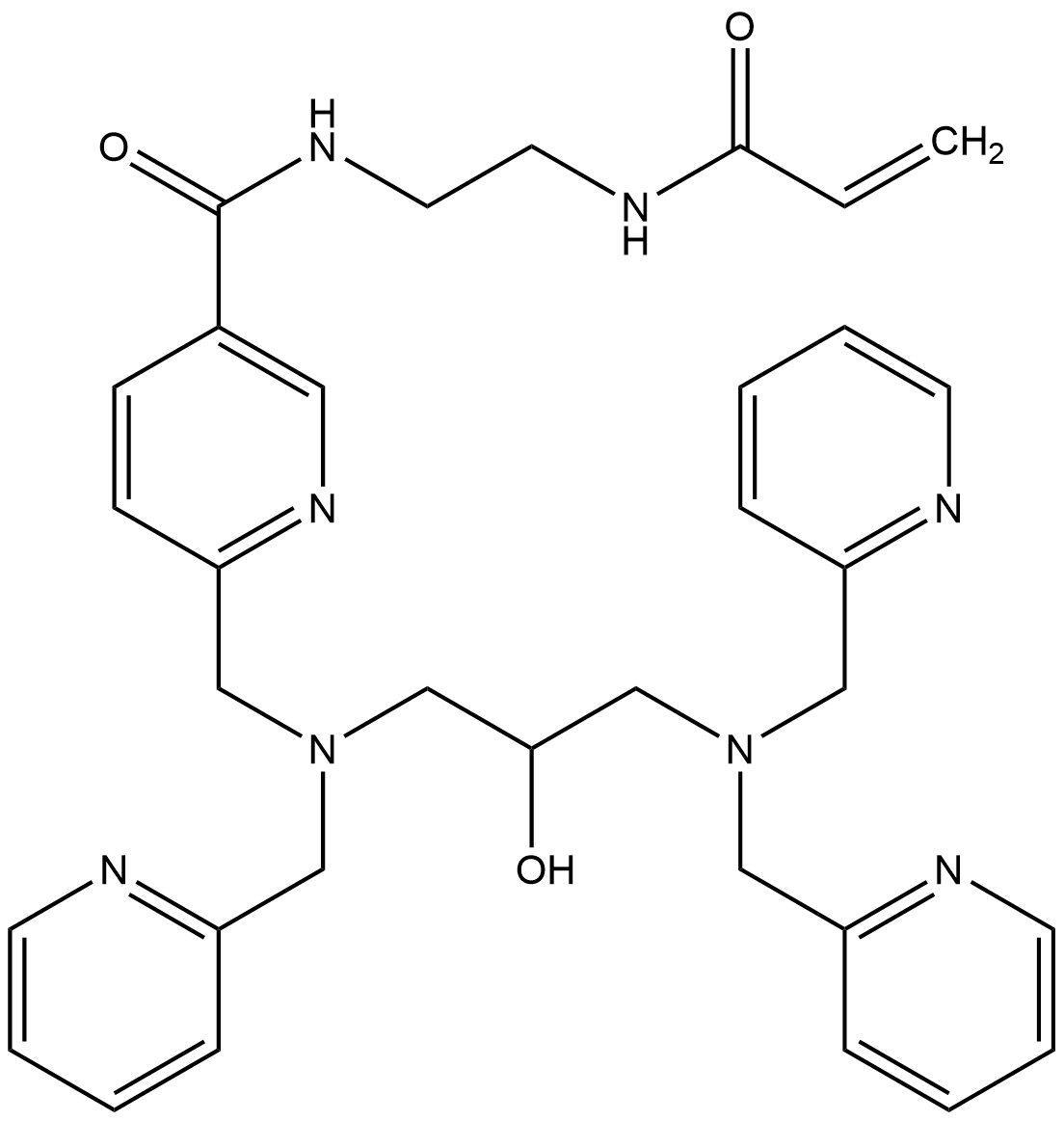
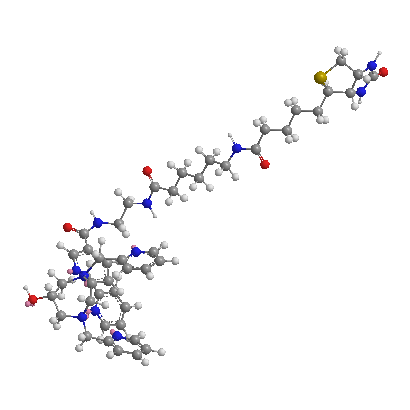
| Chemical Name | 6-(((3-(bis(pyridin-2-ylmethyl)amino)-2-hydroxypropyl)(pyridin-2-ylmethyl)amino)methyl)-N-(2-(5-((3aS,4S,6aR)-2-oxohexahydro-1H-thieno[3,4-d]imidazol-4-yl)pentanamido)ethyl)nicotinamide |
| Canonical SMILES | O=C(C1=CN=C(C=C1)CN(CC(CN(CC2=CC=CC=N2)CC3=CC=CC=N3)O)CC4=CC=CC=N4)NCCNC(CCCC[C@H]5[C@]6([H])[C@](NC(N6)=O)([H])CS5)=O |
| Shipping Condition | Small Molecules with Blue Ice, Modified Nucleotides with Dry Ice. |
| General tips | We do not recommend long-term storage for the solution, please use it up soon. |
Related Biological Data
Q1: What are the core advantages of Phosbind Biotin?
A: The main advantages include: ① No radioactivity; ② No blocking step required for the PVDF membrane; ③ Phosbind binds specifically to phosphate groups independent of amino acid type or sequence; ④ Compatible with downstream applications such as immunoblotting and mass spectrometry; ⑤ The experimental workflow is similar to that using HRP-labeled antibodies.
Q2: What is the sensitivity level?
A: It is at the nanogram level, capable of detecting less than 1 ng of phosphorylated protein. The use of a high-luminescence chemiluminescent reagent is recommended.
Q3: What is the compatibility?
A: Compatible with PVDF membranes, conventional Western Blot imaging systems, and TBS-T buffer systems. It is suitable for sample types such as cell lysates and tissue extracts, and can also be used for antibody microarrays.
Q4: What are the advantages of Phosbind Biotin compared with phospho-specific antibodies?
A: The main advantages include: ① Specificity is independent of amino acid sequence; ② A single reagent detects all phosphorylated proteins; ③ No blocking is required for PVDF membranes; ④ Compatible with downstream analysis.
Q5: How should the product be stored?
A: The solid powder should be stored at 2-8°C protected from light, with a shelf life of 12 months. The dissolved stock solution should be stored at 4°C protected from light and is stable for at least 6 months.
Q6: Besides this product, what other reagents need to be prepared?
A: The following need to be prepared: ① Streptavidin-conjugated HRP solution; ② Chemiluminescent detection reagent; ③ Centrifugal filter device (NMWL = 30,000 ultrafiltration tube); ④ Basic reagents — methanol and TBST; ⑤ Stripping Buffer (optional).
Q7: How many times can the product be used?
A: Phosbind Biotin (10 mg) can be used approximately 130–1300 times, resulting in a low cost per use. Compared with using multiple phospho-specific antibodies, the cost advantage is significant.
Q8: How is the batch-to-batch stability? Is it compatible with enzyme inhibitors?
A: The product undergoes strict QC, with minimal batch-to-batch variation. The stock solution is stable at room temperature for at least 6 months, and the solid powder is stable at 4°C for 12 months. It is compatible with conventional protease inhibitors and phosphatase inhibitors, but phosphate-containing buffers should be avoided.
Q9: What is the recognition specificity?
A: Phosbind specifically binds to phosphomonoester divalent anions, independent of amino acid type and sequence. It does not bind to dephosphorylated proteins or non-phosphorylated proteins.
Q10: What are the requirements regarding temperature, pH, and chemical reagents?
A: Stable complexes are formed under neutral physiological conditions. Phosphate-containing buffers (such as β-glycerophosphate and pyrophosphate) should be avoided, because phosphate ions compete with Phosbind for binding. Chelating agents (such as EDTA) should also be avoided, because they chelate zinc ions.
Q11: How long does the procedure take?
A: For the PVDF membrane incubation steps, the PVDF membrane is soaked in TBST for at least 1 hour, then incubated with Sol. PB-SH (Phosbind Biotin Streptavidin-HRP working solution) for 30 minutes, and finally washed twice for 5 minutes each. The overall procedure takes approximately 2 hours.
Q12: Is blocking required when using Phosbind Biotin?
A: No. Blocking leads to a decrease in sensitivity. This is an important feature that distinguishes the Phosbind Biotin method from traditional Western Blot.
Q13: Is it compatible with purification/detection systems?
A: It is compatible with subsequent antibody reprobing and mass spectrometry analysis. Stripping can be performed using a suitable Stripping buffer (such as neutral elution buffer K4412, whose main components are DTT, SDS, and Tris buffer).
Q14: Can nitrocellulose membranes be used?
A: PVDF membranes are recommended. The Phosbind Biotin method recommends PVDF membranes for optimal detection results.
Q15: What are the possible reasons for no signal or a very weak signal?
A: Possible reasons include: ① The reagent is not completely dissolved; ② The working solution has been stored for too long; ③ Low PVDF membrane transfer efficiency; ④ Incorrect order of adding streptavidin-HRP or chemiluminescent reagent; ⑤ Dephosphorylation occurs during sample processing.
Q16: How can high background signal be resolved?
A: High background is usually related to the following factors: ① The membrane is not thoroughly soaked (this is the most common cause, leading to high background and spots, and even failure to observe protein signals); ② Phosphate-containing buffers are used; ③ The streptavidin-HRP concentration is too high; ④ Insufficient washing. Solutions include: ensuring the membrane is completely soaked, avoiding phosphate-containing buffers, titrating the detection reagent concentration, and increasing the number of washes and washing time.
Q17: Regarding specific product selection, what is the difference between Phosbind Acrylamide (F4002), the BTL-104 series (F4001), and BTL-105 (F4004)?
A: Although these three products belong to the same Phosbind series, their applications are positioned differently: the BTL-104 series (F4001) and BTL-105 (F4004) are both used for the detection of phosphorylated proteins on PVDF membranes. The only difference between them is the length of the biotin linker, with no significant difference in performance; the BTL-104 series (F4001), which has higher solubility, is recommended. Phosbind Acrylamide (F4002), on the other hand, is used for the separation of phosphorylated proteins in SDS-PAGE gels, allowing phosphorylated proteins to be separated from non-phosphorylated proteins and from proteins with different phosphorylation states during electrophoresis based on their degree of phosphorylation. If both separation and detection are required, it is recommended to first perform SDS-PAGE separation using Phosbind Acrylamide, then transfer to a membrane and incubate with Phosbind Biotin (BTL-104 or BTL-105) for PVDF membrane detection. Using the two together provides more complete information on phosphorylated proteins.
-
-
-
 F4005 Prestained Protein Marker (Triple color, EDTA free, 10-250 kDa)
Starting at $50.00
-
-
-
-
-
-