Deferasirox
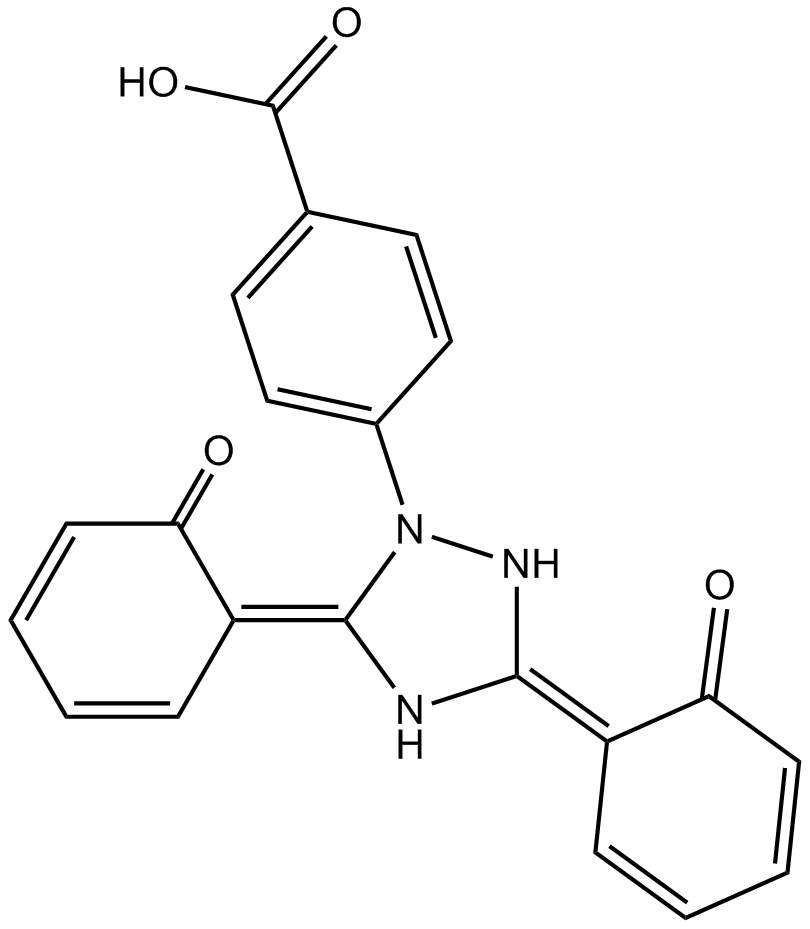





Deferasirox (CAS No. 201530-41-8) is an oral trivalent iron chelator. Its core target is trivalent iron ions (Fe³⁺), which it binds to at a 2:1 molar ratio to form soluble complexes. Meanwhile, it can modulate the nuclear factor κB (NF-κB) signaling pathway by regulating mitochondrial reactive oxygen species (ROS), and downregulate the gene expression of the MYC target in hematopoietic progenitor cells and the PU.1 (SPI1) target in neutrophils.
Its half-maximal inhibitory concentration (IC₅₀) values are dependent on cell status and oxygen environment. In murine ER::HOXB8 cells, the IC₅₀ is 2.1 μM during the proliferative phase and 3.0 μM during the maturation phase under normoxic conditions; under hypoxic conditions, the IC₅₀ is 14.8 μM during the proliferative phase and 21.7 μM during the maturation phase. No definitive half-maximal effective concentration (EC₅₀) data are available.
The clinically effective therapeutic dose is 20–40 mg/kg administered orally once daily (the initial dose is 20 mg/kg, which can be adjusted in increments of 5–10 mg/kg). The commonly used concentration in in vitro experiments is 3–20 μM.
Its biological activities are mainly manifested as highly efficient chelation of excess iron in the body (especially transfusion-related iron overload), with excretion primarily via feces (84%) and kidneys (8%). It is indicated for the treatment of iron overload in conditions such as thalassemia, sickle cell disease, and myelodysplastic syndromes (MDS). Additionally, it can improve erythropoiesis and reduce transfusion requirements in MDS patients. It increases ROS production by inhibiting mitochondrial respiratory chain function and regulates myeloid cell differentiation (suppressing the terminal maturation of neutrophils). It has low affinity for zinc and copper and exhibits a favorable safety profile. Common adverse reactions include gastrointestinal discomfort, skin rashes, and mild elevation of creatinine levels. Co-administration with aluminum-containing preparations should be avoided, and regular monitoring is required for patients with renal insufficiency.
References:
[1] Stumpf JL. Deferasirox. Am J Health Syst Pharm. 2007 Mar 15;64(6):606-16. doi: 10.2146/ajhp060405. PMID: 17353569.
[2] Galanello R, Campus S, Origa R. Deferasirox: pharmacokinetics and clinical experience. Expert Opin Drug Metab Toxicol. 2012 Jan;8(1):123-34. doi: 10.1517/17425255.2012.640674. Epub 2011 Dec 19. PMID: 22176640.
[3] Jeffries NE, Sadreyev D, Trull EC, Chetal K, Yvanovich EE, Mansour MK, Sadreyev RI, Sykes DB. Deferasirox, an iron chelator, impacts myeloid differentiation by modulating NF-kB activity via mitochondrial ROS. Br J Haematol. 2024 Nov;205(5):2000-2007. doi: 10.1111/bjh.19782. Epub 2024 Sep 26. PMID: 39327763; PMCID: PMC11568922.
- 1. Tingting Hou, Yuhang Guo, et al. "Ferroptosis-driven neurobehavioral impairment in zebrafish embryos: Mechanistic links to developmental dibutyl phthalate exposure." Environ Pollut. 2025 Aug 19:127009. PMID: 40840832
- 2. Tingting Hou, Xiaoteng Fan, et al. "Dibutyl phthalate exposure induced mitochondria-dependent ferroptosis by enhancing VDAC2 in zebrafish ZF4 cells." Environ Pollut. 2024 May 1:348:123846. PMID: 38548160
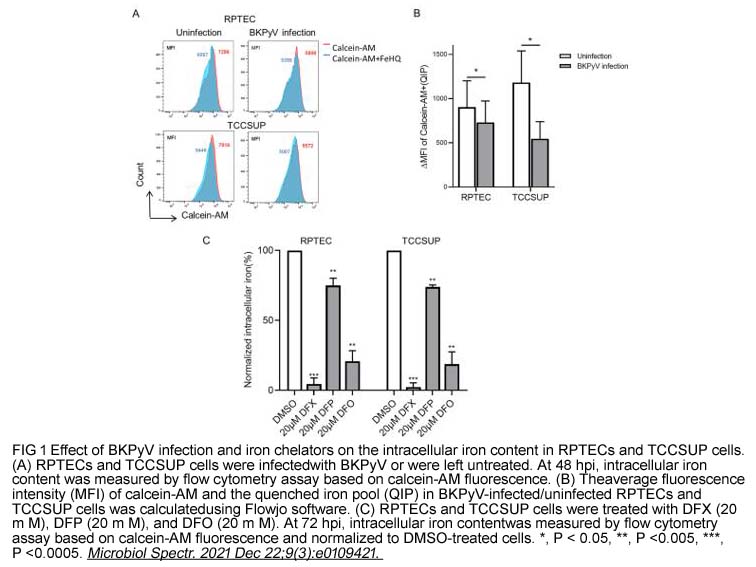
- 3. Jiajia Sun, Yejing Shi, et al. "Intracellular Low Iron Exerts Anti-BK Polyomavirus Effect by Inhibiting the Protein Synthesis of Exogenous Genes." Microbiol Spectr. 2021 Dec 22;9(3):e0109421. PMID: 34756078
| Physical Appearance | A solid |
| Storage | Store at -20°C |
| M.Wt | 373.37 |
| Cas No. | 201530-41-8 |
| Formula | C21H15N3O4 |
| Solubility | insoluble in H2O; ≥37.28 mg/mL in DMSO; ≥2.94 mg/mL in EtOH with ultrasonic |
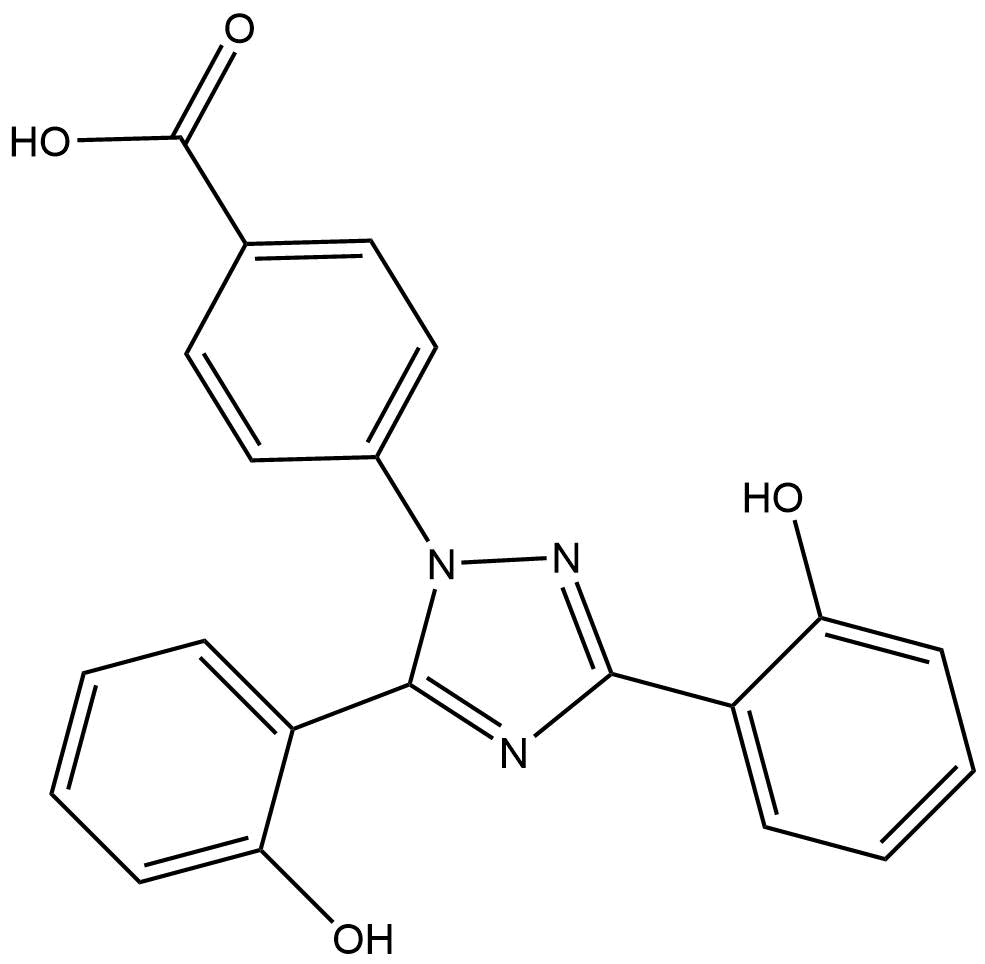
| Chemical Name | 4-(3,5-bis(2-hydroxyphenyl)-1H-1,2,4-triazol-1-yl)benzoic acid |
| Canonical SMILES | OC(c(cc1)ccc1-[n]1nc(-c(cccc2)c2O)nc1-c(cccc1)c1O)=O |
| Shipping Condition | Small Molecules with Blue Ice, Modified Nucleotides with Dry Ice. |
| General tips | We do not recommend long-term storage for the solution, please use it up soon. |
Quality Control & MSDS
- View current batch:
Chemical structure
Related Biological Data