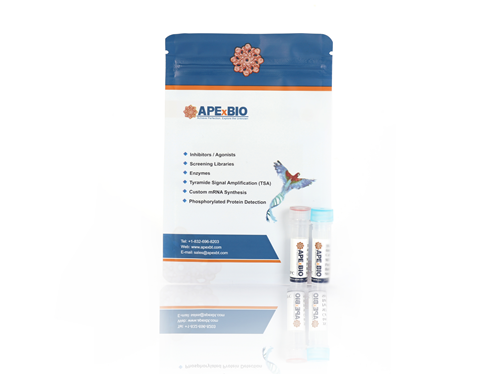
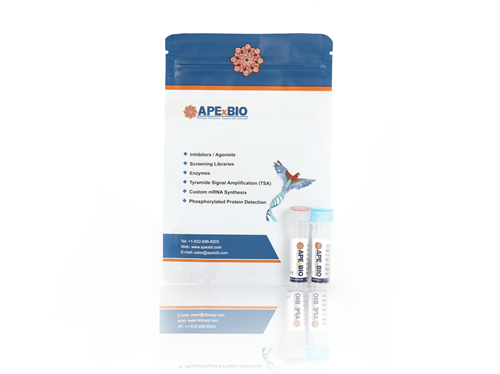
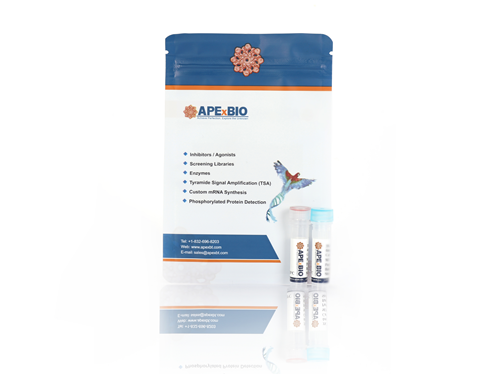
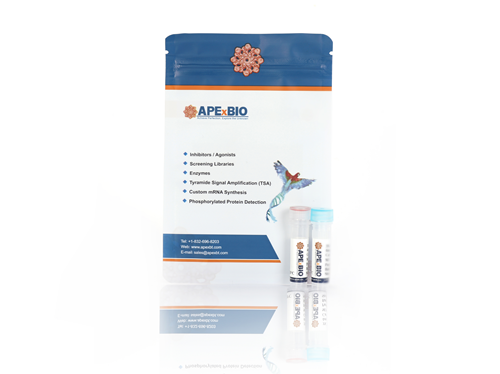
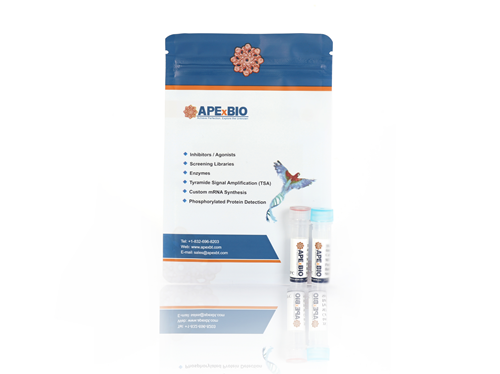
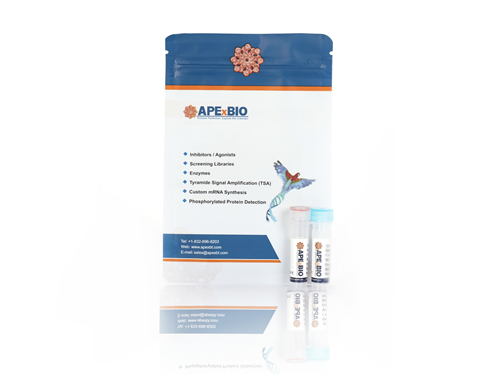
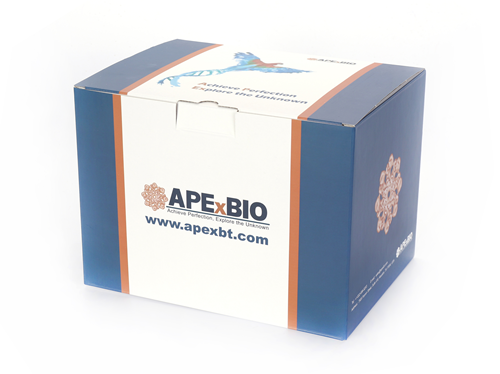
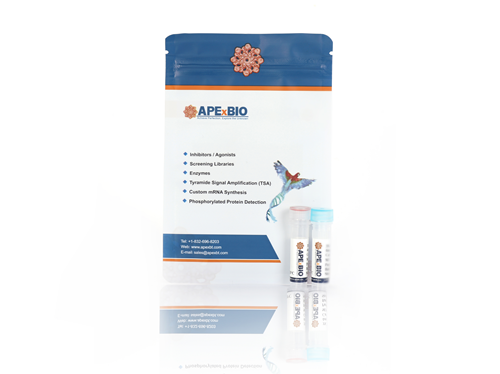
ARCA Cy3 EGFP mRNA (5-moUTP)
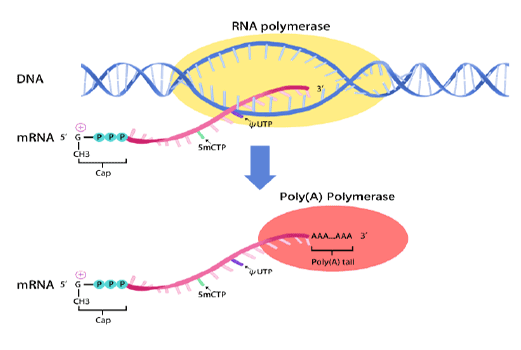
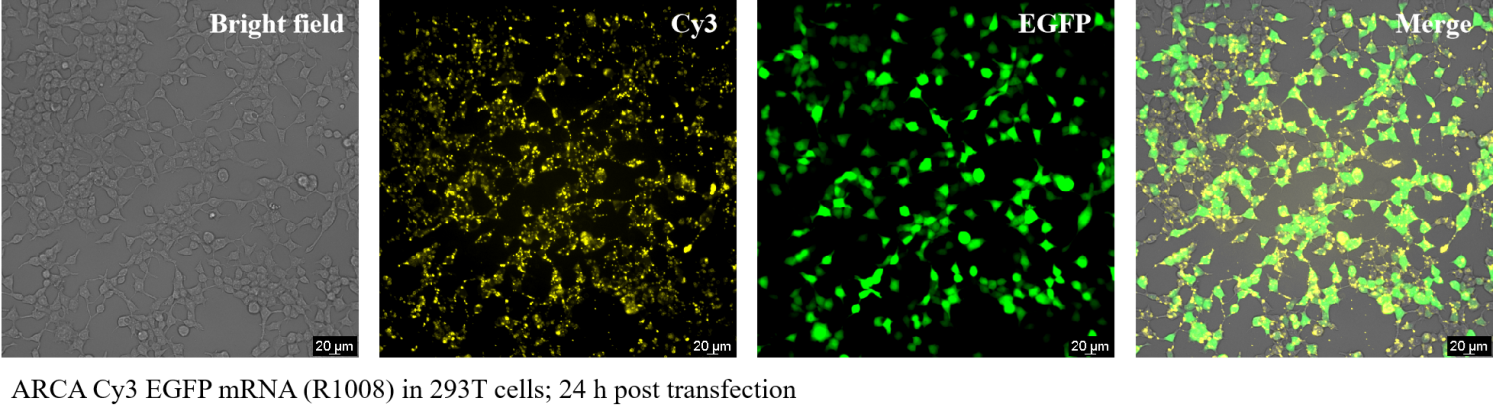
ARCA Cy3 EGFP mRNA (5-moUTP) can be used to analyze mRNA delivery and translation efficiency. The EGFP mRNA will express an enhanced version of green fluorescent protein, which was originally isolated from the jellyfish, Aequorea victoria. EGFP is a direct detection reporter gene commonly used in mammalian cell cultures to produce bright green fluorescence with an emission peak at 509 nm. ARCA Cy3 EGFP mRNA (5-moUTP) is an ideal molecule for determining mRNA delivery and localization and is independent of translation.
Key features:
Fluorescent Labeling: The mRNA is covalently conjugated with Cy3 dye, enabling direct visualization of mRNA delivery, cellular uptake, and intracellular trafficking using fluorescence microscopy or flow cytometry, without the need for secondary detection steps.
ARCA Structure: ARCA is a cost-effective, co-transcriptionally added cap analog that ensures efficient translation. ARCA remains widely used in early-stage research and cost-sensitive applications due to its proven performance and favorable balance of efficiency and affordability.
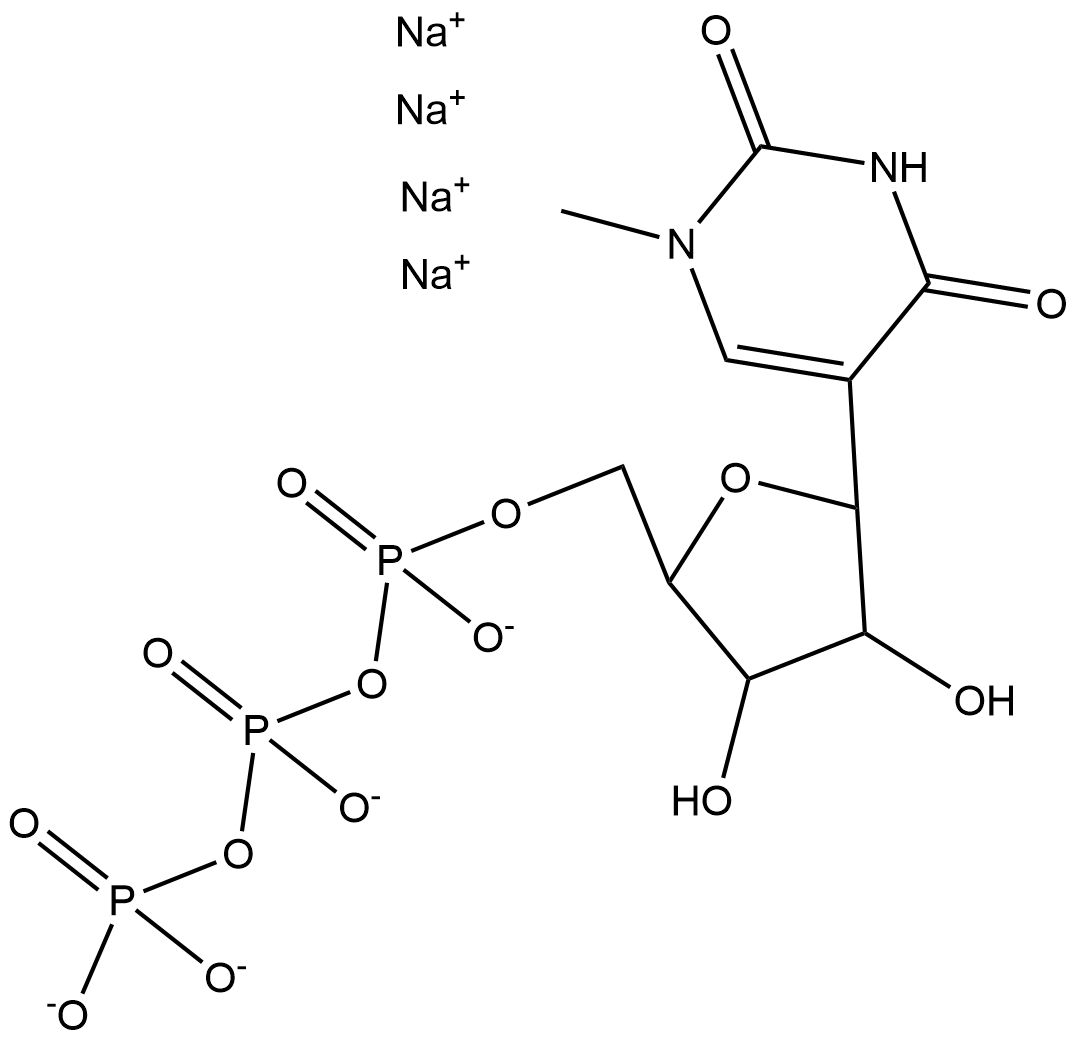
Modified Nucleotides: It contains 5-methoxyuridine (5-moU) modified nucleotides, which decreases immunogenicity, enhances mRNA stability, and increases translational efficiency, resulting in more reliable and reproducible protein yield.
| mRNA Length | 996 nucleotides | ||
| Concentration | 1.0 mg/mL | ||
| Buffer | 1 mM Sodium Citrate, pH 6.4 | Storage | -40°C or below |
| General tips | Dissolve it on ice and take care to prevent RNase contamination degradation. Avoid repeated freezing and thawing as much as possible. Do not vortex. For the first time, it is gently centrifuged and divided into several parts for stand-alone use. Use RNase-free reagents and consumables, using appropriate RNase-free technology. It can not be added to the serum-containing medium until it is mixed with the transfection reagent. | ||
| Shipping Condition | ship with dry ice | ||
- 1. Wenhao Dai, Hongliang Li, et al. "Design and synthesis of novel ionizable lipids enables highly efficient mRNA delivery via lipid nanoparticles." Bioorg Chem. 2026 Apr:171:109526. PMID: 41621179
- 2. Zhenghua Li, Jiacai Wu, et al. "mRNA-LNP hydrogels promote skeletal muscle regeneration in situ." Journal of Controlled Release Available online 23 September 2025, 114258. PMID: 40997951
- 3. Marshall S. Padilla, Kaitlin Mrksich, et al. "Branched endosomal disruptor (BEND) lipids mediate delivery of mRNA and CRISPR-Cas9 ribonucleoprotein complex for hepatic gene editing and T cell engineering." Nat Commun. 2025 Jan 24;16(1):996. PMID: 39856035
- 4. Nicholas W. Kreofsky, Punarbasu Roy, et al. "Blending Carbohydrate and Quinine-Based Polymers Imparts Colloidal Stability, Improved Performance, and Cell Specificity for mRNA Delivery." Biomacromolecules August 28, 2025
Quality Control & DataSheet
- View current batch:
Related Biological Data
It can be based on your experimental goals:
- For Tracking Transfection and Translation Efficiency: APExBIO Reporter Gene mRNAs (e.g. EGFP, Firefly Luciferase mRNA) are commonly used to track transfection efficiency and protein expression duration; evaluate gene expression and cell viability; study mRNA localization and bio-distribution via in vivo imaging; optimize transfection conditions and validate LNP delivery system.
- For Gene Editing, Functional Studies and Gene Therapy Research: APExBIO offers various functional protein mRNAs, involving tumor suppressors (e.g. p53, PTEN), cytokines (e.g. IL-12, IL-10), gene-editing tools (e.g. spCas9, Cre Recombinase), gene replacement protein (e.g. EPO), and antigens (e.g. OVA, SARS-CoV-2 Spike).
- For Sustained Protein Expression: APExBIO Self-amplifying RNA (saRNA) and Circular RNA (circRNA) are recommended for applications requiring prolonged protein expression. saRNA enables lasting and strong protein expression at lower doses, while circRNA has enhanced structural stability and extended expression duration.
- Advanced Capping Technology: Utilizes Cap 1 structure (EZ Cap™ Cap) to achieve enhanced translation efficiency and minimizing activation of the host innate immune response. The capping efficiency can reach 90–99%.
- Diverse Modification Options: Provides a range of modified nucleotides, such as m1Ψ, 5-moUTP and Cy5-UTP, which reduce immunogenicity, improve mRNA stability, and maximize protein expression levels.
- Stringent Quality Control: Each batch undergoes rigorous quality assessment including capping efficiency, purity, integrity, and sterility to ensure batch-to-batch consistency.