Elesclomol (STA-4783)
Elesclomol (STA-4783, CAS: 488832-69-5) is a lipophilic copper ionophore and the prototypical small-molecule inducer of cuproptosis, a copper-dependent form of regulated cell death. The compound was originally identified by Shionogi BioResearch in the early 2000s through a cell-based high-throughput phenotypic screen for apoptosis-inducing anticancer agents and was subsequently advanced into clinical evaluation in combination with paclitaxel for the treatment of metastatic melanoma. Elesclomol was initially believed to exert its antitumor activity primarily through ROS-mediated oxidative stress and mitochondria-dependent apoptosis. In 2015, Hasinoff et al. established that elesclomol functions as a copper ionophore capable of delivering copper to mitochondria. Building upon this work, Tsvetkov et al. elucidated the molecular mechanism of copper-induced cell death in 2022 and introduced the concept of cuproptosis, establishing elesclomol as the canonical chemical probe for investigating this pathway.
Elesclomol readily chelates extracellular Cu2+ to form a stable, electrically neutral, lipophilic complex that readily crosses biological membranes and accumulates within mitochondria. In the mitochondrial matrix, ferredoxin 1 (FDX1) reduces the transported Cu2+ to Cu+, generating the bioactive copper species responsible for cytotoxicity. The released Cu+ binds directly to lipoylated mitochondrial enzymes of the tricarboxylic acid (TCA) cycle, particularly dihydrolipoamide S-acetyltransferase (DLAT), promoting irreversible protein aggregation. Concurrently, copper destabilizes iron–sulfur cluster proteins, including FDX1, LIAS, and SDHB, leading to mitochondrial proteotoxic stress, disruption of TCA cycle function, and ultimately cuproptotic cell death. After releasing copper, elesclomol is capable of binding additional extracellular Cu2+, thereby functioning catalytically as a copper shuttle that continuously promotes intracellular copper delivery. Owing to its well-defined mechanism of action and robust ability to induce copper-dependent cell death, elesclomol has become the most widely used pharmacological inducer of cuproptosis in mechanistic studies and drug discovery.
References:
1. Tsvetkov P, Coy S, Petrova B, Dreishpoon M, Verma A, Abdusamad M, Rossen J, Joesch-Cohen L, Humeidi R, Spangler RD, Eaton JK, Frenkel E, Kocak M, Corsello SM, Lutsenko S, Kanarek N, Santagata S, Golub TR. Copper induces cell death by targeting lipoylated TCA cycle proteins. Science. 2022 Mar 18;375(6586):1254-1261. doi: 10.1126/science.abf0529. Epub 2022 Mar 17. Erratum in: Science. 2022 Apr 22;376(6591):eabq4855. doi: 10.1126/science.abq4855. PMID: 35298263; PMCID: PMC9273333.
2. Yu Q, Jiang K, Ma S, Zheng Q, Tondi S, Reina C, ?abanovi? B, Wen C, Shen B, Aicher A, Song H, Ma Y, Heeschen C. Elesclomol-copper combination synergistically targets mitochondrial metabolism in cancer stem cells to overcome chemoresistance in PDAC. Mol Ther. 2025 Dec 3;33(12):6160-6177. doi: 10. 1016/j.ymthe.2025.09.004. Epub 2025 Sep 10. PMID: 40931516; PMCID: PMC12703165.
3. Liu X, Qu H, Li J, Sun X, Wang Z, Wang D, Bai X and Li X (2025) p53 enhances elesclomol-Cu-induced cuproptosis in hepatocellular carcinoma via FDXR-mediated FDX1 upregulation. Front. Oncol. 15:1584811. doi: 10.3389/fonc.2025.1584811.
4. Hasinoff BB, Wu X, Yadav AA, Patel D, Zhang H, Wang DS, Chen ZS, Yalowich JC. Cellular mechanisms of the cytotoxicity of the anticancer drug elesclomol and its complex with Cu(II). Biochem Pharmacol. 2015 Feb 1;93(3):266-76. doi: 10.1016/j.bcp.2014.12.008. Epub 2014 Dec 27. PMID: 25550273.5. Ronald K. Blackman, Kahlin Cheung-Ong, Marinella Gebbia, David A. Proia, Suqin He, Jane Kepros, Aurelie Jonneaux, Philippe Marchetti, Jerome Kluza, Patricia E. Rao, Yumiko Wada, Guri Giaever, Corey Nislow. Mitochondrial electron transport is the cellular target of the oncology drug elesclomol. PLoS ONE 2012; 7(1): e29798.6. Jessica R. Kirshner, Suqin He, Vishwasenani Balasubramanyam, Jane Kepros, Chin-Yu Yang, Mei Zhang, Zhenjian Du, James Barsoum, and John Bertin. Elesclomol induces cancer cell apoptosis through oxidative stress. Mol Cancer Ther 2008; 7:2319-2327.
- 1. Yang Liu, Jing-Jing Jiang, et al. "Artemisinins ameliorate polycystic ovarian syndrome by mediating LONP1-CYP11A1 interaction." Science. 2024 Jun 14;384(6701):eadk5382. PMID: 38870290
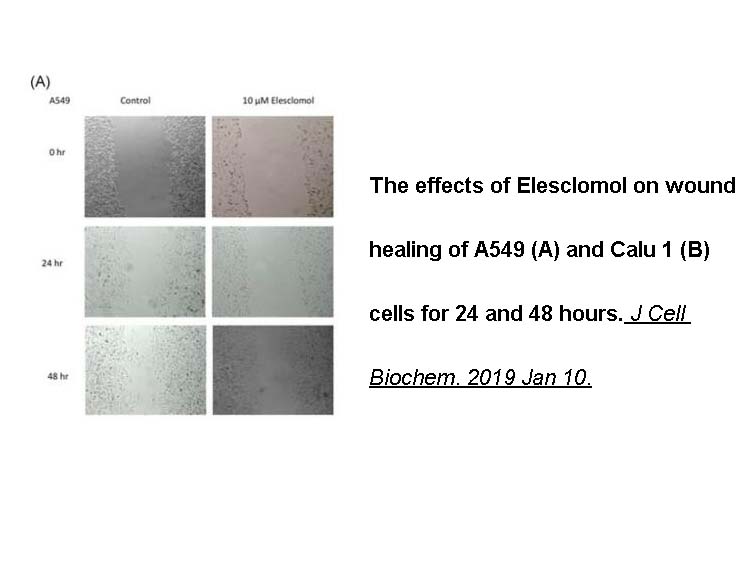
- 2. Albayrak G, Korkmaz FD, et al. "The outcomes of an impaired powerhouse in KRAS mutant lung adenocarcinoma cells by Elesclomol." J Cell Biochem. 2019 Jan 10. PMID:30628735
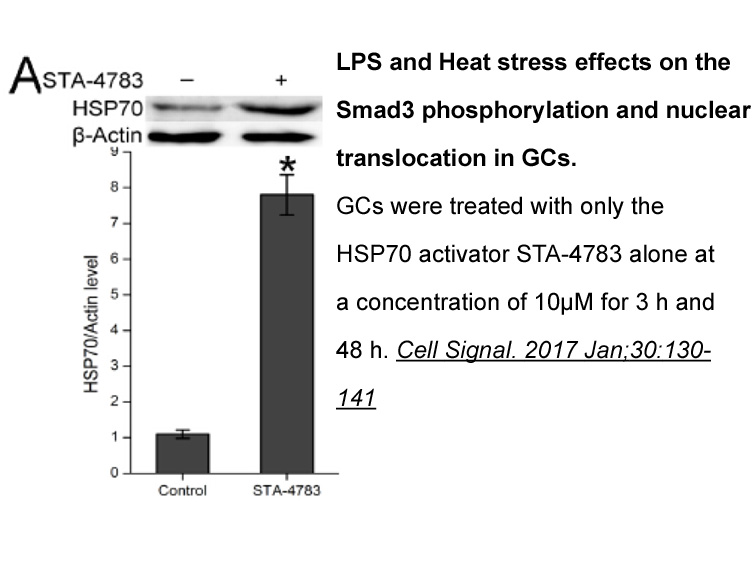
- 3. Li H, Guo S, et al."Lipopolysaccharide and heat stress impair the estradiol biosynthesis in granulosa cells via increase of HSP70 and inhibition of smad3 phosphorylation and nuclear translocation." Cell Signal. 2017 Jan;30:130-141. PMID:27940052
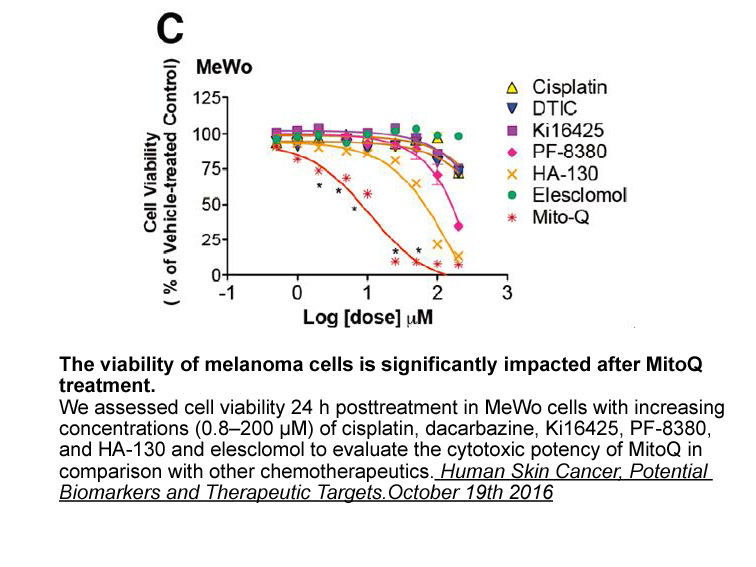
- 4. Ali A. Alshamrani, James L. et al. "Inhibiting Lactate Dehydrogenase A Enhances the Cytotoxicity of the Mitochondria Accumulating Antioxidant, Mitoquinone, in Melanoma Cells." Human Skin Cancer, Potential Biomarkers and Therapeutic Targets.October 19th 2016.
| Physical Appearance | A solid |
| Storage | Store at -20°C |
| M.Wt | 400.5 |
| Cas No. | 488832-69-5 |
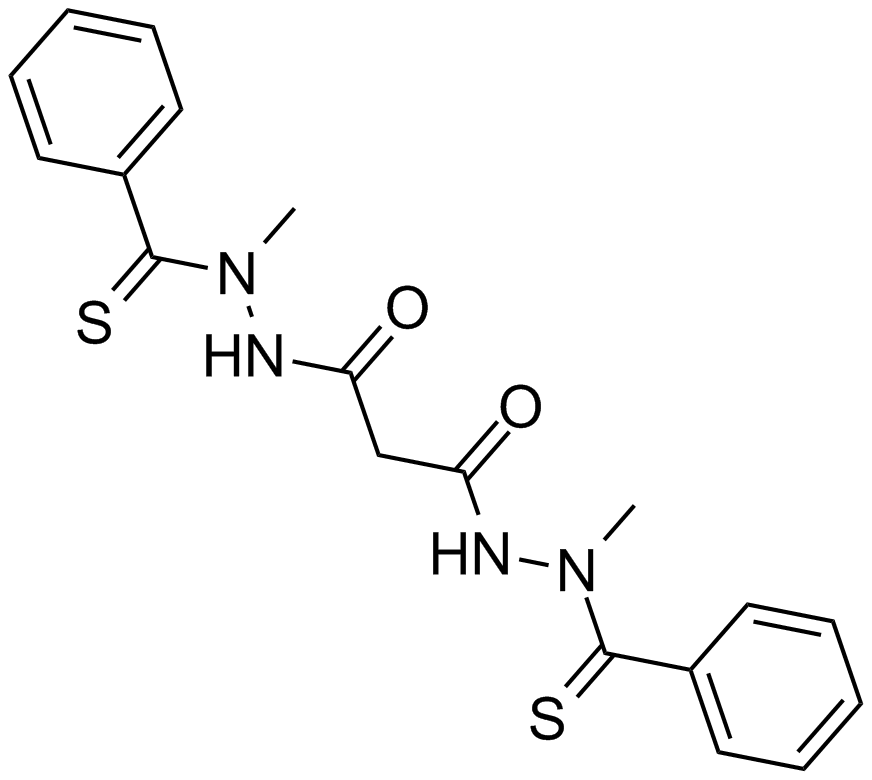
| Formula | C19H20N4O2S2 |
| Synonyms | STA 4783, STA4783 |
| Solubility | insoluble in H2O; ≥20.15 mg/mL in DMSO; ≥5.68 mg/mL in EtOH with gentle warming and ultrasonic |
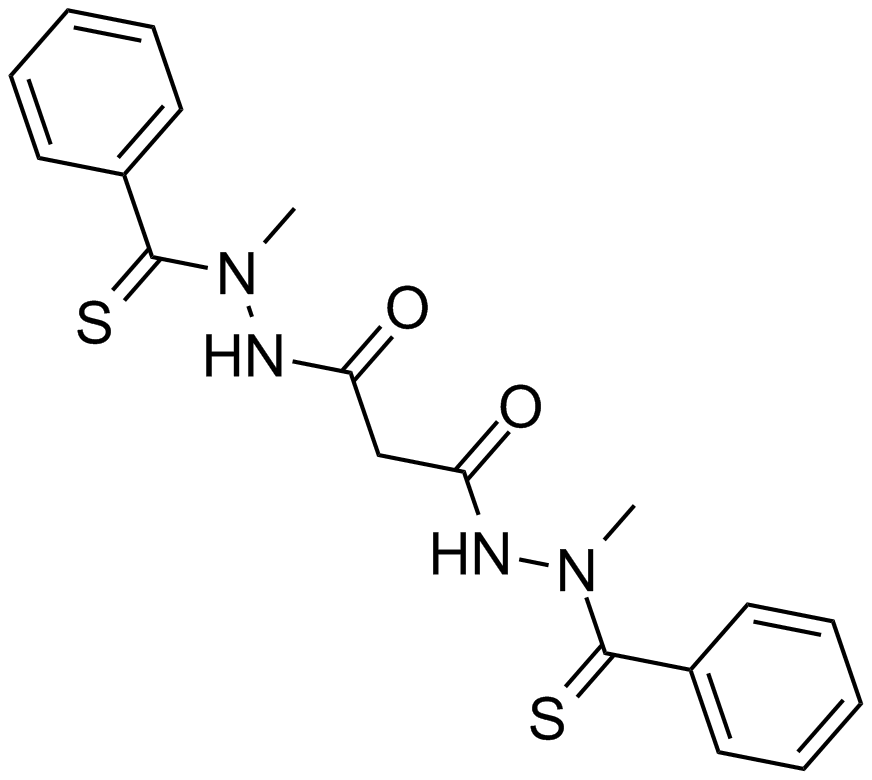
| Chemical Name | 1-N',3-N'-bis(benzenecarbonothioyl)-1-N',3-N'-dimethylpropanedihydrazide |
| Canonical SMILES | CN(C(c1ccccc1)=S)NC(CC(NN(C)C(c1ccccc1)=S)=O)=O |
| Shipping Condition | Small Molecules with Blue Ice, Modified Nucleotides with Dry Ice. |
| General tips | We do not recommend long-term storage for the solution, please use it up soon. |
| Cell experiment [1]: | |
|
Cell lines |
HSB2 cells |
|
Preparation method |
The solubility of this compound in DMSO is > 10 mM. General tips for obtaining a higher concentration: Please warm the tube at 37 °C for 10 minutes and/or shake it in the ultrasonic bath for a while. Stock solution can be stored below -20 °C for several months. |
|
Reaction Conditions |
200 nM; 18 hrs |
|
Applications |
In HSB2 cells, Elesclomol increased the number of early and late apoptotic cells (3.7- and 11-fold, respectively). |
| Animal experiment [2]: | |
|
Animal models |
Nude mouse xenograft models of human breast cancers (MDA435, MCF7 and ZR-75-1), lung cancer (RER) or lymphoma (U937) |
|
Dosage form |
25 ~ 100 mg/kg; i.v. |
|
Applications |
In nude mouse xenograft models of human breast cancers (MDA435, MCF7 and ZR-75-1), lung cancer (RER) or lymphoma (U937), a single dose of Elesclomol (25 ~ 100 mg/kg) showed no antitumor activity. But Elesclomol substantially enhanced the efficacy of chemotherapeutic agents such as Paclitaxel, both in terms of tumor regression and extended survival of mice. |
|
Other notes |
Please test the solubility of all compounds indoor, and the actual solubility may slightly differ with the theoretical value. This is caused by an experimental system error and it is normal. |
|
References: [1]. Jessica R. Kirshner, Suqin He, Vishwasenani Balasubramanyam, Jane Kepros, Chin-Yu Yang, Mei Zhang, Zhenjian Du, James Barsoum, and John Bertin. Elesclomol induces cancer cell apoptosis through oxidative stress. Mol Cancer Ther 2008; 7:2319-2327 [2]. Gehrmann M. Drug evaluation: STA-4783--enhancing taxane efficacy by induction of Hsp70. Curr Opin Investig Drugs. 2006 Jun;7(6):574-80. |
|
| Description | Elesclomol is a novel potent inducer of oxidative stress. | |||||
| Targets | HSP70 | |||||
| IC50 | ||||||
Quality Control & MSDS
- View current batch:
Chemical structure
Related Biological Data
Related Biological Data
Related Biological Data