Ammonium tetrathiomolybdate
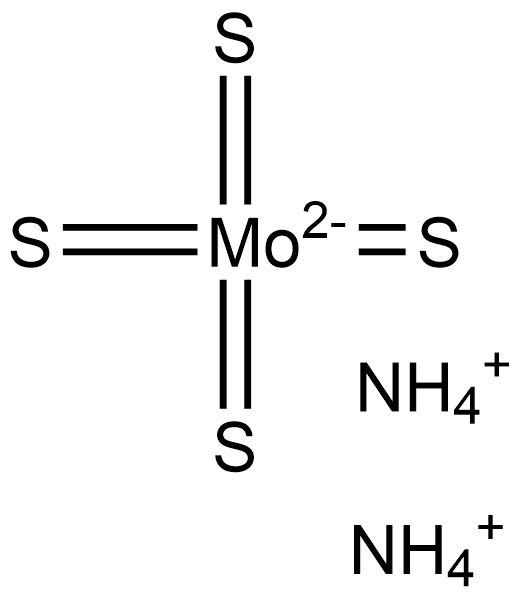
Ammonium Tetrathiomolybdate (TTM, CAS:15060-55-6) is an exceptionally high-affinity copper chelator widely used to deplete cellular copper and suppress copper-dependent biological processes. The active tetrathiomolybdate anion (MoS42?) coordinates copper through four sulfur donor atoms, forming extremely stable Cu–TTM complexes that can further associate with serum proteins such as albumin. As a result, TTM efficiently removes copper from both extracellular and intracellular labile copper pools.
TTM blocks copper delivery through two complementary mechanisms. In the extracellular environment, it rapidly sequesters free copper or extracts copper directly from copper ionophores through ligand-exchange reactions, thereby preventing copper uptake. A fraction of TTM also enters cells, where it tightly chelates free and weakly bound intracellular copper, further reducing the bioavailable copper pool. Consequently, TTM effectively suppresses cuproptosis by preventing intracellular copper accumulation and depleting the bioavailable copper required to initiate this pathway. Copper depletion also inhibits the activity of multiple cuproenzymes, including Cu/Zn superoxide dismutase (SOD1) and cytochrome c oxidase (Complex IV), leading to alterations in mitochondrial respiration, reactive oxygen species (ROS) metabolism, and cellular redox signaling. Under hypoxic or ischemia–reperfusion conditions, TTM has also been reported to function as a conditional sulfide donor capable of modulating mitochondrial bioenergetics.
TTM is frequently used to investigate copper homeostasis, cuproptosis, copper-dependent enzyme function, mitochondrial metabolism, redox signaling, and angiogenesis. It is also employed in cell-based and animal studies to evaluate copper-dependent phenotypes, enzyme activities, mitochondrial function, metabolic flux, and the pharmacological consequences of copper depletion.
Unlike most small-molecule copper chelators, Cu–TTM complexes are relatively large, highly hydrophilic, and negatively charged, limiting their diffusion across biological membranes after copper binding. Consequently, intracellular Cu–TTM complexes are removed slowly and may accumulate during prolonged treatment. This characteristic should be considered when designing long-term in vivo studies involving repeated TTM administration.
References:
1. Kodama H, Fujisawa C, Bhadhprasit W. Inherited copper transport disorders: biochemical mechanisms, diagnosis, and treatment. Curr Drug Metab. 2012 Mar;13(3):237-50. doi: 10.2174/138920012799320455. PMID: 21838703; PMCID: PMC3290776.
| Storage | Store at -20°C |
| M.Wt | 260.27 |
| Cas No. | 15060-55-6 |
| Formula | (NH4)2MoS4 |
| Synonyms | Thiomolybdic acid (H2MoS4), diammonium salt |
| Chemical Name | ammonium tetrathiomolybdate |
| Canonical SMILES | S=[Mo-2](=S)(=S)=S.[NH4+].[NH4+] |
| Shipping Condition | Small Molecules with Blue Ice, Modified Nucleotides with Dry Ice. |
| General tips | We do not recommend long-term storage for the solution, please use it up soon. |