


Apoptosis
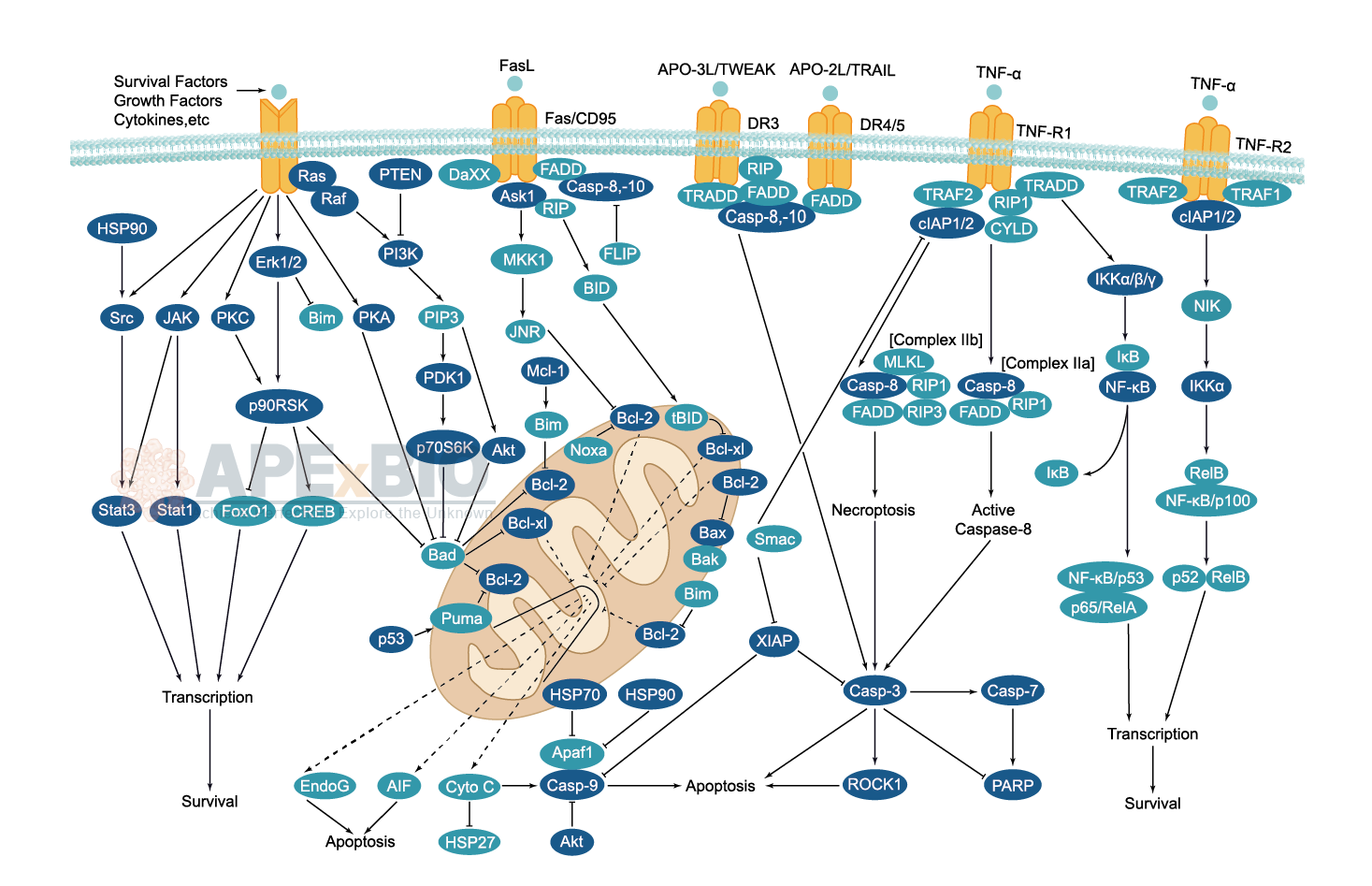
Apoptosis, also known as programmed cell death, is rigorously controlled process of cell death that leads to phagocytosis of unwanted cell. It is triggered after sufficient cellular damage and activated through extrinsic or intrinsic pathways. The intrinsic pathway is mainly occurs via release of cytochrome c from the mitochondria and regulates mitochondrial outer membrane permeabilization by Bcl-2 family proteins. The extrinsic pathway is induced by ligand binding to death receptor, such as Fas, TNFαR, DR3, DR4, and DR5. Caspases then cleave target proteins and nuclear lamins to promote DNA degradation, resulting apoptotic cells undergo phagocytosis. In addition, p53 has the ability to activate intrinsic and extrinsic pathways of apoptosis by inducing transcription of several proteins like Puma, Bid, Bax, TRAIL-R2, and CD95.
Some Inhibitors of apoptosis proteins (IAPs), such as XIAP/BIRC4 and Bruce/BIRC6, can block casapse activity through direct binding, while other IAPs, such as cIAP1/BIRC2, cIAP2/BIRC3, act as ubiquitin ligases that target caspases for ubiquitin-mediated degradation. Apoptosis is essential for growth, development and aging in multicellular organisms. Any alterations or abnormalities occurring in apoptotic processes contribute to development of human diseases, including cancer.
-
 BA2827 YUM70Summary: YUM70 is a potent and selective inhibitor of glucose-regulated protein 78.
 -
BA2828 JG-98Summary: JG-98 is a heat shock protein 70 variant inhibitor that binds tightly to a conserved site on and interrupts the Hsp70-Bag3 interaction.
-
BA2829 PCC0208017Summary: PCC0208017 is a potent inhibitor of microtubule affinity-regulated kinases.
-
BA2830 BufotalinSummary: Bufotalin is a steroidal lactone isolated from VenenumBufonis with potent antitumor activity.
-
BA2831 MRT199665Summary: MRT199665 is a potent, ATP-competitive, selective inhibitor.
-
BA2832 E64FC26Summary: E64FC26 is a potent pan-inhibitor of the protein disulfide bond isomerase family, with 1.9, 20.9, 25.9, 16.3 and 25.4 μM for PDIA1, PDIA3, PDIA4, TXNDC5 and PDIA6, respectively.
-
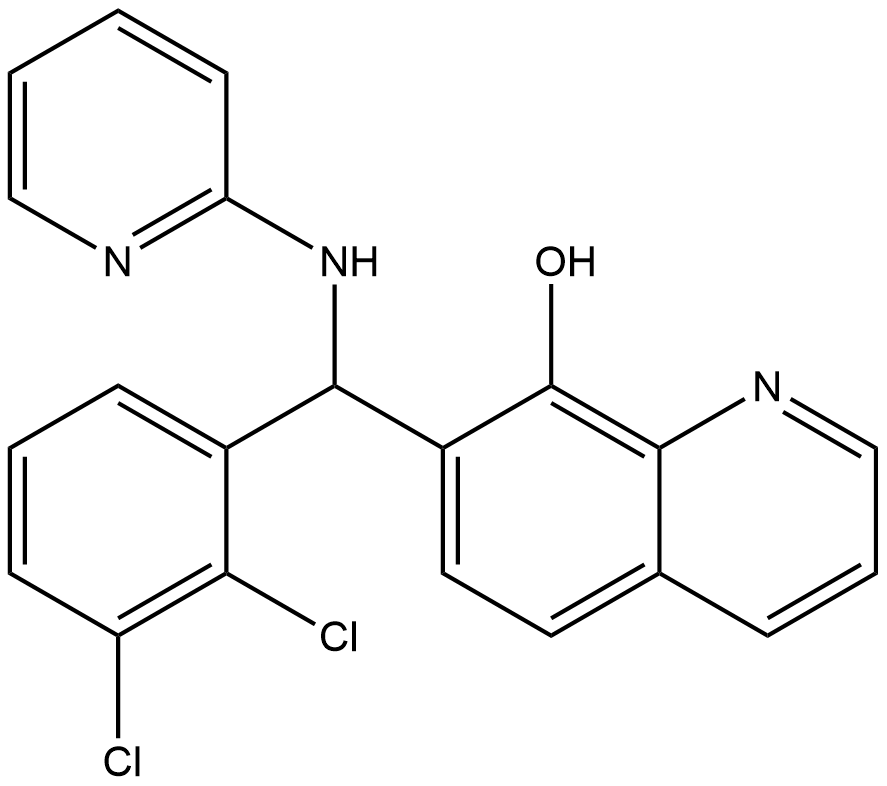 BA2833 MMRi62Summary: MMRi62 is an iron death inducer that targets (oncogene p53 negative regulator).
 -
BA2834 JQAD1Summary: JQAD1 is CRBN-dependent and selectively targeted for degradation.
-
BA2835 NitrochinSummary: Nitrochin (4-NQO) is a chemical carcinogen.
-
BA2836 RobininSummary: Robinin, a flavonoid that can be extracted from purple-red cowpea leaves, inhibits the TGF-β, TLR4/NF-κB, and TLR2-PI3k-AKT signaling pathways and exerts anti-inflammatory and antitumor effects.