


Metabolism
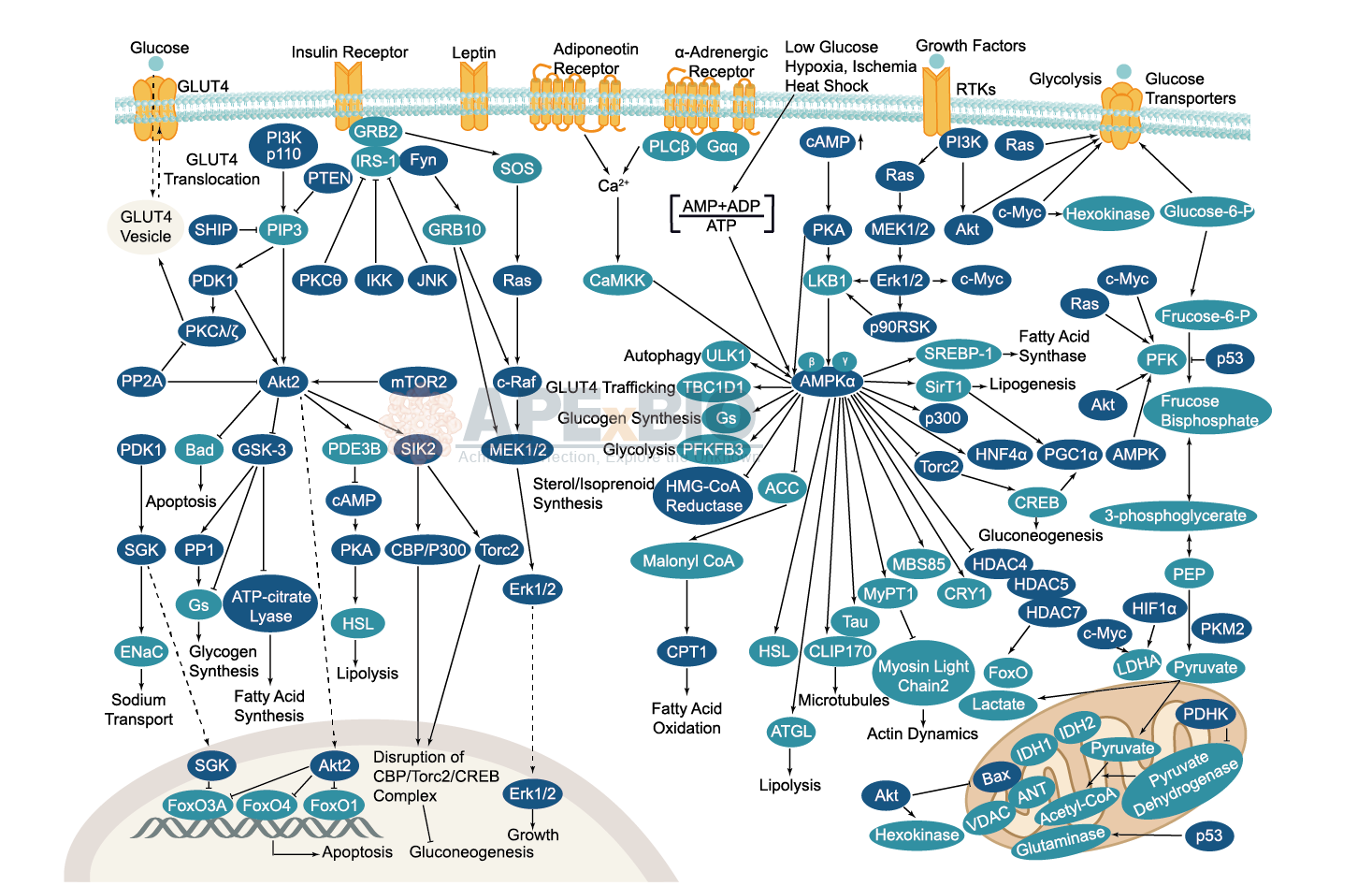
Serine/threonine kinase AMPK upregulates glucose uptake by promoting the expression and function of glucose transporters. AMPK is activated by increased AMP/ATP ratio, resulting from cellular and environmental stress, e.g. low glucose, heat shock, hypoxia and ischemia. AMPK activation positively modulates signaling transductions that refill ATP levels. Moreover, it also stimulates catabolic processes such as fatty acid oxidation and glycolysis through inhibition of ACC and activation of PFK2. AMPK negatively regulates various proteins which are important to ATP-consuming mechanisms, e.g. mTORC2, glycogen synthase, SREBP-1, and TSC2, causing the downregulation/inhibition of gluconeogenesis and glycogen, lipid and protein synthesis.
-
 BA3927 TretazicarSummary: Tretazicar (CB1954) is an antitumor precursor with high potency and selectivity against the Walker256 rat tumor cell line.
 -
BA3935 PR-104ASummary: PR-104A (SN27858) is the alcohol metabolite of the phosphate precursor PR-104.
-
BA3957 IMT1Summary: IMT1 is the first, specific and non-competitive inhibitor of human mitochondrial RNA polymerase.
-
BA3974 PTC299Summary: PTC299 is an orally active inhibitor of translation that selectively inhibits protein synthesis at the post-transcriptional level.
-
BA3982 116-9eSummary: 116-9e (MAL2-11B) is a co-chaperone inhibitor.
-
BA3997 DHODH-IN-16Summary: DHODH-IN-16 is a potent dihydroorotic acid dehydrogenase inhibitor.
-
BA4021 LaflunimusSummary: Laflunimus (HR325) is an immunosuppressant and analog of Leflunomide active metabolite A771726.
-
BA4054 hDHODH-IN-1Summary: hDHODH-IN-1 is a human dihydroorotic acid dehydrogenase inhibitor.
-
BA4060 N2-AcetylguanineSummary: N2-Acetylguanine is a C2-modified guanine.
-
BA4069 DHODH-IN-15Summary: DHODH-IN-15 is a hydroxyfurazan analog of A771726.