


1-Aminocyclopropanecarboxylic Acid
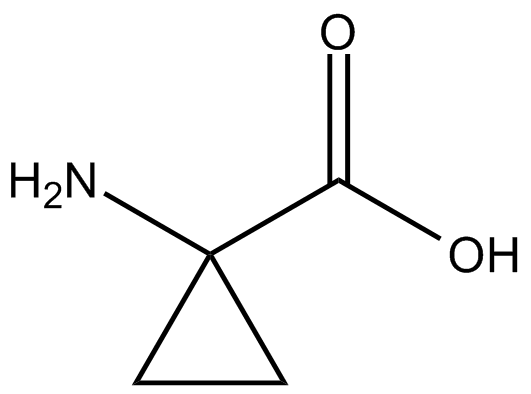
1-Aminocyclopropanecarboxylic Acid (CAS No.: 22059-21-8) is an endogenous alpha amino acid and a biologically active small molecule widely utilized in neuropharmacology and plant biology research. As a key intermediate in ethylene biosynthesis in plants, it plays a central role in regulating physiological processes such as seed germination, fruit ripening, and senescence, while in mammalian systems it has been characterized as a modulator of N-methyl-D-aspartate (NMDA) receptor signaling. Mechanistically, this compound exhibits context-dependent activity at NMDA receptors, functioning as a partial agonist at the glycine co-agonist site under low glutamate conditions and as a competitive antagonist at the glutamate-binding site when glutamate levels are elevated, with activity observed across nanomolar to low micromolar ranges. Through this dual modulatory profile, it enables controlled receptor activation and attenuation of excitotoxic signaling, contributing to neuroprotective effects in experimental models of ischemia and neurodegeneration. In addition, it has been associated with antioxidant activity and modulation of cardiovascular parameters in preclinical models, as well as improvements in cognitive functions such as object recognition memory and cognitive flexibility linked to prefrontal cortex activity. These properties make it a valuable tool compound for investigating NMDA receptor pharmacology, synaptic plasticity, and neurotoxicity, as well as for screening therapeutic candidates targeting excitatory neurotransmission. The concentrations or dosing regimens employed in vitro and in vivo typically vary depending on the specific experimental system and research objectives.
| Physical Appearance | A solid |
| Storage | -20°C |
| M.Wt | 101.1 |
| Cas No. | 22059-21-8 |
| Formula | C4H7NO2 |
| Synonyms | ACC; ACPC; NSC 98430 |
| Solubility | insoluble in EtOH; insoluble in DMSO; ≥10.1 mg/mL in H2O |
| Chemical Name | 1-aminocyclopropanecarboxylic acid |
| Canonical SMILES | OC(C1(CC1)N)=O |
| Shipping Condition | Small Molecules with Blue Ice, Modified Nucleotides with Dry Ice. |
| General tips | We do not recommend long-term storage for the solution, please use it up soon. |