


Metabolism
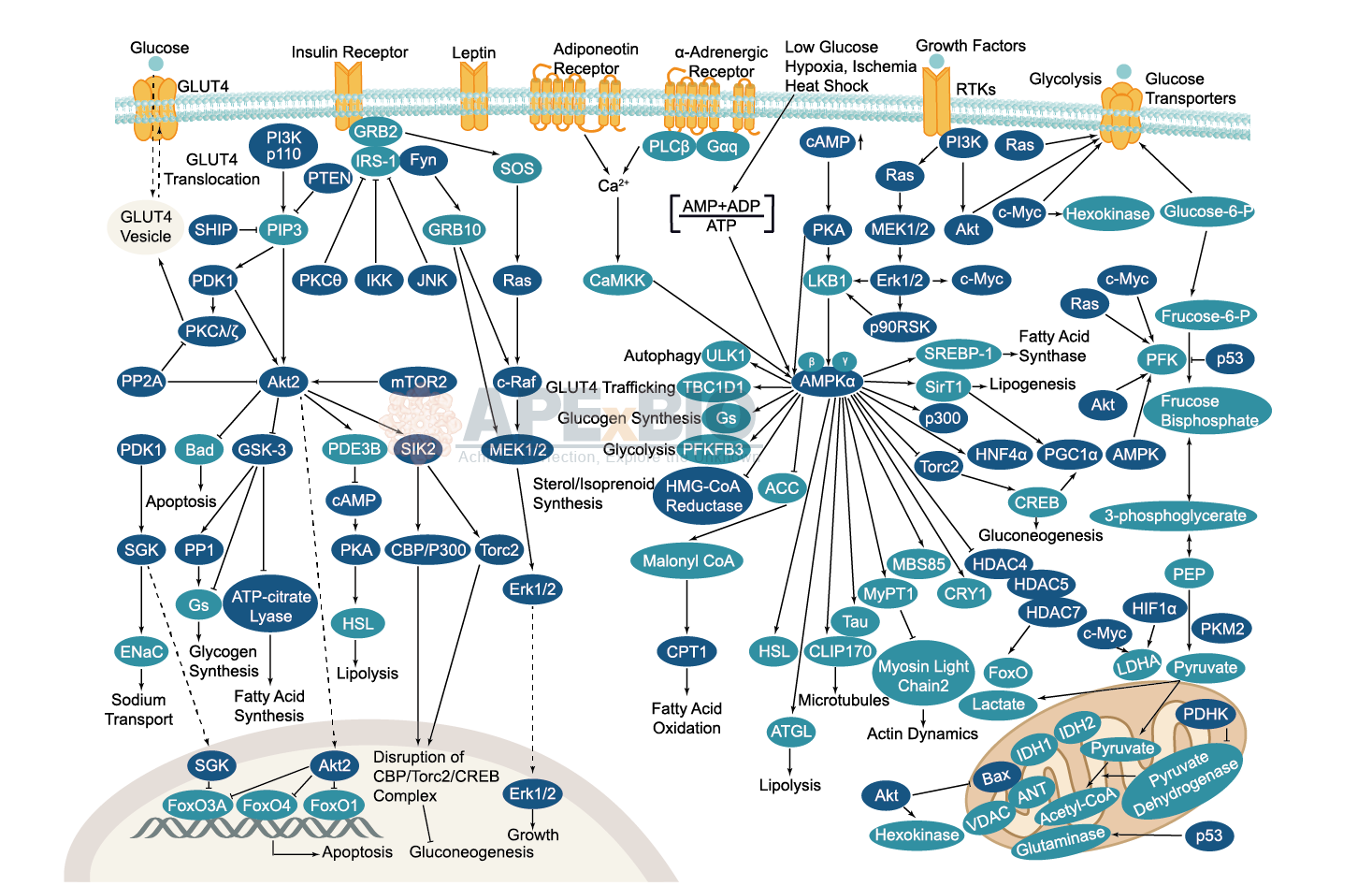
Serine/threonine kinase AMPK upregulates glucose uptake by promoting the expression and function of glucose transporters. AMPK is activated by increased AMP/ATP ratio, resulting from cellular and environmental stress, e.g. low glucose, heat shock, hypoxia and ischemia. AMPK activation positively modulates signaling transductions that refill ATP levels. Moreover, it also stimulates catabolic processes such as fatty acid oxidation and glycolysis through inhibition of ACC and activation of PFK2. AMPK negatively regulates various proteins which are important to ATP-consuming mechanisms, e.g. mTORC2, glycogen synthase, SREBP-1, and TSC2, causing the downregulation/inhibition of gluconeogenesis and glycogen, lipid and protein synthesis.
-
 BA4074 DHODH-IN-14Summary: DHODH-IN-14 is a hydroxyfurazan analog of A771726.
 -
BA4078 DHODH-IN-12Summary: DHODH-IN-12 is a Leflunomide derivative.
-
BA4079 DHODH-IN-13Summary: DHODH-IN-13 is a hydroxyfurazan analog of A771726.
-
BA4084 4-MethoxyestradiolSummary: 4-Methoxyestradiol is methoxyestradiol that induces oxidative damage in human lung epithelial cells.
-
BA4085 12R-LOX-IN-2Summary: 12R-LOX-IN-2 is an inhibitor of 12R-lipoxygenase (12R-LOX).
-
BA4140 CM-675Summary: CM-675 is a selective inhibitor of and.
-
BA4157 PomiferinSummary: An inhibitor
-
BA4161 TriciferolSummary: Triciferol is a multiligand with combined agonist and antagonist effects.
-
BA4206 YM-08Summary: YM-08 is an inhibitor that crosses the blood-brain barrier.
-
BA4282 N2-MethylguanosineSummary: N2-Methylguanosine is a modified nucleoside.