2,4-Dichlorophenoxy Acetic Acid
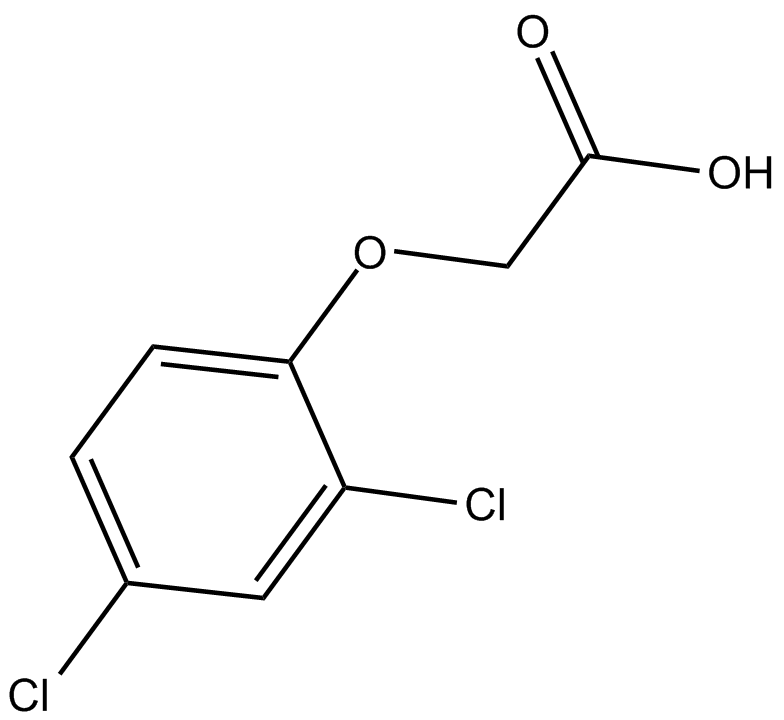
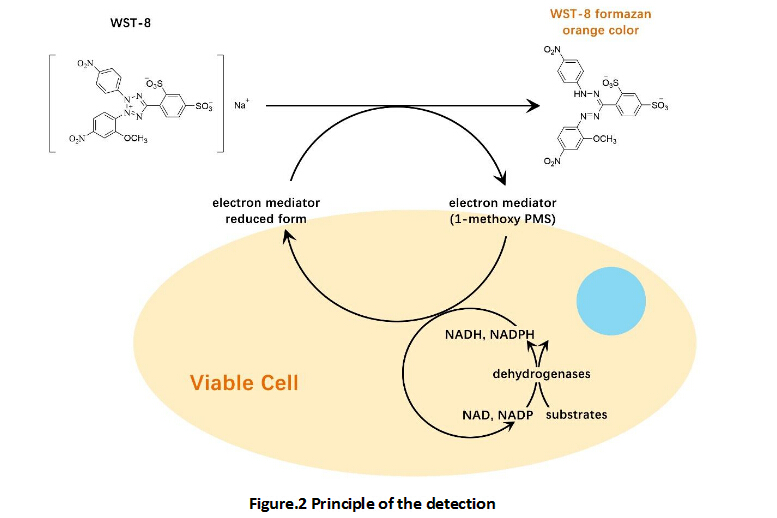
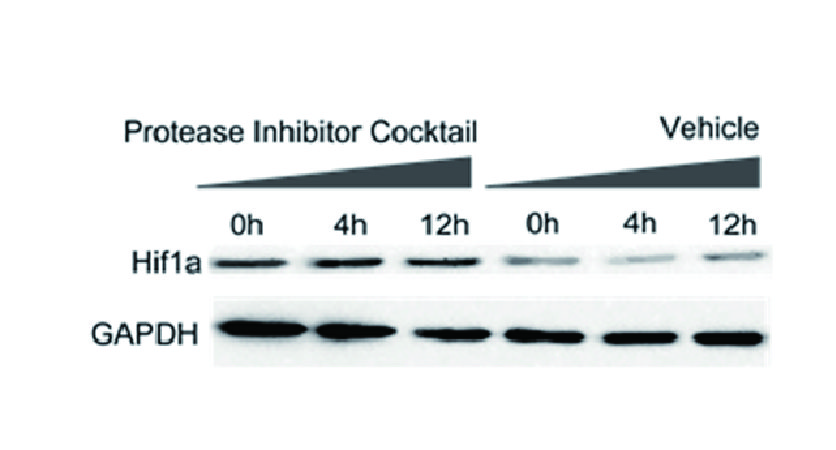
2,4-Dichlorophenoxy Acetic Acid (CAS No.: 94-75-7) is a synthetic auxin and selective herbicide widely employed as a plant growth regulator and experimental tool in plant biology and translational research. Functionally, it mimics endogenous auxin signaling, disrupting hormone-regulated pathways that control cell elongation, division, and differentiation, and has been shown to interfere with cytoskeletal organization, particularly actin dynamics, thereby impairing root elongation and cellular organization. Mechanistically, 2,4-D perturbs auxin-dependent transcriptional programs and inhibits DNA and protein synthesis, ultimately inducing apoptosis-like processes in plant cells. In vitro, its biological activity is typically observed across low micromolar to millimolar concentration ranges depending on the cellular system and assay conditions. In biomedical and life sciences research, it is frequently utilized in plant cell culture to promote callus formation and to investigate hormone signaling networks, programmed cell death, and stress-response pathways, while also serving as a model compound for studying xenobiotic-induced cytotoxicity and signal transduction. Experimental concentrations and treatment regimens vary according to specific model systems and research objectives, particularly in studies aiming to dissect conserved regulatory mechanisms relevant to cell proliferation and apoptosis.
| Physical Appearance | A solid |
| Storage | -20°C |
| M.Wt | 221.04 |
| Cas No. | 94-75-7 |
| Formula | C8H6Cl2O3 |
| Synonyms | 2,4- D; Diclordon; Vidon 638 |
| Solubility | insoluble in H2O; ≥47.8 mg/mL in DMSO; ≥49.8 mg/mL in EtOH |
| Chemical Name | 2-(2,4-dichlorophenoxy)acetic acid |
| Canonical SMILES | ClC1=CC(Cl)=CC=C1OCC(O)=O |
| Shipping Condition | Small Molecules with Blue Ice, Modified Nucleotides with Dry Ice. |
| General tips | We do not recommend long-term storage for the solution, please use it up soon. |