Icaritin
Icaritin (CAS No.: 118525-40-9) is a naturally derived prenylflavonoid isolated from Epimedium brevicornu Maxim. that is widely studied as a bioactive small molecule in oncology and bone biology research. Classified within flavonoid-based modulators of cellular signaling, Icaritin exhibits antiproliferative activity in hematologic malignancy models, inhibiting the growth of K562 leukemia cells and primary chronic myeloid leukemia cells at low micromolar concentrations, and has also been investigated in experimental contexts related to solid tumors, metastatic breast cancer, and hepatocellular carcinoma. Mechanistically, it is reported to modulate multiple intracellular signaling cascades, including MAPK/ERK/JNK and JAK2/STAT3/AKT pathways, thereby influencing cell proliferation, survival, and differentiation processes, while additionally promoting osteogenic activity in relevant cell systems. These properties make Icaritin a useful tool compound for studying signal transduction, tumor cell biology, and bone metabolism, as well as for evaluating pathway-targeted therapeutic strategies. In vitro and in vivo applications typically involve concentration ranges and dosing regimens tailored to specific model systems and experimental objectives, supporting its use in pharmacological profiling, mechanistic studies, and early-stage drug discovery investigations.
| Physical Appearance | A solid |
| Storage | -20°C |
| M.Wt | 368.38 |
| Cas No. | 118525-40-9 |
| Formula | C21H20O6 |
| Solubility | ≥11.14 mg/mL in DMSO with ultrasonic; ≥5.58 mg/mL in EtOH with ultrasonic; insoluble in H2O |
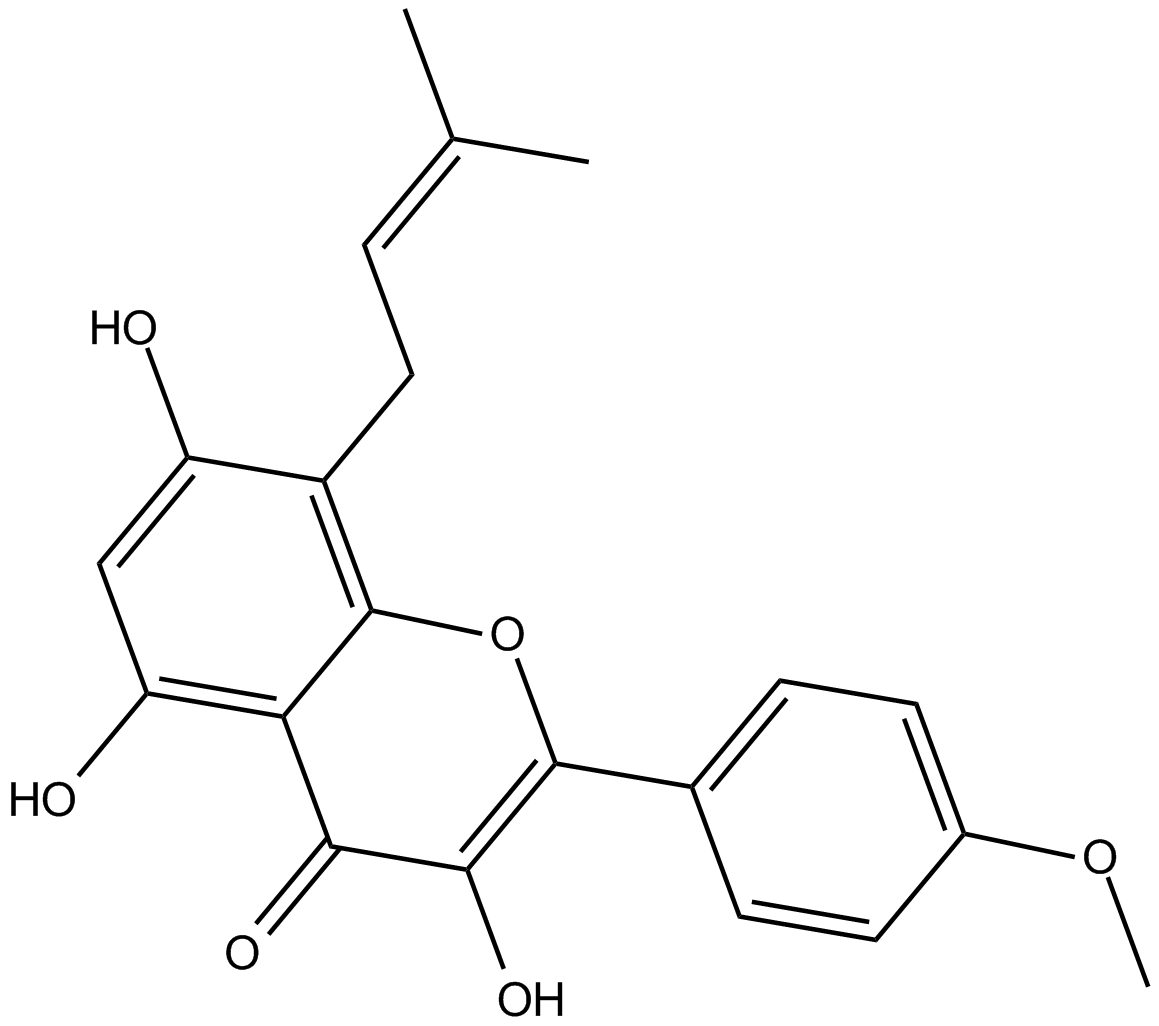
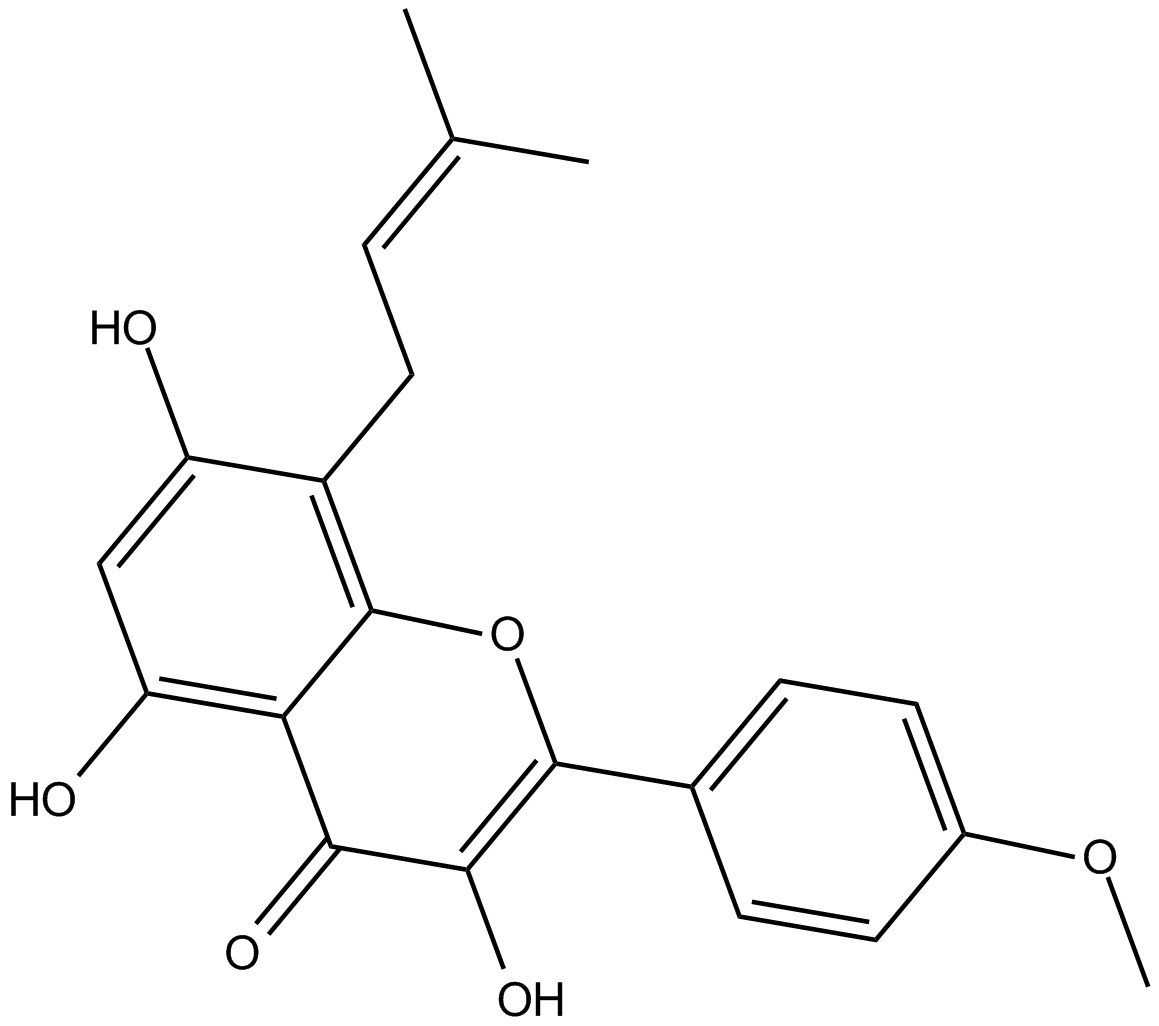
| Chemical Name | 3,5,7-trihydroxy-2-(4-methoxyphenyl)-8-(3-methylbut-2-en-1-yl)-4H-chromen-4-one |
| Canonical SMILES | C/C(C)=C\CC1=C2C(C(C(O)=C(O2)C3=CC=C(C=C3)OC)=O)=C(C=C1O)O |
| Shipping Condition | Small Molecules with Blue Ice, Modified Nucleotides with Dry Ice. |
| General tips | We do not recommend long-term storage for the solution, please use it up soon. |
Quality Control & MSDS
- View current batch:
Chemical structure