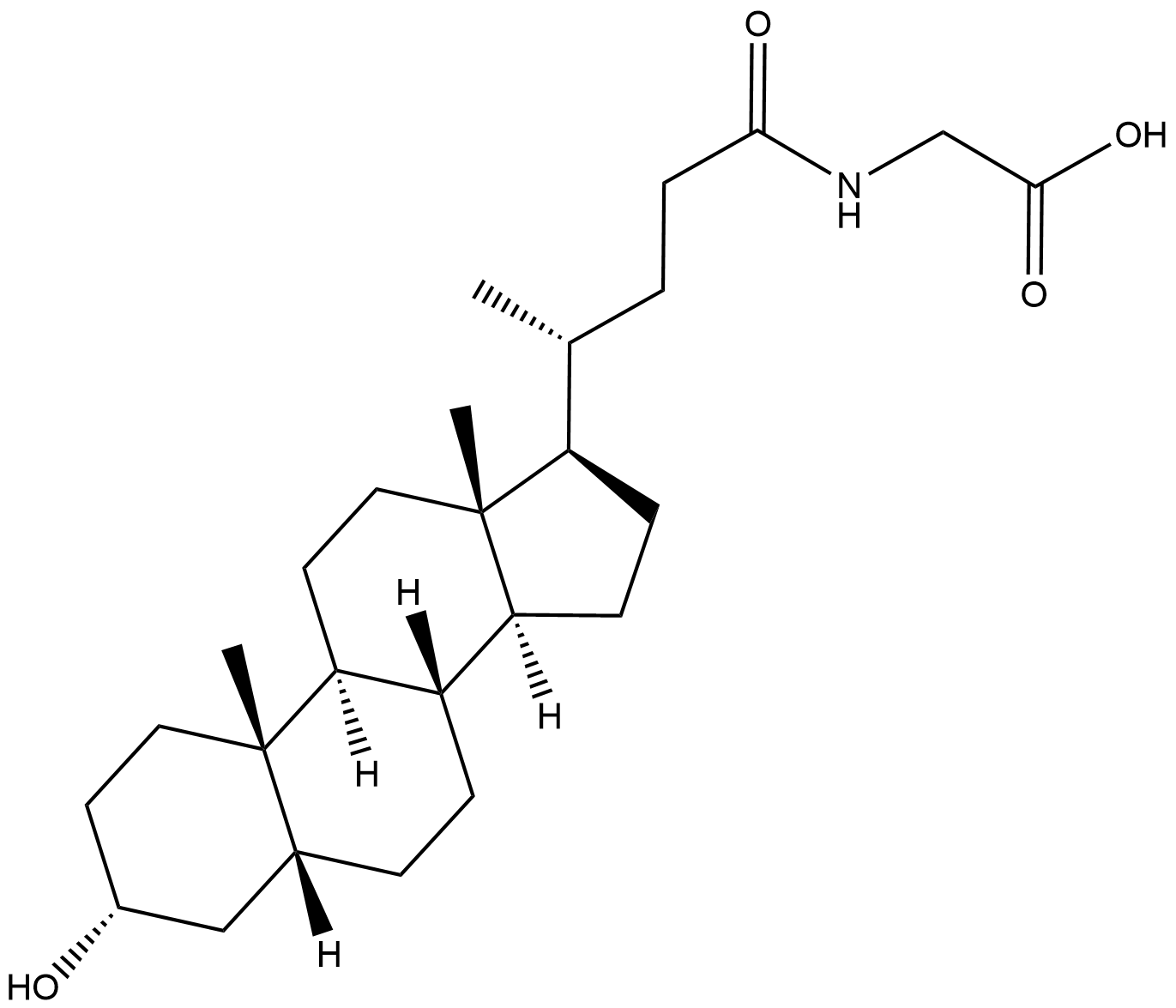
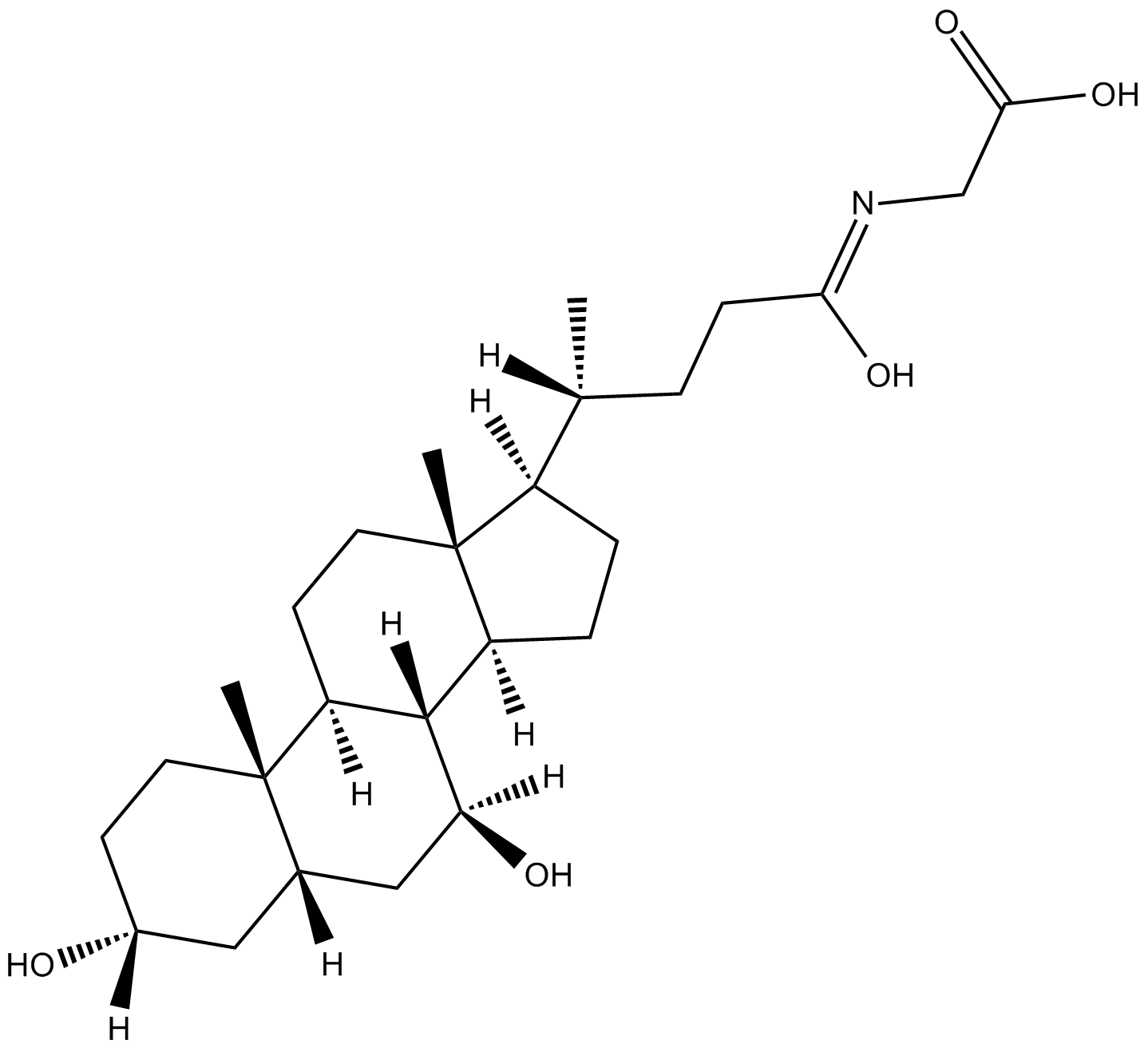
Glycolithocholic Acid (sodium salt)
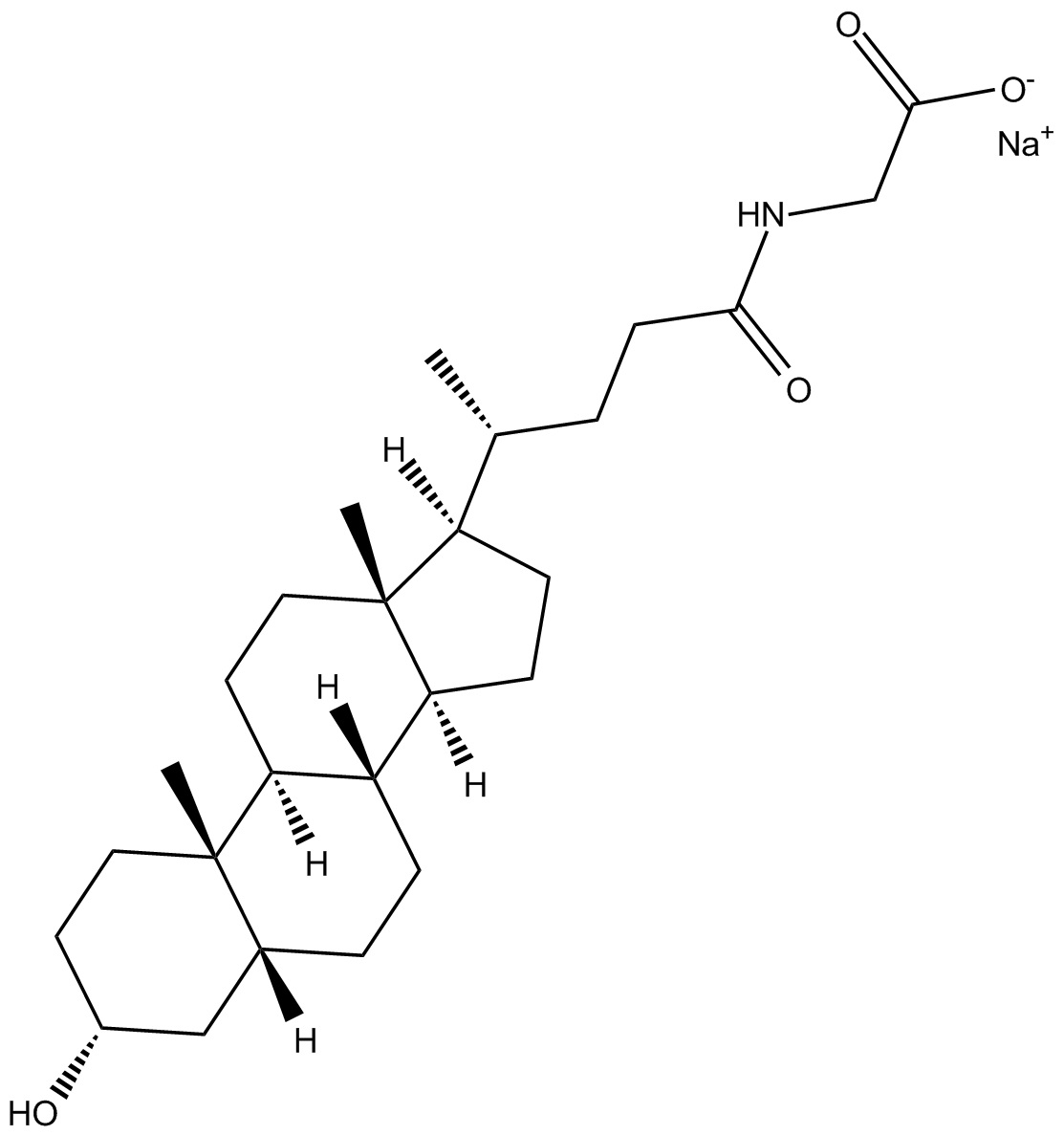





Glycolithocholic Acid (sodium salt) (CAS No.: 24404-83-9) is the sodium salt form of glycolithocholic acid, a glycine-conjugated secondary bile acid derived from lithocholic acid through microbial metabolism and subsequent hepatic conjugation, and serves as an important endogenous metabolite in bile acid homeostasis and gut–liver axis regulation. As a member of the bile acid pool, it participates in the modulation of intestinal microbiota composition and influences hepatic and gastrointestinal function through interactions with bile acid–sensitive signaling pathways, including nuclear receptors such as farnesoid X receptor and membrane receptors such as Takeda G protein-coupled receptor 5, thereby contributing to the regulation of lipid metabolism, inflammatory responses, and epithelial barrier integrity. Altered levels of glycolithocholic acid have been associated with pathological conditions including ulcerative colitis, non-alcoholic steatohepatitis, and primary sclerosing cholangitis, supporting its utility as a biomarker and mechanistic probe in disease-related metabolic and inflammatory studies. Preclinical observations indicate that its endogenous levels can be modulated by dietary interventions, peptide hormone analogs, and age-related physiological changes, highlighting its responsiveness to metabolic and endocrine cues. In vitro and in vivo investigations typically employ this compound within concentration ranges consistent with bile acid signaling studies, often spanning low micromolar to higher physiological levels depending on the experimental system, and it is widely used in cell-based assays, microbiome-related studies, and animal models to explore bile acid–mediated signaling, hepatobiliary function, and therapeutic target discovery in metabolic and inflammatory diseases.
| Physical Appearance | A solid |
| Storage | -20°C |
| M.Wt | 455.61 |
| Cas No. | 24404-83-9 |
| Formula | C26H42NNaO4 |
| Synonyms | GLCA; Lithocholylglycine |
| Solubility | ≥12.23 mg/mL in DMSO; ≥9.92 mg/mL in EtOH with ultrasonic; insoluble in H2O |
| Chemical Name | sodium 2-((R)-4-((3R,5R,8R,9S,10S,13R,14S,17R)-3-hydroxy-10,13-dimethylhexadecahydro-1H-cyclopenta[a]phenanthren-17-yl)pentanamido)acetate |
| Canonical SMILES | C[C@H](CCC(NCC([O-])=O)=O)[C@@]1([H])CC[C@@]2([H])[C@]3([H])CC[C@]4([H])C[C@H](O)CC[C@]4(C)[C@@]3([H])CC[C@@]21C.[Na+] |
| Shipping Condition | Small Molecules with Blue Ice, Modified Nucleotides with Dry Ice. |
| General tips | We do not recommend long-term storage for the solution, please use it up soon. |