


Apoptosis
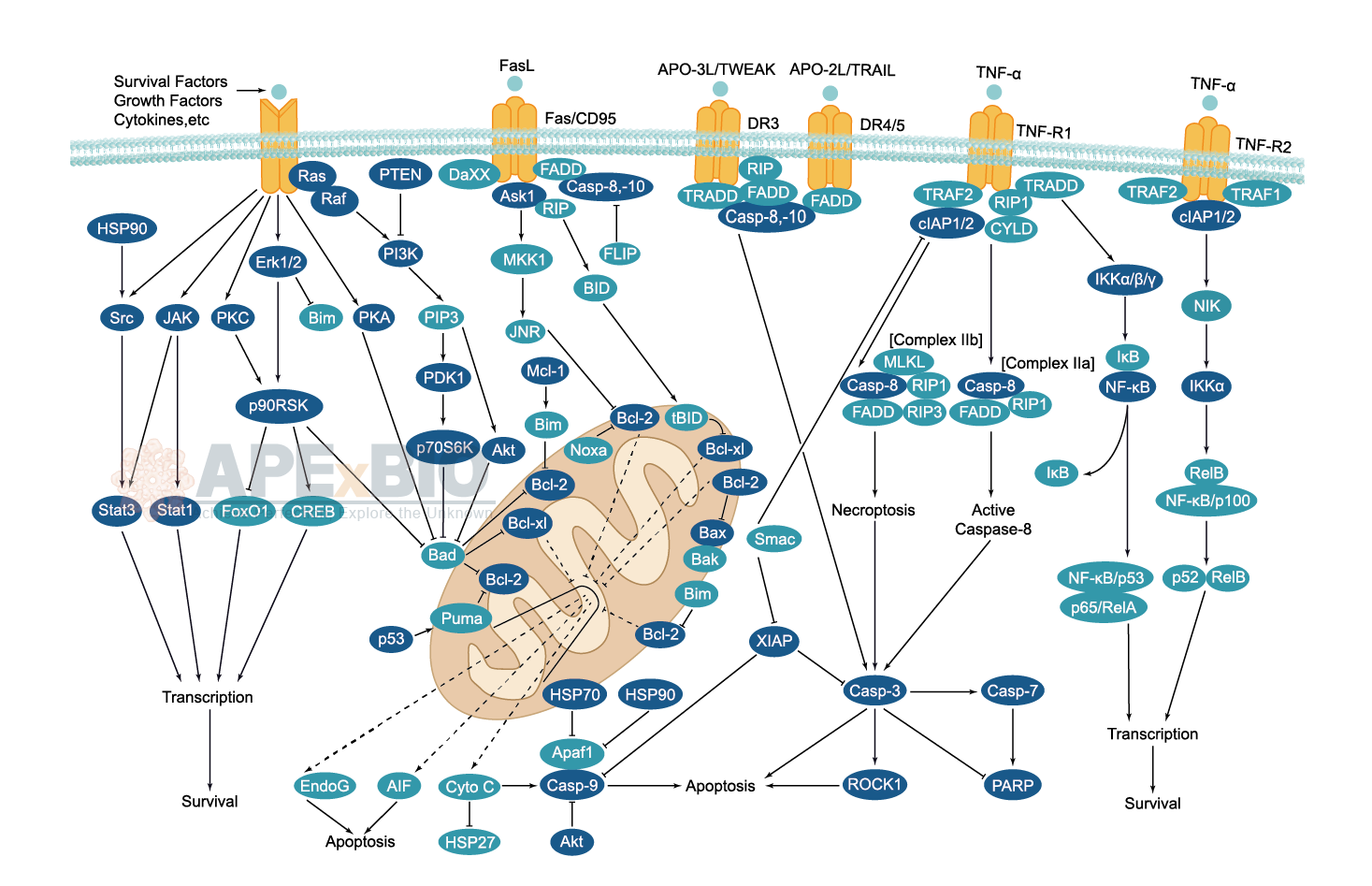
Apoptosis, also known as programmed cell death, is rigorously controlled process of cell death that leads to phagocytosis of unwanted cell. It is triggered after sufficient cellular damage and activated through extrinsic or intrinsic pathways. The intrinsic pathway is mainly occurs via release of cytochrome c from the mitochondria and regulates mitochondrial outer membrane permeabilization by Bcl-2 family proteins. The extrinsic pathway is induced by ligand binding to death receptor, such as Fas, TNFαR, DR3, DR4, and DR5. Caspases then cleave target proteins and nuclear lamins to promote DNA degradation, resulting apoptotic cells undergo phagocytosis. In addition, p53 has the ability to activate intrinsic and extrinsic pathways of apoptosis by inducing transcription of several proteins like Puma, Bid, Bax, TRAIL-R2, and CD95.
Some Inhibitors of apoptosis proteins (IAPs), such as XIAP/BIRC4 and Bruce/BIRC6, can block casapse activity through direct binding, while other IAPs, such as cIAP1/BIRC2, cIAP2/BIRC3, act as ubiquitin ligases that target caspases for ubiquitin-mediated degradation. Apoptosis is essential for growth, development and aging in multicellular organisms. Any alterations or abnormalities occurring in apoptotic processes contribute to development of human diseases, including cancer.
-
 BA2859 BJE6-106Summary: BJE6-106 (B106) is a potent and selective inhibitor.
 -
BA2861 InecalcitolSummary: Inecalcitol (TX522), a unique vitamin D3 analog, is an orally active vitamin D receptor agonist.
-
BA2862 ForodesineSummary: Forodesine (BCX-1777) is a potent, orally active purine nucleoside phosphorylase inhibitor with values ranging from 0.48 to 1.57 nM in humans, mice, rats, monkeys and dogs.
-
BA2863 WDR5-IN-1Summary: WDR5-IN-1 is a potent and selective WD repeat structural domain 5 inhibitor.
-
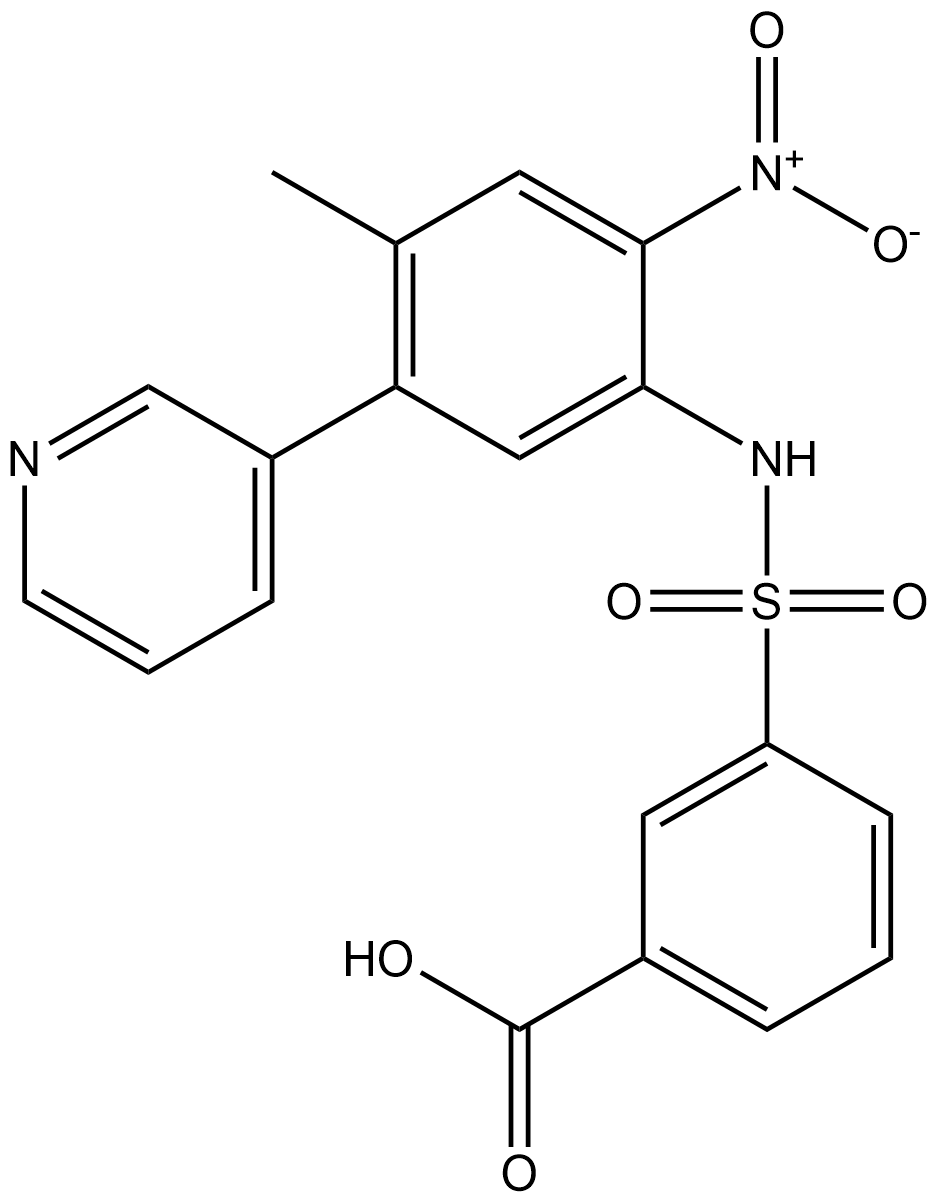 BA2864 AlofanibSummary: Alofanib (RPT835) is a potent and selective variant inhibitor of fibroblast growth factor receptor 2.
 -
BA2865 KY-05009Summary: KY-05009 is an ATP-competitive inhibitor.
-
BA2866 DihydrokaempferolSummary: Could be a good candidate for new anti-arthritic drugs.
-
BA2867 PrinomastatSummary: Prinomastat (AG3340) is a broad-spectrum, potent, orally active metalloproteinase inhibitor.
-
BA2868 TZ9Summary: TZ9 is a selective inhibitor.
-
BA2869 VII-31Summary: VII-31 is a NEDDylation pathway activator that inhibits tumors in vitro and in vivo.