(S)-Glutamic acid
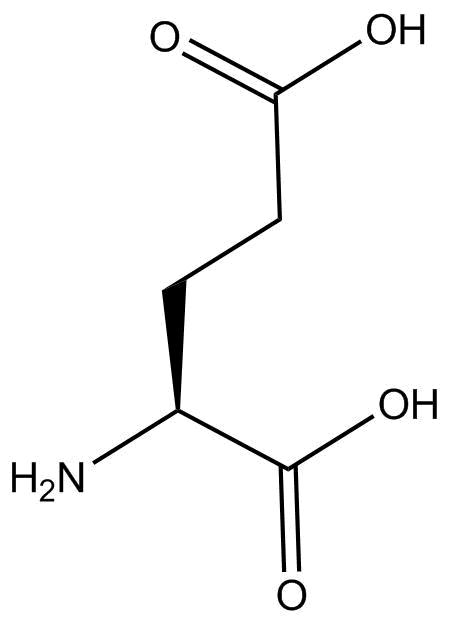





(S)-Glutamic acid (CAS No.: 56-86-0) is an endogenous excitatory amino acid neurotransmitter widely distributed in the central nervous system and commonly used as a reference compound in neurobiological and pharmacological research. It functions as a non-selective agonist at both ionotropic glutamate receptors, including NMDA, AMPA, and kainate receptors, and metabotropic glutamate receptors, thereby playing a central role in excitatory synaptic transmission and signal integration. Through receptor-mediated mechanisms, it facilitates neurotransmitter release, including the modulation of dopamine release from dopaminergic nerve terminals, and contributes to synaptic plasticity and neuronal communication. In vitro, its activity is typically observed across low micromolar to millimolar concentration ranges depending on receptor subtype, assay system, and cellular context. (S)-Glutamic acid is extensively utilized in studies investigating synaptic transmission, receptor pharmacology, neural circuitry, and the molecular mechanisms underlying neurological and neurodegenerative disorders, as well as in assay development for screening modulators of glutamatergic signaling. Experimental concentrations and conditions vary according to specific cell-based assays or in vivo models designed to probe excitatory neurotransmission and receptor function.
| Physical Appearance | Solid |
| Storage | -20°C |
| M.Wt | 147.13 |
| Cas No. | 56-86-0 |
| Formula | C5H9NO4 |
| Solubility | ≥6.25mg/mL in H2O need ultrasonic;≥2mg/mL in DMSO ultrasonic and warming and heat to 60°C |
| Chemical Name | L-glutamic acid |
| Canonical SMILES | OC(CC[C@@H](C(O)=O)N)=O |
| Shipping Condition | Small Molecules with Blue Ice, Modified Nucleotides with Dry Ice. |
| General tips | We do not recommend long-term storage for the solution, please use it up soon. |