Aucubin
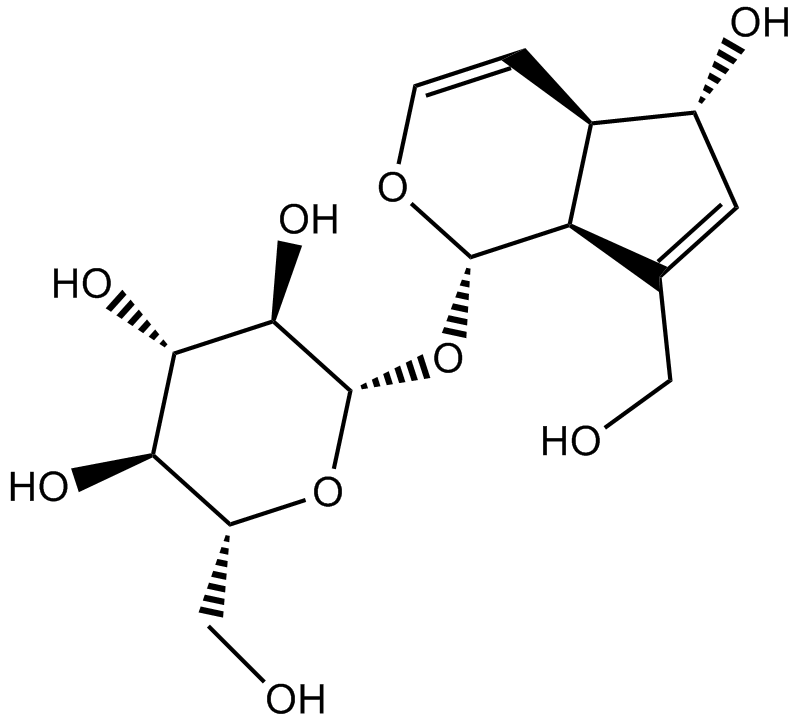
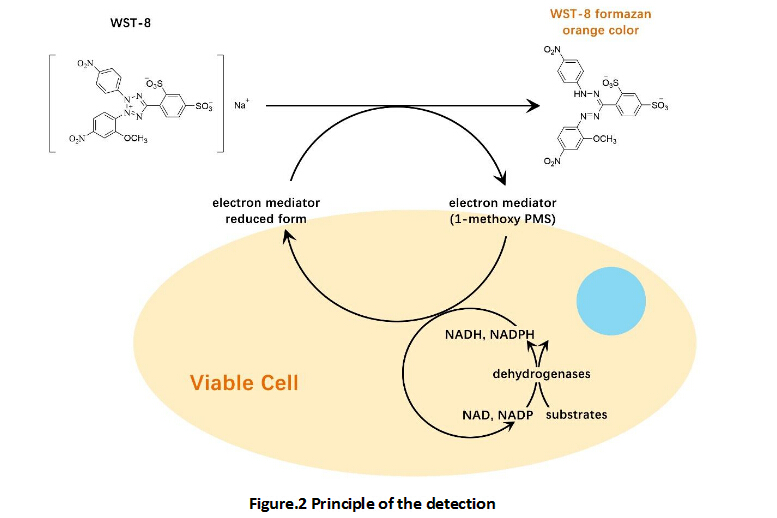
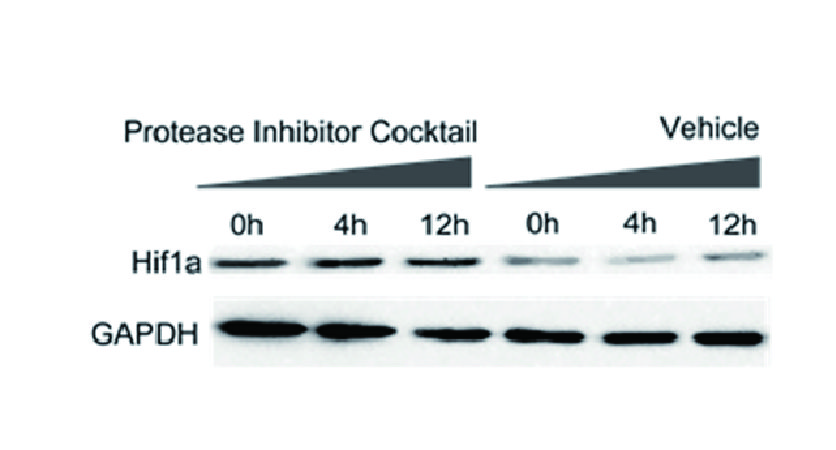
Aucubin (CAS No.: 479-98-1) is a naturally occurring iridoid glycoside isolated from medicinal plants such as Eucommia ulmoides, Plantago species, and Rehmannia, and is widely studied for its pleiotropic pharmacological properties in biomedical research and drug discovery. As a bioactive natural product, aucubin exhibits broad-spectrum activities including antioxidant, anti-inflammatory, antimicrobial, anti-fibrotic, hepatoprotective, neuroprotective, osteoprotective, and anti-aging effects, positioning it as a valuable candidate for investigating mechanisms of chronic disease modulation. Mechanistically, aucubin has been shown to regulate inflammatory signaling pathways by suppressing pro-inflammatory cytokine release, including inhibition of IgE-mediated IL-6 and TNF-α secretion in mast cells at low microgram per milliliter concentrations, and to attenuate oxidative stress through reduction of reactive oxygen species and lipid peroxidation markers. It also modulates extracellular matrix remodeling via downregulation of matrix metalloproteinases and fibrotic mediators such as TGF-β1 and α-smooth muscle actin, supporting its role in fibrosis-related studies. Notably, aucubin can cross the blood-brain barrier and demonstrates neuroprotective and neuromodulatory effects, including anti-anxiety and antidepressant-like activities, as well as enhancement of neuronal survival in disease models, highlighting its relevance in central nervous system research. In vitro and in vivo studies further indicate efficacy in models of metabolic dysfunction, pulmonary fibrosis, and UV-induced cellular damage, typically within low microgram per milliliter ranges in cell-based assays and milligram per kilogram dosing in animal studies, depending on experimental design. Owing to its diverse biological activities and multi-target modulation, aucubin is frequently utilized in pharmacological screening, inflammation and oxidative stress research, and studies of neurodegenerative and fibrotic diseases; for optimal stability, the compound should be stored in a sealed, cool, and dry environment.
| Physical Appearance | A solid |
| Storage | -20°C |
| M.Wt | 346.33 |
| Cas No. | 479-98-1 |
| Formula | C15H22O9 |
| Solubility | ≥34.6 mg/mL in DMSO; insoluble in EtOH; ≥26.2 mg/mL in H2O |
| Chemical Name | (2S,3R,4S,5S,6R)-2-[[(1S,4aR,5S,7aS)-5-hydroxy-7-(hydroxymethyl)-1,4a,5,7a-tetrahydrocyclopenta[c]pyran-1-yl]oxy]-6-(hydroxymethyl)oxane-3,4,5-triol |
| Canonical SMILES | O[C@H]([C@H]1O)[C@H](O[C@H]2[C@H](C(CO)=C[C@H]3O)[C@H]3C=CO2)O[C@H](CO)[C@H]1O |
| Shipping Condition | Small Molecules with Blue Ice, Modified Nucleotides with Dry Ice. |
| General tips | We do not recommend long-term storage for the solution, please use it up soon. |