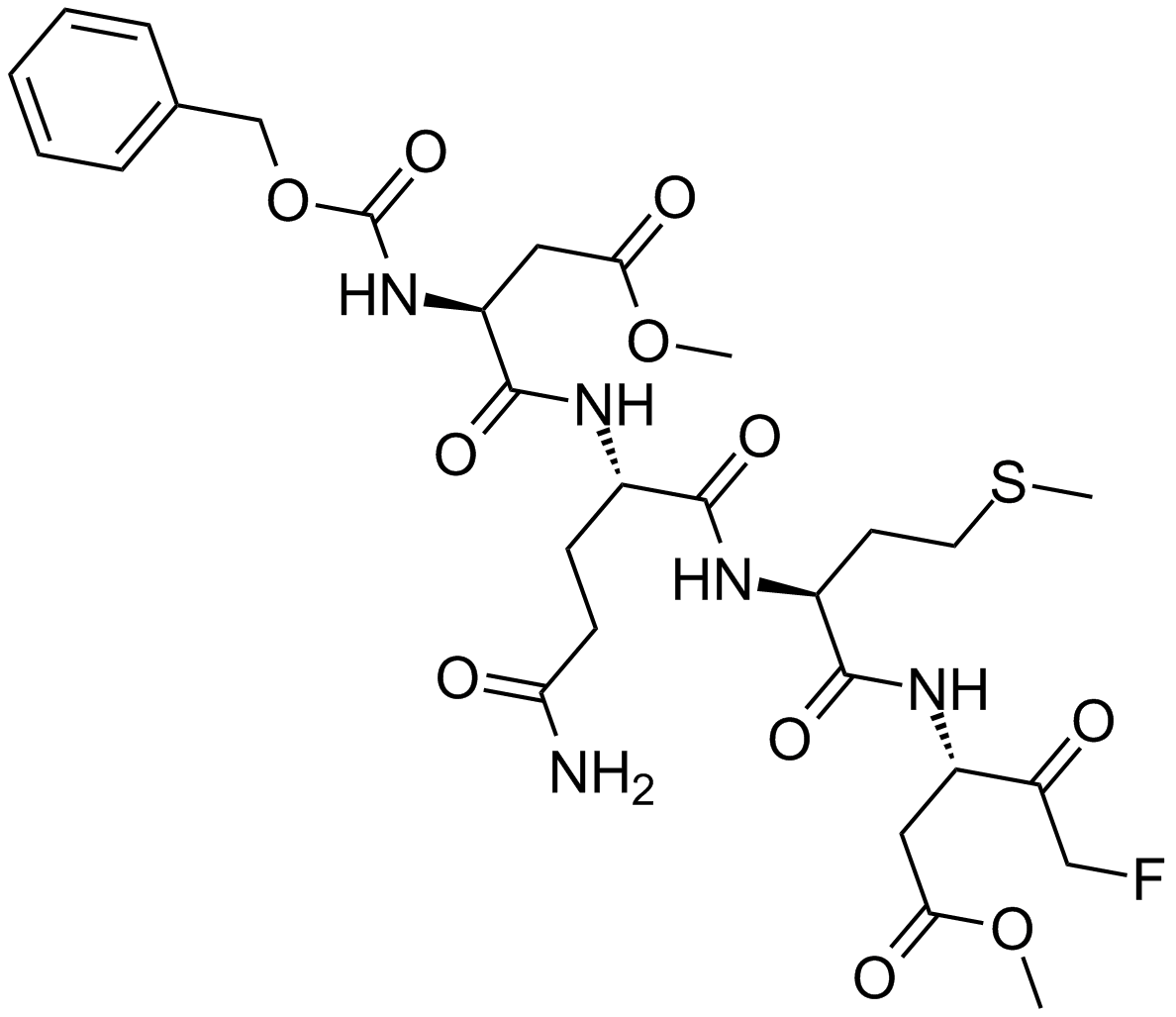
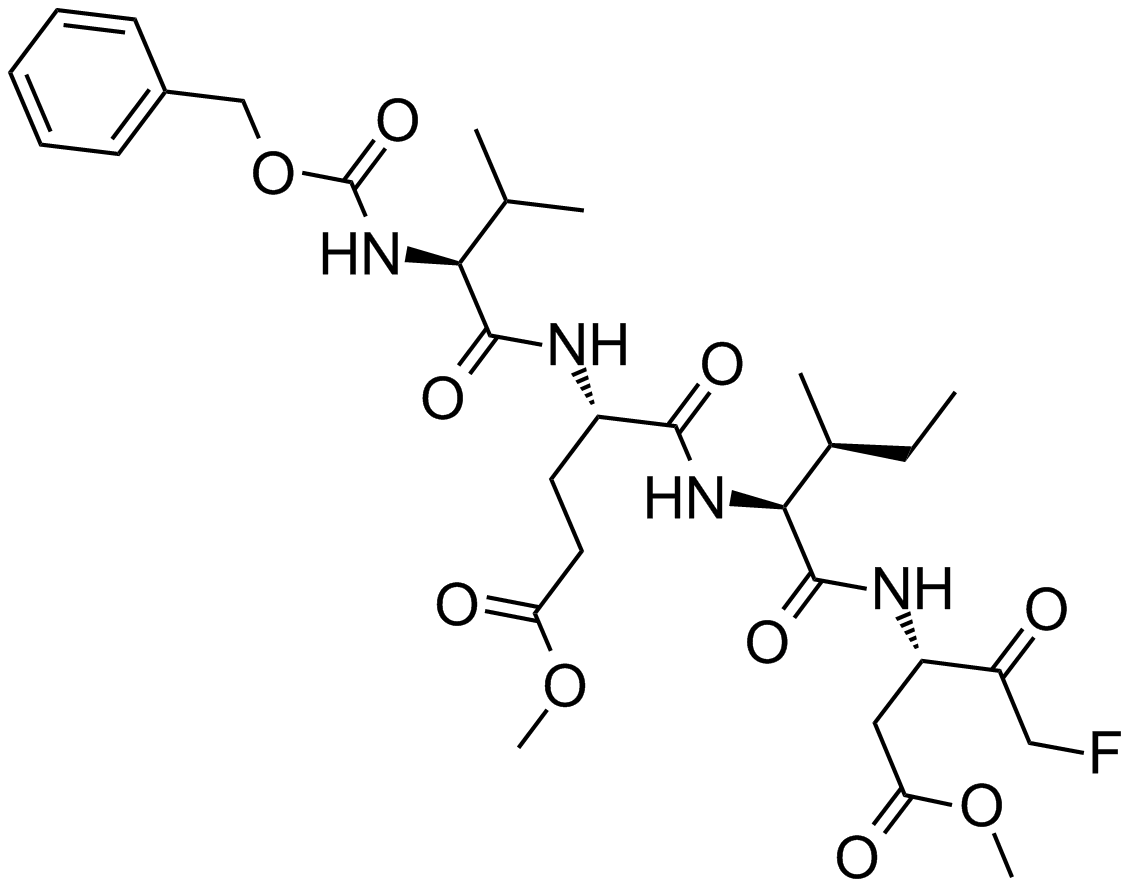
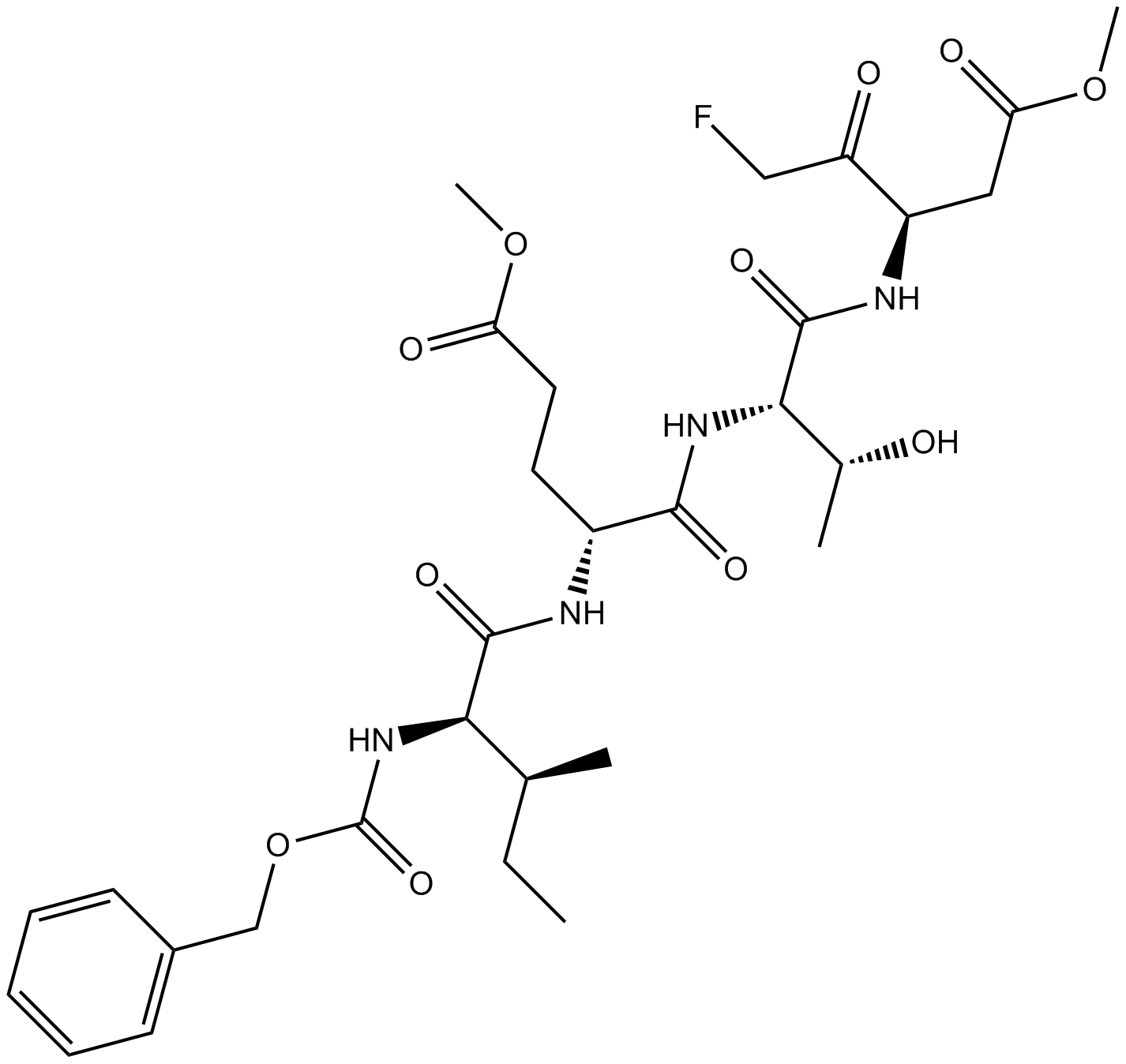
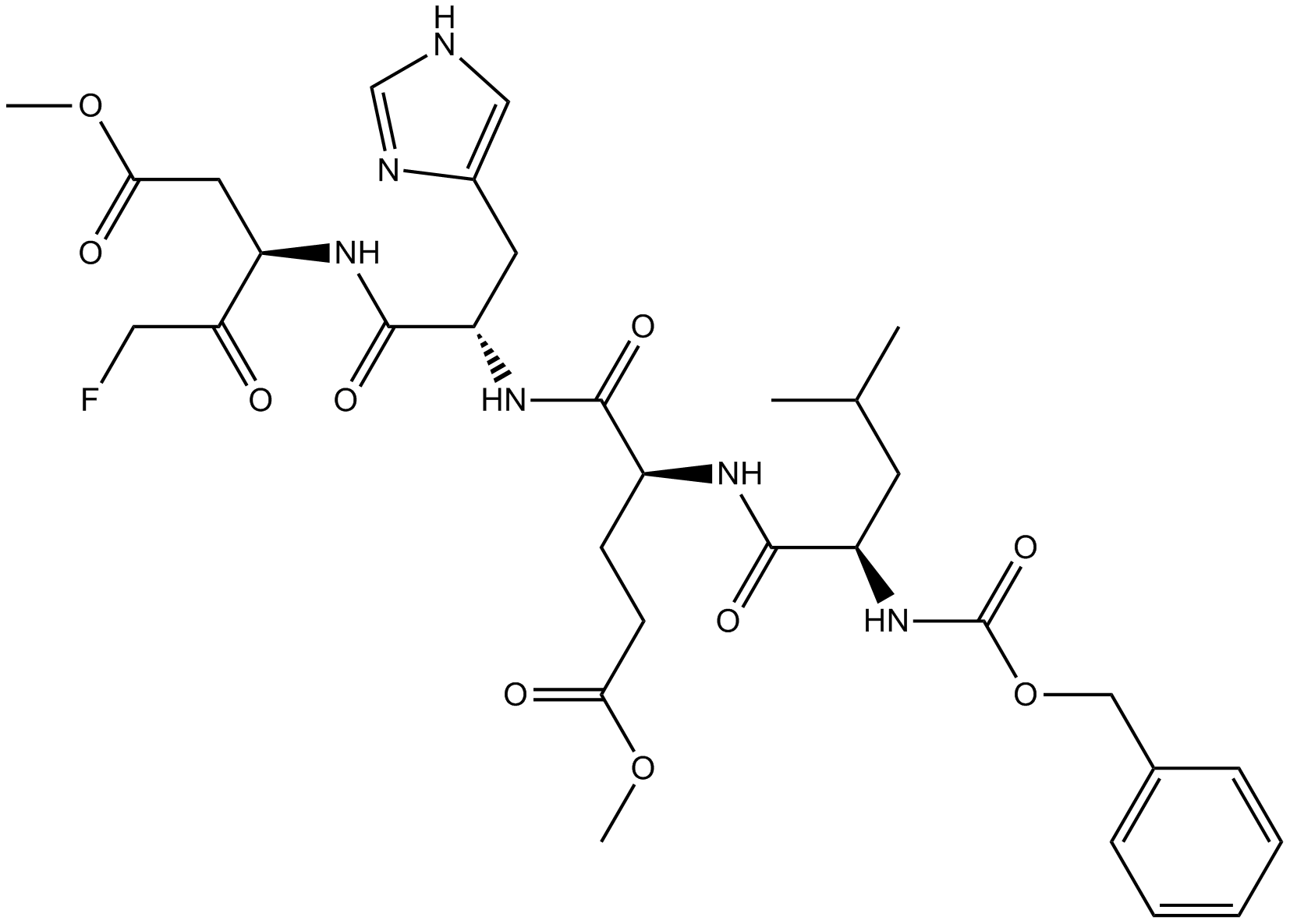
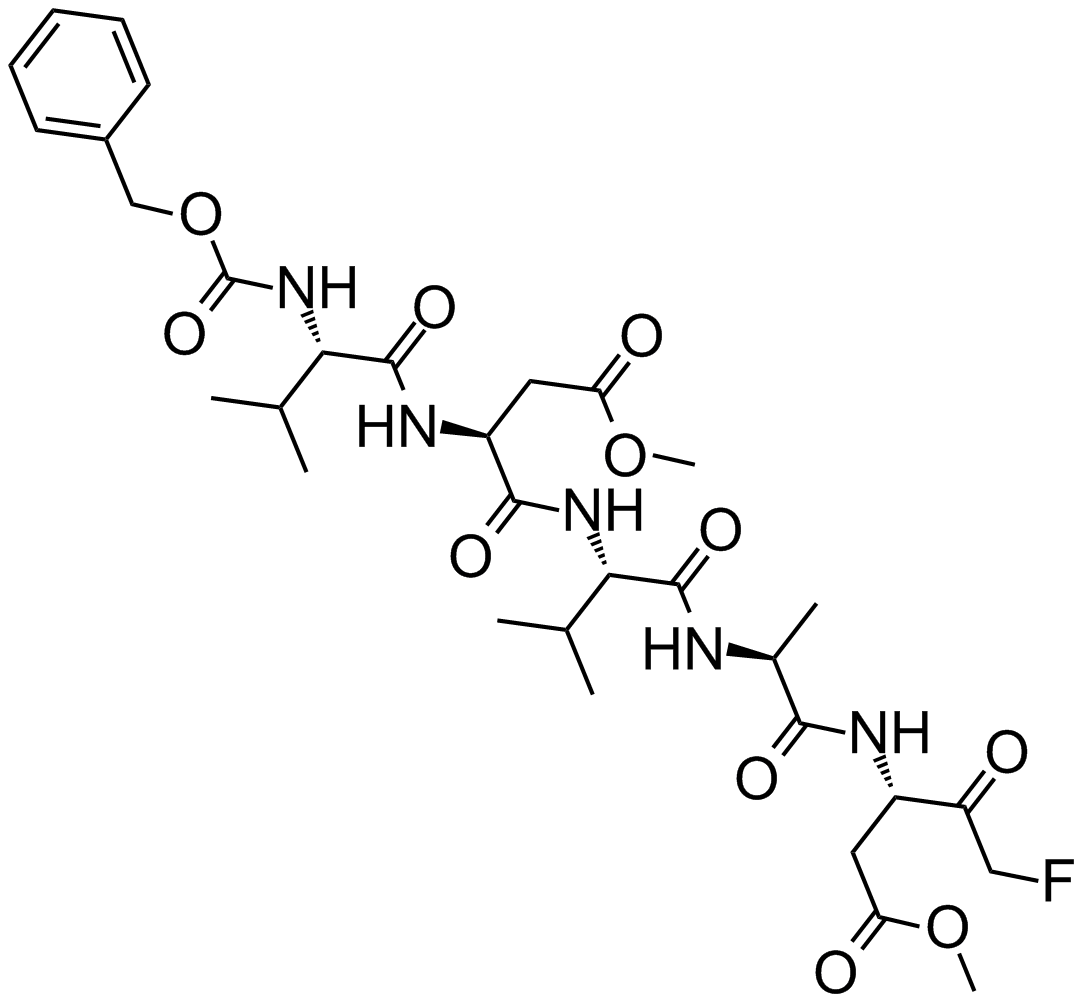
Z-VDVAD-FMK
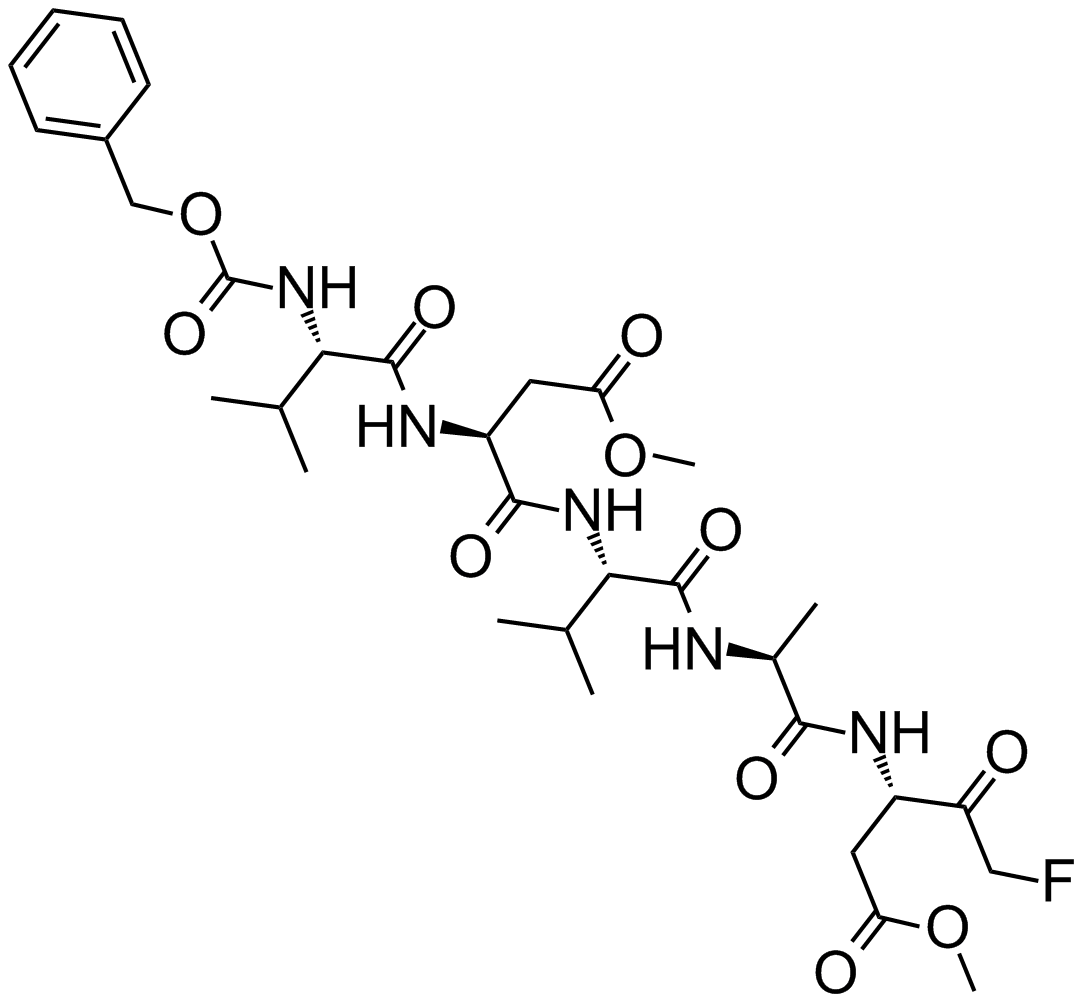
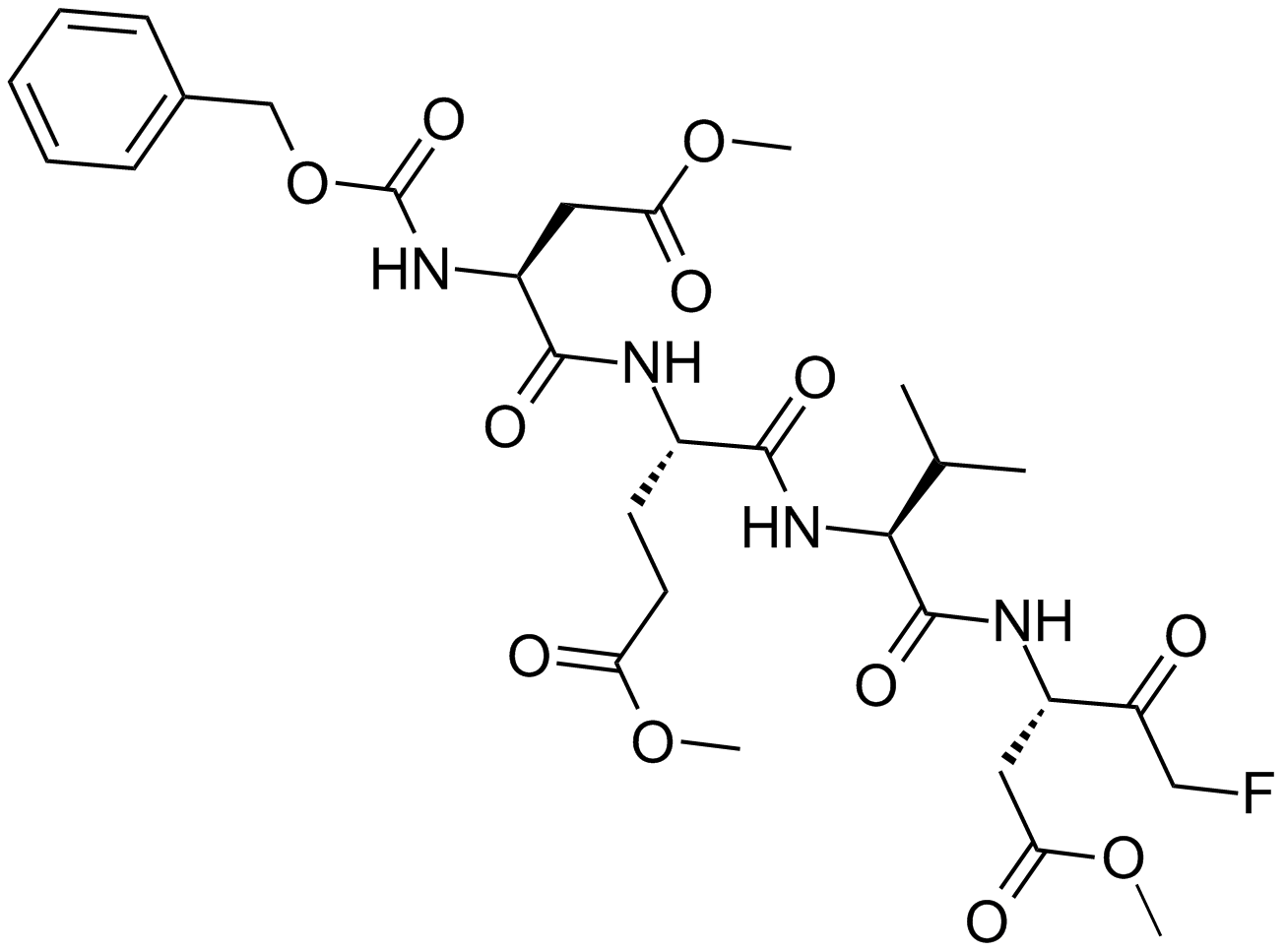
Z-VDVAD-FMK (CAS: 210344-92-6) is an irreversible, cell-permeable inhibitor that primarily targets caspase-2, with additional inhibitory activity against caspases-3 and -7. It acts by covalently binding to the active site cysteine of caspase enzymes, thereby blocking their proteolytic activity and disrupting downstream apoptotic signaling [3].
Functional studies have demonstrated the critical role of caspase-2 in apoptosis regulation. In Jurkat T-lymphocytes, treatment with Z-VDVAD-FMK or stable transfection with pro-caspase-2 antisense (Casp-2/AS) rendered cells resistant to cytochrome c release induced by etoposide, indicating that caspase-2 acts upstream of mitochondrial permeabilization [1]. Consistently, suppression of pro-caspase-2 activation—either by Z-VDVAD-FMK or Casp-2/AS—attenuated cytochrome c release and other apoptotic hallmarks during etoposide-induced cell death.
Similarly, in bovine brain microvessel endothelial cells, oxyhemoglobin (OxyHb) exposure markedly increased caspase-2 and -3 activities, leading to apoptosis. Co-treatment with the caspase-2 inhibitor Z-VDVAD-FMK or the caspase-3 inhibitor Z-DEVD-FMK significantly reduced cell detachment, caspase activity, DNA fragmentation, and PARP cleavage, demonstrating that both caspase-2 and caspase-3 are essential mediators of OxyHb-induced apoptosis [2].
Moreover, the minimal-length caspase-2 inhibitor Z-VDVAD-FMK, which also inhibits caspases-3 and -7, has been shown to prevent doxorubicin-induced nuclear apoptosis without completely blocking cell death, suggesting that caspase-independent mechanisms may also contribute to cytotoxicity [4].
References:
Robertson, J. D., Enoksson, M. et al. Caspase-2 Acts Upstream of Mitochondria to Promote Cytochrome c Release during Etoposide-induced Apoptosis. J. Biol. Chem. 277: 29803–29809 (2002).
Meguro, T., Chen, B. et al. Caspase Inhibitors Attenuate Oxyhemoglobin-Induced Apoptosis in Endothelial Cells. Stroke 32: 561–566 (2001).
Talanian, R. V. et al. Substrate Specificity of Caspase Family Proteases. J. Biol. Chem. 272: 9677–9682 (1997).
Gamen, S. et al. Doxorubicin Treatment Activates a Z-VAD-Sensitive Caspase, Which Causes Δψm Loss, Caspase-9 Activity, and Apoptosis in Jurkat Cells. Exp. Cell Res. 258: 223 (2000).
- 1. Jie Li, Haicheng Lin, et al. "3A and 2B proteins of SVA play chess game with host restriction factor DDX23 by apoptotic pathway." J Virol. 2025 Oct 23;99(10):e0076125. PMID: 40956085
- 2. Ravi Padia, Lei Sun, et al. "HOXC8 impacts lung tumorigenesis by preventing pyroptotic cell death through the suppression of caspase-1 expression." Cell Death Dis. 2025 Jul 23;16(1):552. PMID: 40701951
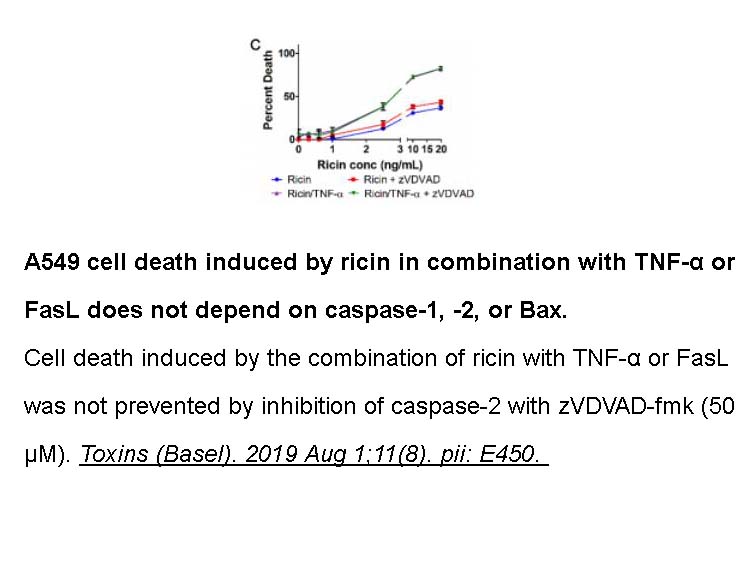
- 3. Hodges AL, Kempen CG, et al. "TNF Family Cytokines Induce Distinct Cell Death Modalities in the A549 Human Lung Epithelial Cell Line when Administered in Combination with Ricin Toxin." Toxins (Basel). 2019 Aug 1;11(8). pii: E450 PMID: 31374990
| Storage | Store at -20°C |
| M.Wt | 695.73 |
| Cas No. | 210344-92-6 |
| Formula | C32H46N5O11F |
| Synonyms | Z-VDVAD-fluoromethylketone, Caspase-2 Inhibitor (fluoromethylketone),Z-Val-Asp(OMe)-Val-Ala-Asp(OMe)-FMK |
| Solubility | ≥34.8 mg/mL in DMSO; insoluble in EtOH; insoluble in H2O |
| Chemical Name | methyl (3S)-5-fluoro-3-[[(2S)-2-[[(2S)-2-[[(2S)-4-methoxy-2-[[(2S)-3-methyl-2-(phenylmethoxycarbonylamino)butanoyl]amino]-4-oxobutanoyl]amino]-3-methylbutanoyl]amino]propanoyl]amino]-4-oxopentanoate |
| Canonical SMILES | CC(C)C(C(=O)NC(C)C(=O)NC(CC(=O)OC)C(=O)CF)NC(=O)C(CC(=O)OC)NC(=O)C(C(C)C)NC(=O)OCC1=CC=CC=C1 |
| Shipping Condition | Small Molecules with Blue Ice, Modified Nucleotides with Dry Ice. |
| General tips | We do not recommend long-term storage for the solution, please use it up soon. |
| Cell experiment [1,2]: | |
|
Cell line |
Jurkat T-lymphocytes |
|
Preparation method |
The solubility of this compound in DMSO is >10 mM. General tips for obtaining a higher concentration: Please warm the tube at 37 ℃ for 10 minutes and/or shake it in the ultrasonic bath for a while. Stock solution can be stored below -20℃ for several months. |
|
Reaction Conditions |
25 or 100 μM; 1 or 22 h |
|
Applications |
Jurkat T-lymphocytes pretreated with 25 μM Z-VDVAD-FMK for 1 h, or stably transfected with pro-caspase-2 antisense (Casp-2/AS) are refractory to cytochrome c release stimulated by etoposide. According to the MTT-assay, Jurkat cells treated with 100 μM Z-VDVAD-FMK for 22 h prevented doxorubicin-induced nuclear apoptosis, but not cell death. |
|
References: [1]. J. D. Robertson, M. Enoksson et al. Caspase-2 Acts Upstream of Mitochondria to Promote Cytochrome c Release during Etoposide-induced Apoptosis. The Journal of Biological Chemistry. 277, :29803–29809, 2002. [2]. Gamen et al (2000) Doxorubicin treatment activates a Z-VAD-sensitive caspase, which causes Dym loss, caspase-9 activity, and apoptosis in Jurkat cells. Exp.Cell Res. 258 223. |
|
| Irreversible caspase-2 inhibitor. Attenuates oxyhemoglobin-induced cleavage of PARP and apoptosis in endothelial cells. | ||||||
| Targets | Caspase-2 | |||||
| IC50 | ||||||
Quality Control & MSDS
- View current batch:
Chemical structure
Related Biological Data