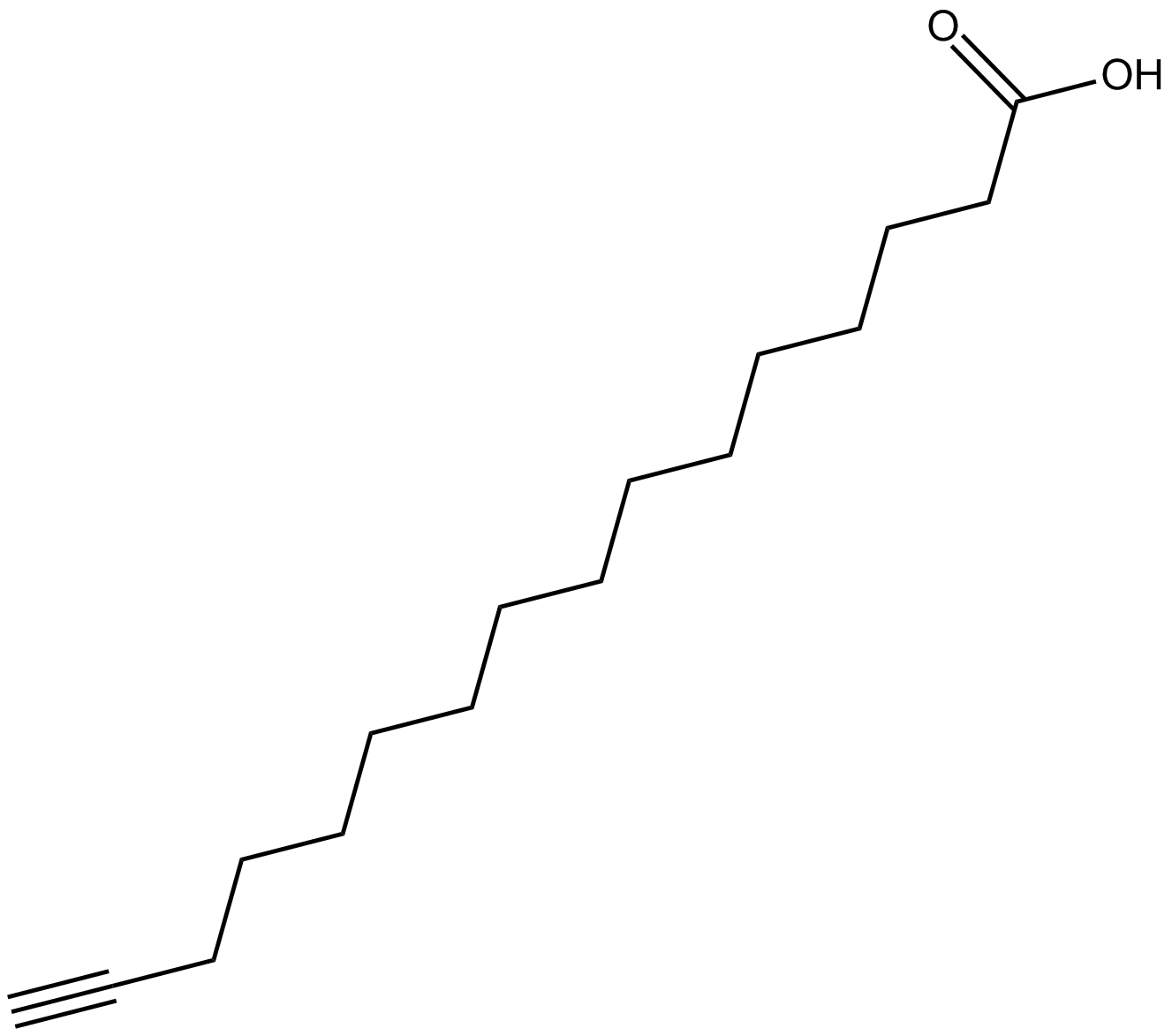
TBTA
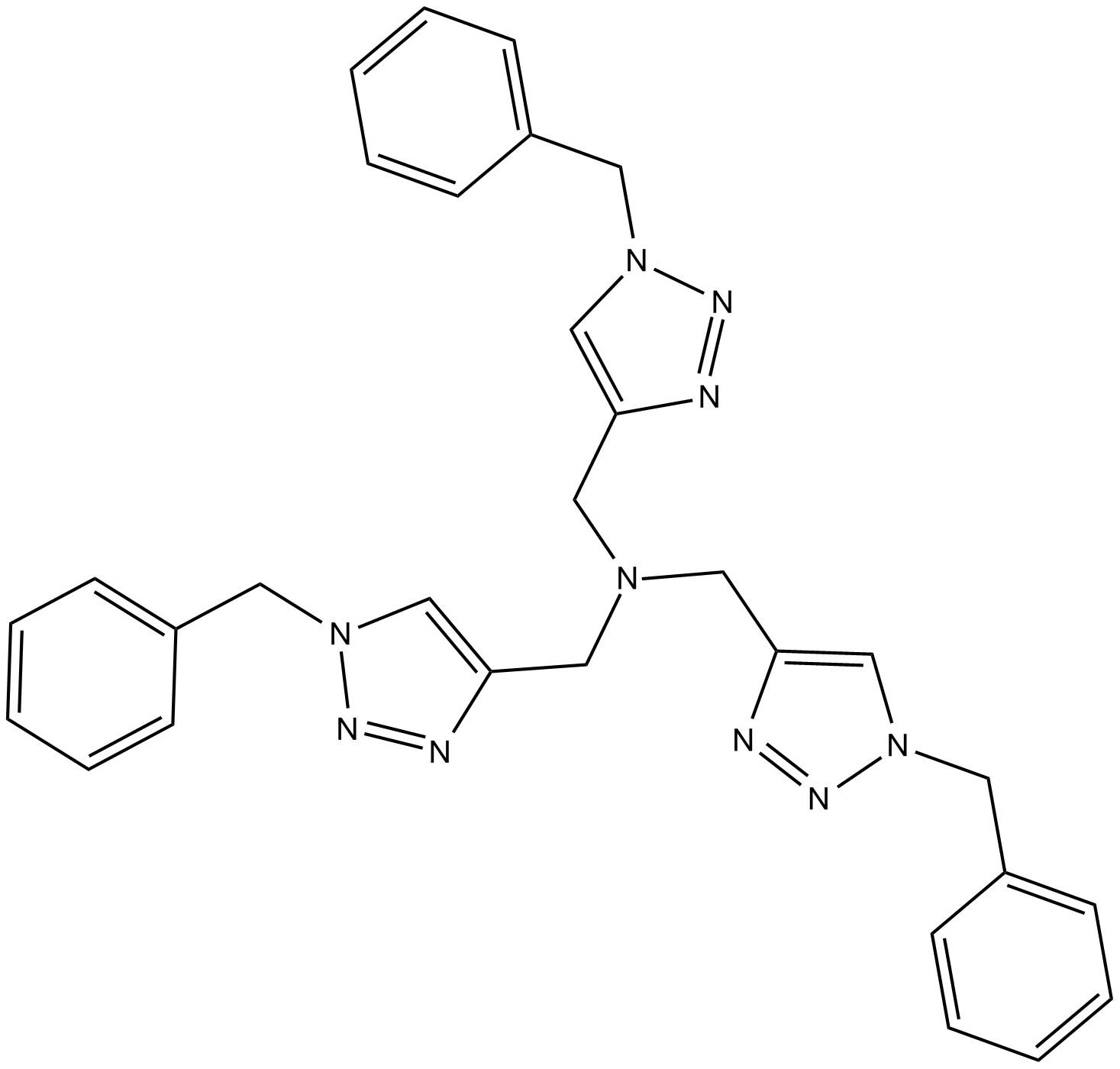
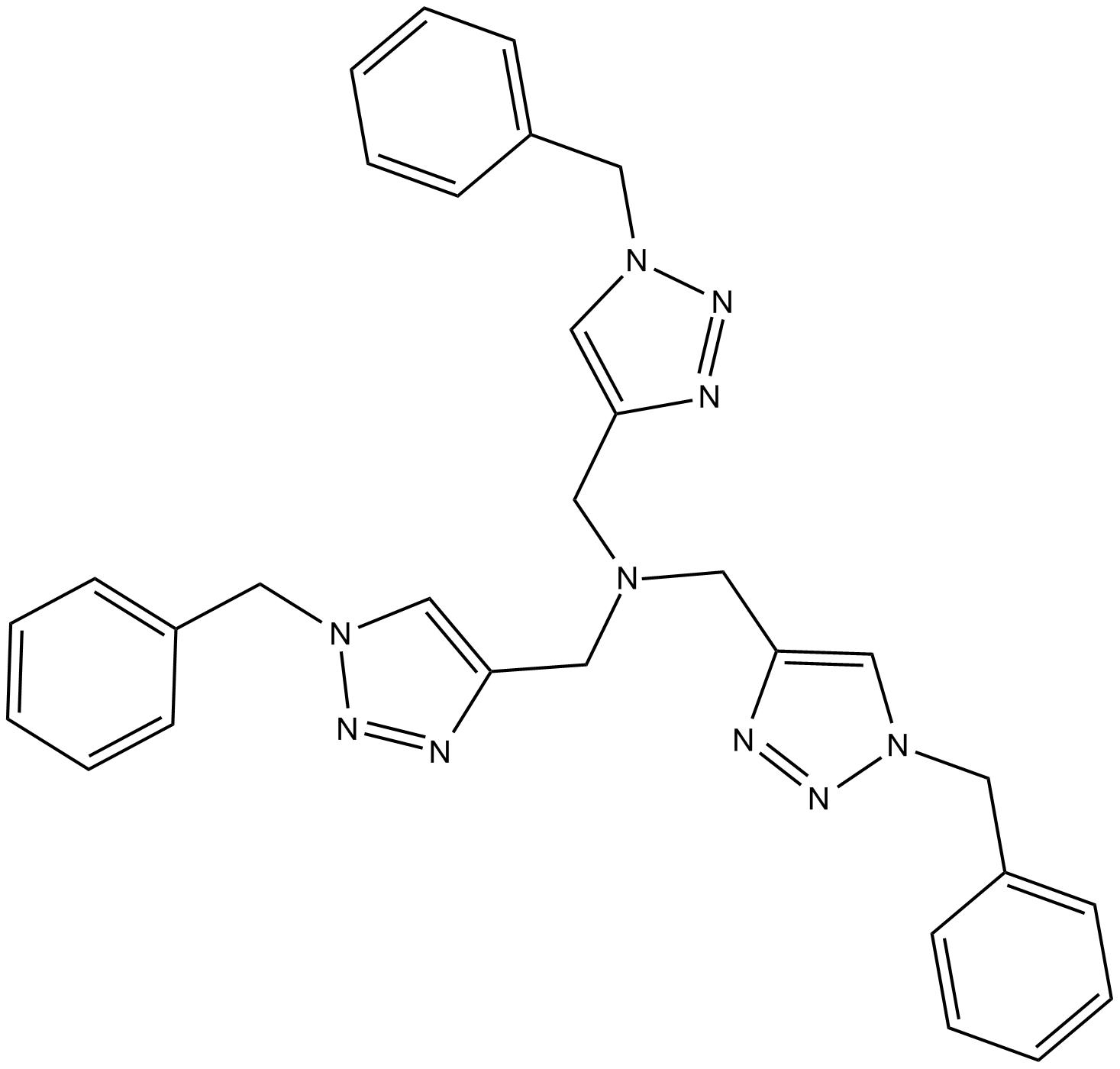
TBTA (CAS No.: 510758-28-8) is a synthetic tris(triazole)-containing tertiary amine ligand widely employed as a biochemical tool in proteomics, chemical biology, and drug discovery research, particularly for its role in copper-catalyzed azide–alkyne cycloaddition reactions central to click chemistry. By efficiently complexing and stabilizing copper(I), TBTA enhances reaction kinetics and selectivity, enabling precise and robust labeling of biomolecules such as proteins and enzymes in complex biological systems. This selective tagging capability facilitates the study of protein function, enzyme activity, and dynamic cellular processes, including signal transduction and metabolic pathway regulation. TBTA is commonly used in vitro in biochemical assays and cell-based models to improve detection sensitivity, molecular tracking, and isolation of labeled targets, thereby supporting high-throughput screening and mechanistic studies. While it does not directly act on canonical biological receptors or signaling pathways, its function as a catalytic ligand indirectly enables the interrogation of diverse biological networks through bioorthogonal chemistry. Experimental concentrations typically fall within low micromolar ranges, with specific usage conditions varying according to assay design and research objectives.
| Physical Appearance | A solid |
| Storage | -20°C |
| M.Wt | 530.63 |
| Cas No. | 510758-28-8 |
| Formula | C30H30N10 |
| Synonyms | Tris(benzyltriazolylmethyl)amine |
| Solubility | ≥24.75 mg/mL in DMSO; ≥8.2 mg/mL in EtOH with ultrasonic; insoluble in H2O |
| Chemical Name | tris((1-benzyl-1H-1,2,3-triazol-4-yl)methyl)amine |
| Canonical SMILES | C1(CN(CC2=CN(CC3=CC=CC=C3)N=N2)CC4=CN(CC5=CC=CC=C5)N=N4)=CN(CC6=CC=CC=C6)N=N1 |
| Shipping Condition | Small Molecules with Blue Ice, Modified Nucleotides with Dry Ice. |
| General tips | We do not recommend long-term storage for the solution, please use it up soon. |
Quality Control & MSDS
- View current batch:
Chemical structure