octadecanedioate
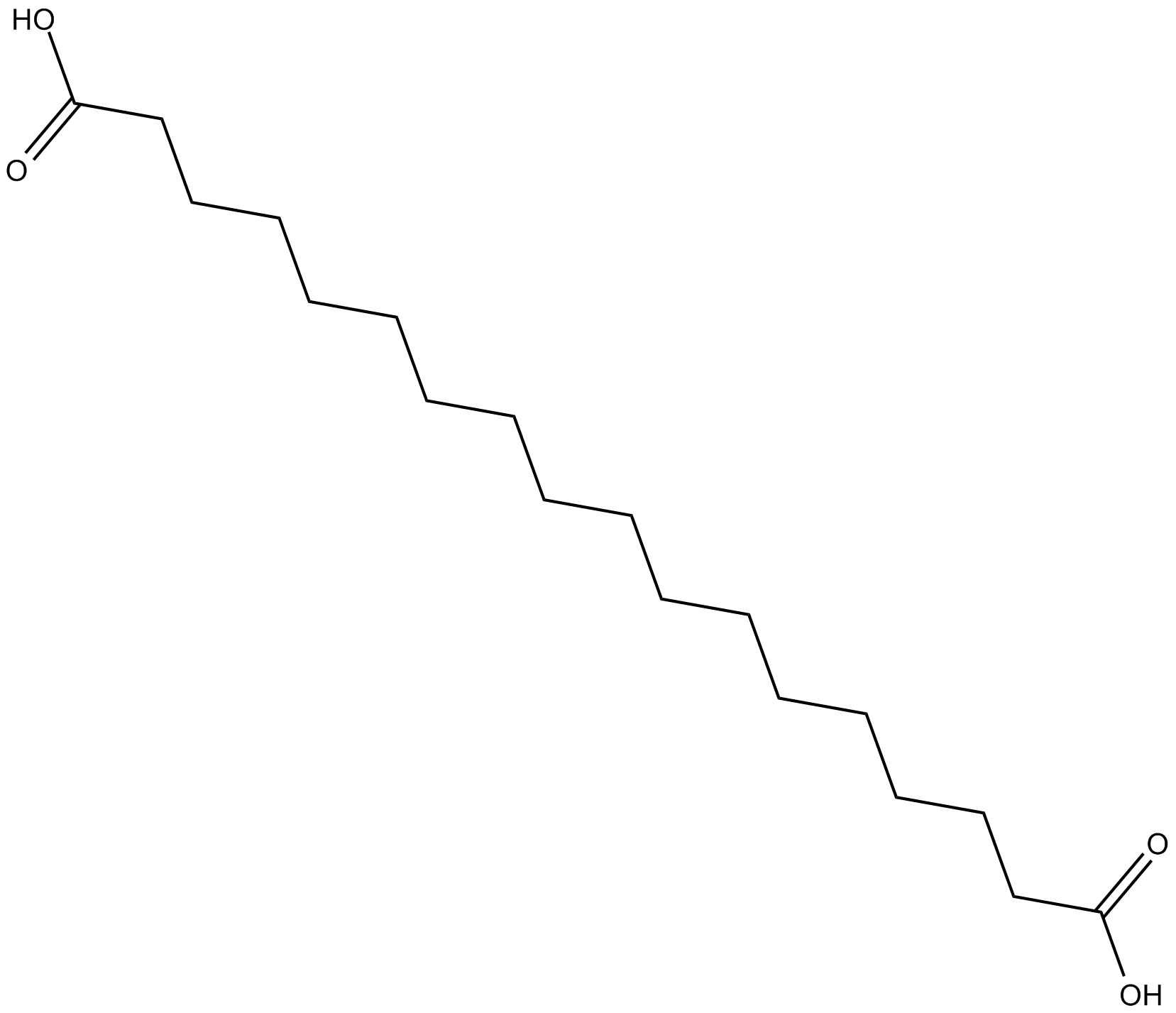
octadecanedioate (CAS No.: 871-70-5) is an endogenous long-chain dicarboxylic acid generated during fatty acid ω-oxidation and subsequent metabolic processing, representing an important intermediate in lipid catabolism. As a member of the dicarboxylic acid family, it is commonly studied in the context of mitochondrial and peroxisomal fatty acid oxidation pathways, where it reflects alterations in energy metabolism and lipid turnover. Elevated or dysregulated levels of octadecanedioate have been associated with metabolic disturbances, including conditions such as Reye’s syndrome, highlighting its utility as a biochemical marker for investigating disruptions in fatty acid oxidation and related metabolic networks. Mechanistically, it is linked to pathways governing lipid homeostasis, including β-oxidation flux and peroxisomal enzyme activity, although no single direct molecular target has been definitively established. In vitro and in vivo studies typically employ this metabolite to probe lipid metabolic flux, assess pathway modulation, and characterize disease-associated metabolic phenotypes, with experimental concentrations generally falling within low micromolar to millimolar ranges depending on the biological system and study design. Its application spans metabolomics profiling, pathway elucidation, and the evaluation of metabolic dysfunction in cell-based assays and animal models, making it a valuable tool for research in metabolic biology and drug discovery focused on lipid metabolism.
| Physical Appearance | Solid |
| Storage | -20°C |
| M.Wt | 314.46 |
| Cas No. | 871-70-5 |
| Formula | C18H34O4 |
| Solubility | insoluble in H2O; insoluble in EtOH; ≥24.45 mg/mL in DMSO |
| Chemical Name | octadecanedioic acid |
| Canonical SMILES | O=C(O)CCCCCCCCCCCCCCCCC(O)=O |
| Shipping Condition | Small Molecules with Blue Ice, Modified Nucleotides with Dry Ice. |
| General tips | We do not recommend long-term storage for the solution, please use it up soon. |