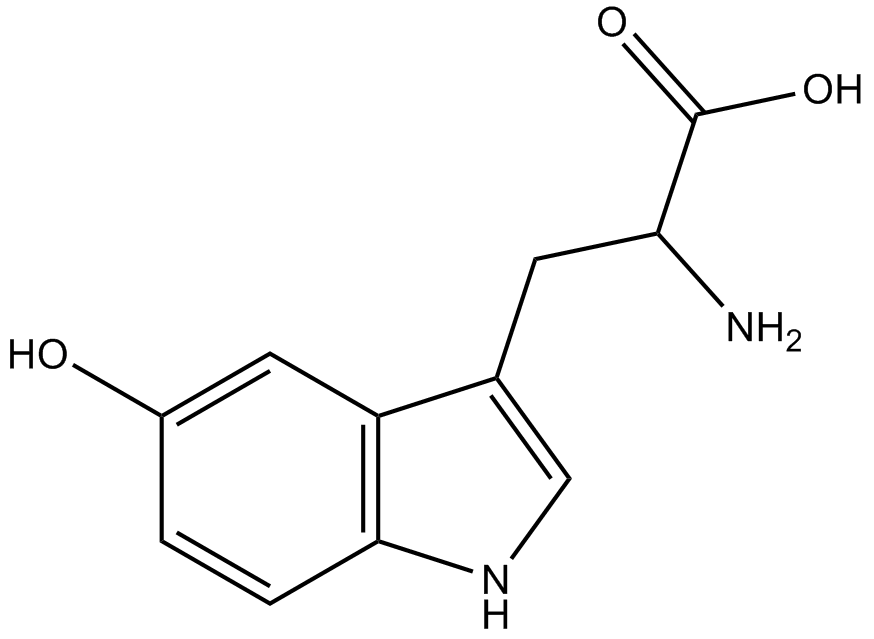
L-Tryptophan
L-Tryptophan (CAS No.: 73-22-3) is a biologically active essential amino acid widely utilized in biomedical research as a precursor for the biosynthesis of serotonin, melatonin, and vitamin B3, thereby playing a central role in neuroendocrine regulation and metabolic homeostasis. It functions as a substrate for key enzymes including tryptophan hydroxylase, indoleamine-2,3-dioxygenase, and tryptophan-2,3-dioxygenase, linking it to serotonergic signaling and the kynurenine pathway, which are critical in immune modulation, neurobiology, and cancer-related metabolic reprogramming. In addition, L-tryptophan is metabolized by gut microbiota into bioactive indole derivatives, further contributing to host–microbe interactions and intestinal physiology. Experimental studies demonstrate that L-tryptophan enhances stemness and osteogenic differentiation of bone marrow-derived mesenchymal stem cells in vitro and in vivo, while elevated concentrations can suppress cell proliferation and induce cell cycle arrest, indicating a concentration-dependent dual role in cellular regulation typically observed in the micromolar to millimolar range. In animal models, administration of L-tryptophan modulates central nervous system metabolites such as serotonin and its derivatives and has been associated with behavioral effects relevant to neuropsychiatric research. This compound is therefore extensively applied in studies of cell proliferation, stem cell differentiation, bone regeneration, neurotransmitter biosynthesis, and metabolic pathway analysis, with experimental concentrations or dosing regimens varying according to specific study designs and research objectives.
| Physical Appearance | A solid |
| Storage | -20°C |
| M.Wt | 204.23 |
| Cas No. | 73-22-3 |
| Formula | C11H12N2O2 |
| Synonyms | NSC 13119; (–)-Tryptophan |
| Solubility | insoluble in EtOH; ≥6.46 mg/mL in H2O; ≥7 mg/mL in DMSO |
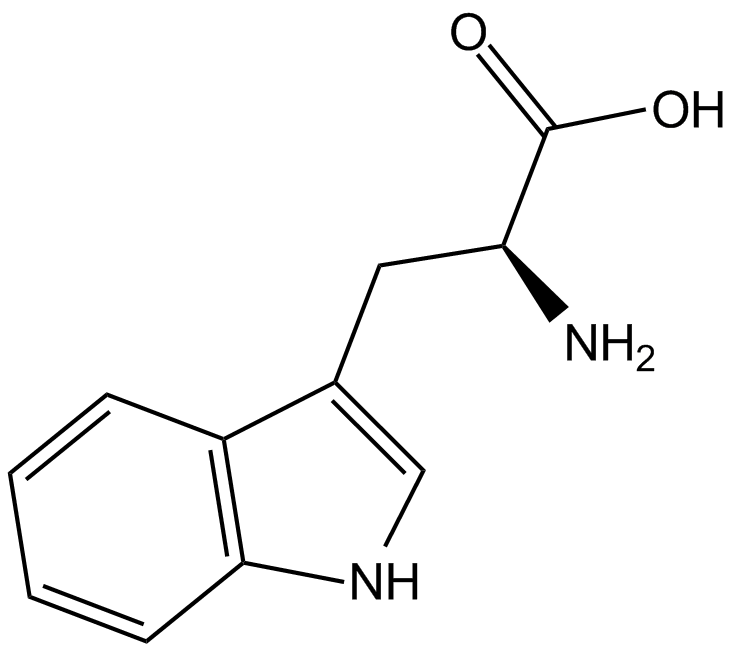
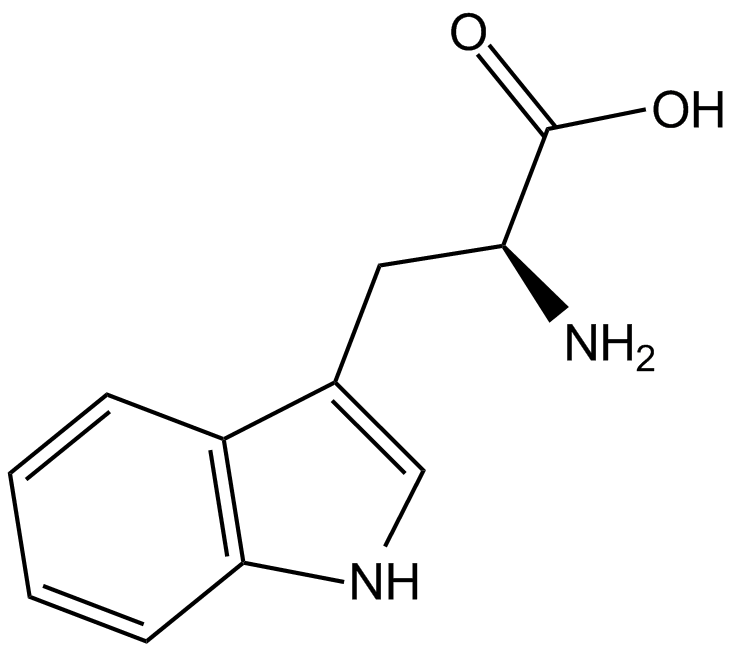
| Chemical Name | (S)-2-amino-3-(1H-indol-3-yl)propanoic acid |
| Canonical SMILES | OC([C@@H](N)CC1=CNC2=C1C=CC=C2)=O |
| Shipping Condition | Small Molecules with Blue Ice, Modified Nucleotides with Dry Ice. |
| General tips | We do not recommend long-term storage for the solution, please use it up soon. |
Quality Control & MSDS
- View current batch:
Chemical structure