Spermine tetrahydrochloride
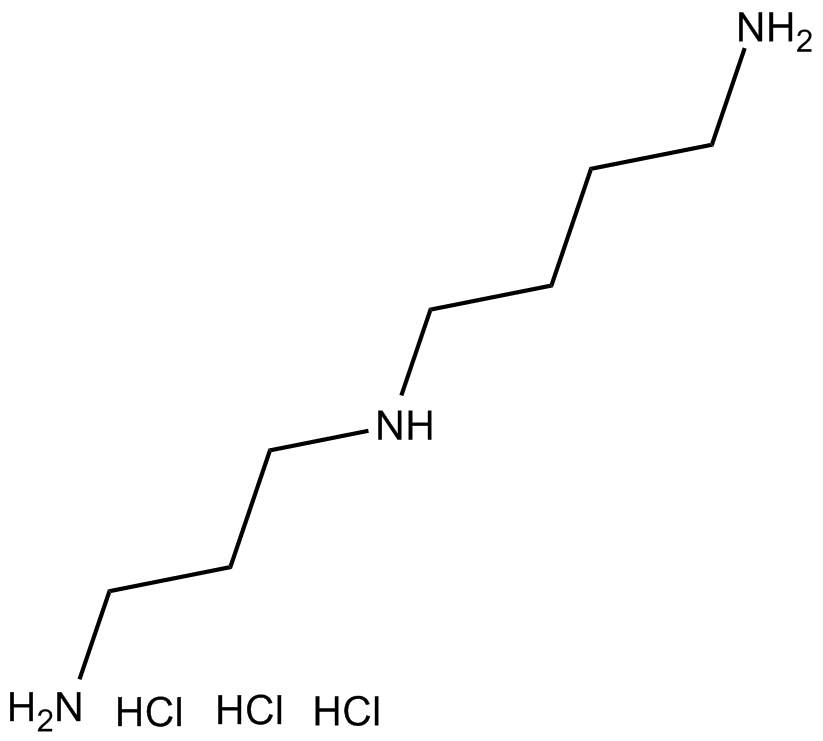
Spermine tetrahydrochloride (CAS No. 306-67-2) is a naturally occurring polyamine compound. Its core targets include bacterial protoplast membranes, proteins (e.g., RNA helicases), and ionic polymers (e.g., polyphosphazenes). It exerts membrane-stabilizing, protein structure-regulating, and polymer crosslinking functions through charge interactions.
The concentrations commonly used in experiments vary significantly: 0.001–0.004 M (1–4 mM) for protoplast protection assays, 5 mM for protein crystallization experiments, and 0.05–10 mg/mL for polymer nanoparticle crosslinking studies.
Its biological activities are mainly manifested as follows: it can significantly protect Sarcina lutea protoplasts from lysis induced by steroidal compounds (with a protective effect superior to that of spermidine and putrescine); as an additive, it promotes the crystallization of the DDX3 RNA helicase domain and improves crystal quality; as an ionic crosslinker, it mediates the formation of polyphosphazene nanoparticles (for protein delivery) and maintains the structural integrity of encapsulated lysozyme as well as its enzymatic activity against oligosaccharide substrates. It has a favorable safety profile, with no reported obvious toxicity-related issues.
References:
[1] Smith RF, Shay DE. Steroid lysis of protoplasts and effects of stabilizers and steroid antagonists. Appl Microbiol. 1965 Sep;13(5):706-12. doi: 10.1128/am.13.5.706-712.1965. PMID: 4956242; PMCID: PMC1058329.
[2] Rodamilans B, Montoya G. Expression, purification, crystallization and preliminary X-ray diffraction analysis of the DDX3 RNA helicase domain. Acta Crystallogr Sect F Struct Biol Cryst Commun. 2007 Apr 1;63(Pt 4):283-6. doi: 10.1107/S1744309107006434. Epub 2007 Mar 12. PMID: 17401195; PMCID: PMC2330201.
[3] Andrianov AK, Marin A, Deng J, Fuerst TR. Protein-loaded soluble and nanoparticulate formulations of ionic polyphosphazenes and their interactions on molecular and cellular levels. Mater Sci Eng C Mater Biol Appl. 2020 Jan;106:110179. doi: 10.1016/j.msec.2019.110179. Epub 2019 Sep 9. PMID: 31753403; PMCID: PMC6903416.
| Physical Appearance | A solid |
| Storage | Store at -20°C |
| M.Wt | 348.19 |
| Cas No. | 306-67-2 |
| Formula | C10H26N4·4HCl |
| Solubility | ≥34.8 mg/mL in H2O; insoluble in EtOH; insoluble in DMSO |
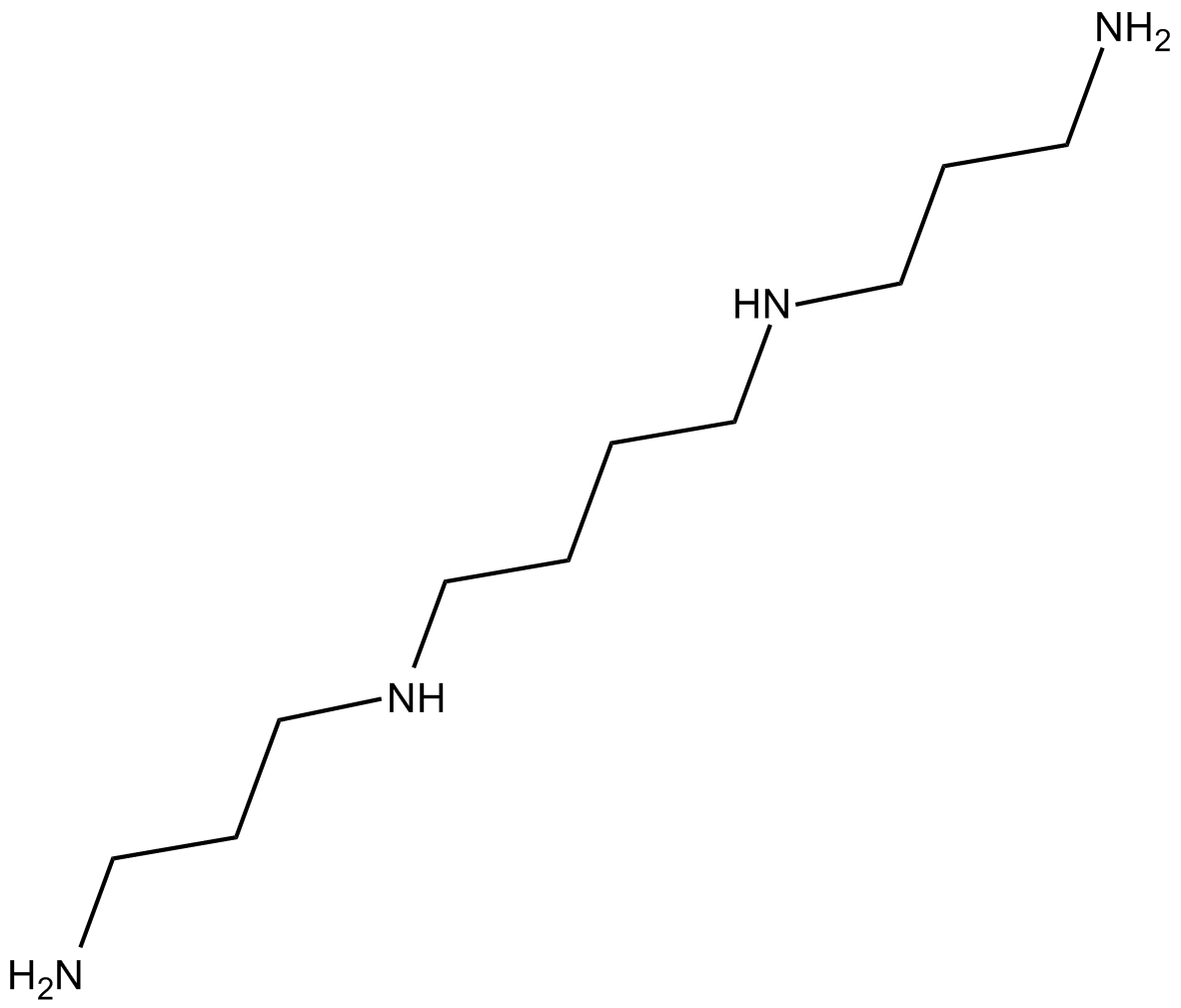
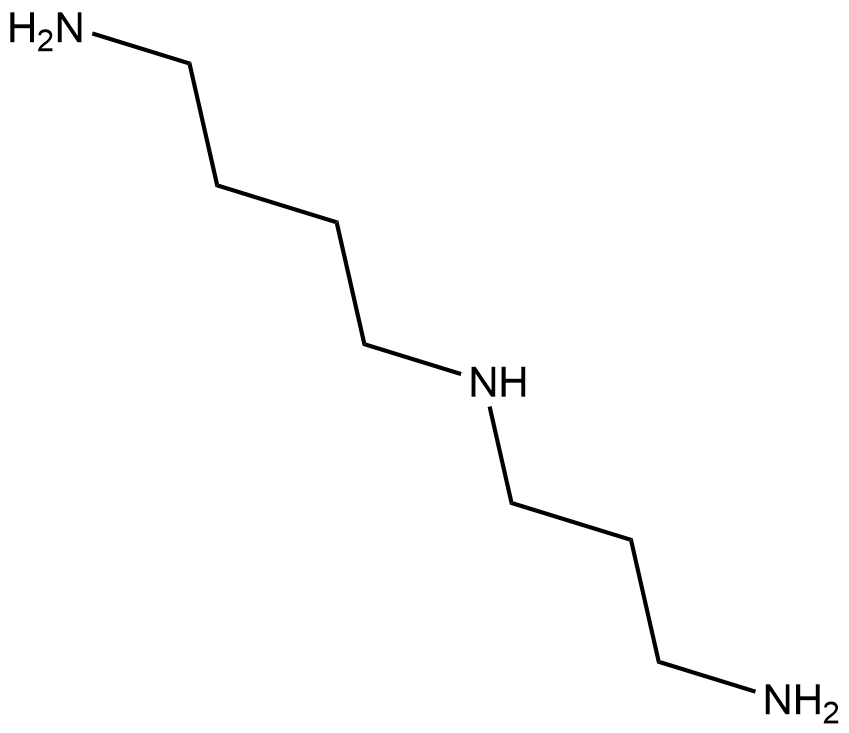
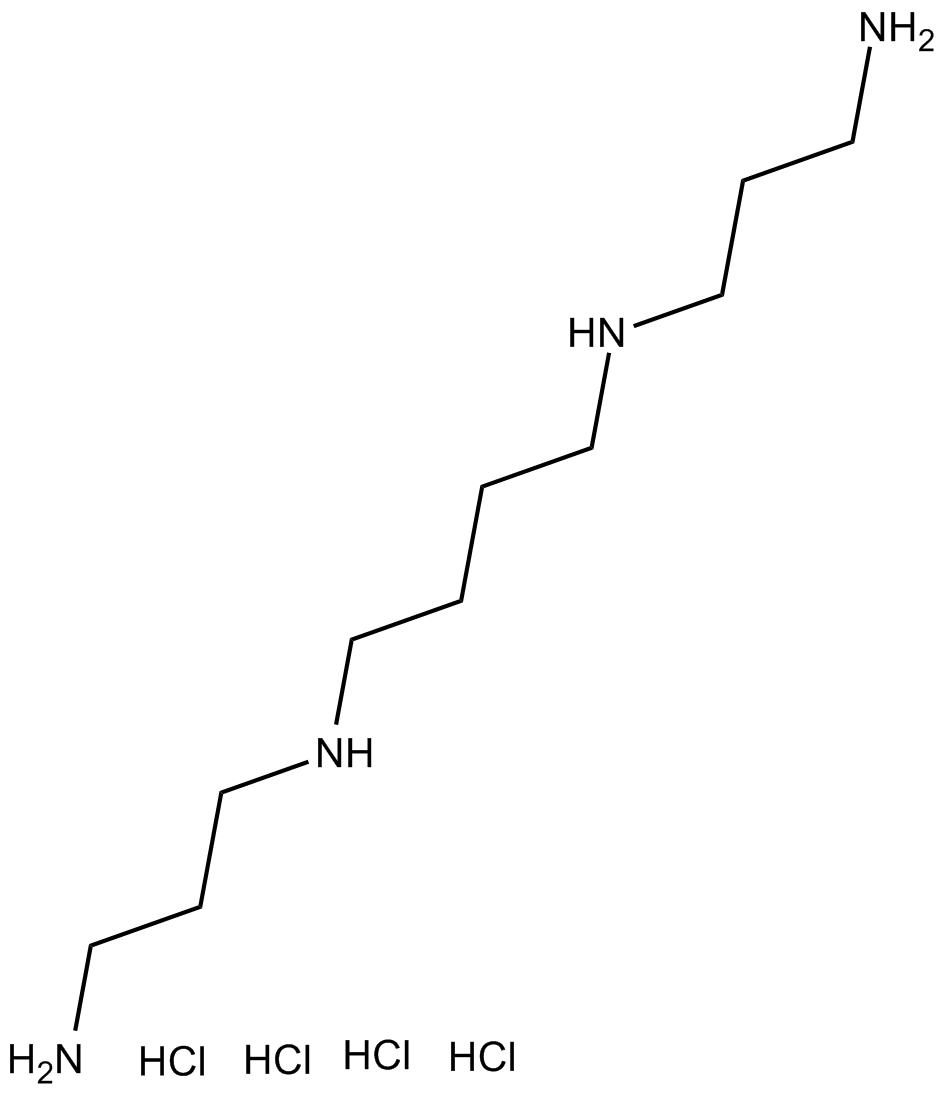
| Chemical Name | N1,N1'-(butane-1,4-diyl)bis(propane-1,3-diamine) tetrahydrochloride |
| Canonical SMILES | NCCCNCCCCNCCCN.Cl.Cl.Cl.Cl |
| Shipping Condition | Small Molecules with Blue Ice, Modified Nucleotides with Dry Ice. |
| General tips | We do not recommend long-term storage for the solution, please use it up soon. |
Quality Control & MSDS
- View current batch:
Chemical structure