Ribavirin
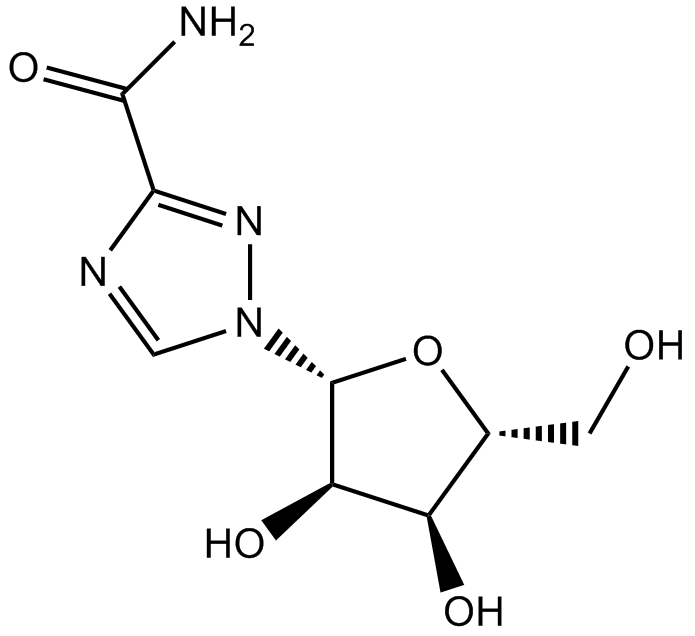





Ribavirin (CAS No.: 36791-04-5) is a synthetic guanosine nucleoside analog classified as a broad-spectrum antiviral agent widely used in biomedical research to investigate viral replication and host–virus interactions. Following cellular uptake, ribavirin is intracellularly phosphorylated to active metabolites, including the triphosphate form, which interferes with viral RNA synthesis by inducing premature chain termination and inhibiting viral RNA-dependent polymerases, thereby disrupting transcription and replication cycles. It exhibits activity against a diverse range of RNA and DNA viruses, including hepatitis C virus, human immunodeficiency virus, respiratory syncytial virus, orthopoxviruses, and variola-related viruses, and has also demonstrated inhibitory effects on SARS-CoV-2 replication in cell-based systems. In vitro studies indicate antiviral potency typically in the low micromolar to tens of micromolar range depending on the virus and assay conditions, reflecting variability in viral susceptibility and cellular context. Ribavirin is extensively applied in cell culture models such as Vero cells to evaluate antiviral efficacy and mechanisms, and in vivo studies, including murine infection models, have shown reductions in viral burden and disease severity under appropriate dosing regimens. As a research tool, it is commonly employed in antiviral drug discovery, mechanistic studies of viral polymerase inhibition, and the exploration of combination therapies, with experimental concentrations or doses tailored to specific study designs and target pathogens.
| Physical Appearance | A solid |
| Storage | -20°C |
| M.Wt | 244.21 |
| Cas No. | 36791-04-5 |
| Formula | C8H12N4O5 |
| Synonyms | NSC 163039 |
| Solubility | insoluble in EtOH; ≥24.46 mg/mL in DMSO; ≥54.4 mg/mL in H2O |
| Chemical Name | 1-[(2R,3R,4S,5R)-3,4-dihydroxy-5-(hydroxymethyl)oxolan-2-yl]-1,2,4-triazole-3-carboxamide |
| Canonical SMILES | C1=NC(=NN1C2C(C(C(O2)CO)O)O)C(=O)N |
| Shipping Condition | Small Molecules with Blue Ice, Modified Nucleotides with Dry Ice. |
| General tips | We do not recommend long-term storage for the solution, please use it up soon. |