Pipecolic acid
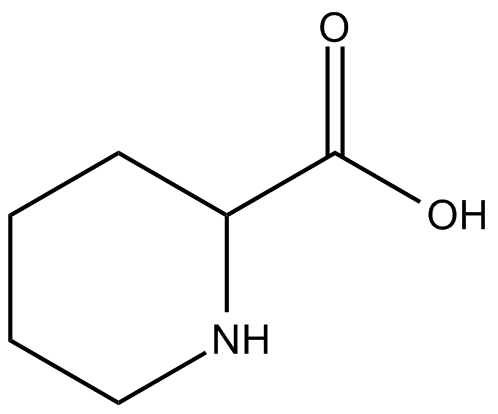





Pipecolic acid (CAS No.: 535-75-1) is a lysine-derived secondary metabolite widely detected in physiological fluids and microbial systems, where it functions as an important intermediate in amino acid metabolism and secondary biosynthetic pathways. It is recognized as a bioactive small molecule with diverse roles in cellular regulation, including modulation of oxidative stress responses, ion channel activity, and immune signaling. Mechanistically, pipecolic acid has been shown to influence the YAP-GPX4 signaling axis, contributing to the suppression of ferroptosis and the regulation of lipid peroxidation processes, as well as to enhance voltage-sensitive calcium channel currents and promote neuronal apoptosis under certain experimental conditions. In addition, it is implicated in the regulation of retinal vascular cell behavior, including inhibition of vascular tube formation in relevant in vitro models. As a blood-brain barrier-permeable metabolite, pipecolic acid is of particular interest in neurobiology and metabolic research, including studies of lysine catabolism and neurological dysfunction. Reported bioactivities are generally observed in the low micromolar to millimolar concentration range depending on the assay system and cellular context. This compound is commonly utilized in cell-based assays, metabolic profiling studies, and disease model investigations, including retinal and neuronal systems, where experimental concentrations and exposure conditions are optimized according to specific study designs.
| Physical Appearance | Solid |
| Storage | -20°C |
| M.Wt | 129.16 |
| Cas No. | 535-75-1 |
| Formula | C6H11NO2 |
| Solubility | ≥26 mg/mL in H2O,insoluble in DMSO |
| Chemical Name | piperidine-2-carboxylic acid |
| Canonical SMILES | O=C(C1CCCCN1)O |
| Shipping Condition | Small Molecules with Blue Ice, Modified Nucleotides with Dry Ice. |
| General tips | We do not recommend long-term storage for the solution, please use it up soon. |