N-acetyl-D-Glucosamine
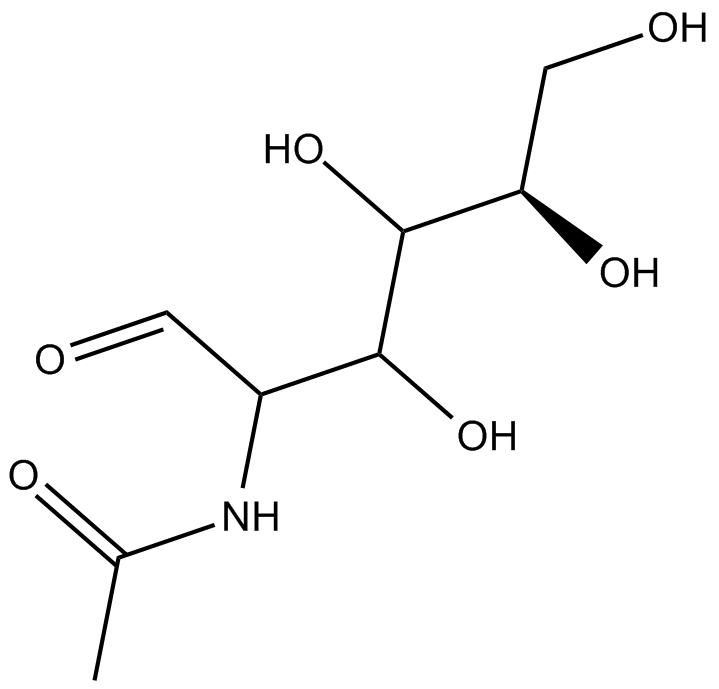
N-acetyl-D-Glucosamine (CAS No.: 7512-17-6) is a naturally occurring monosaccharide derivative of glucose that serves as a fundamental building block in glycobiology, participating in the biosynthesis of cell surface oligosaccharides and protein glycosylation processes. It is generated in mammalian systems through the enzymatic removal of O-linked N-acetylglucosamine modifications from proteins and plays a critical role in regulating cellular signaling pathways associated with metabolism, stress responses, and neurodegenerative conditions. As a key intermediate in bacterial metabolism, it is present in organisms such as Escherichia coli, where it can influence gene expression, including the induction of multidrug transporter systems, and modulate cellular differentiation processes such as yeast-to-mycelial transition in Candida albicans. N-acetyl-D-Glucosamine is also the monomeric unit of chitin, underscoring its importance in fungal and invertebrate structural biology. Functionally, it has been reported to exhibit anti-inflammatory and anti-tumor activities and to promote cartilage repair in preclinical models, supporting its relevance in studies of tissue regeneration and immune modulation. In vitro and cellular studies typically employ this compound at concentrations ranging from low micromolar to millimolar levels, depending on the experimental system, to investigate glycosylation-dependent signaling pathways, metabolic flux, and host–microbe interactions. Consequently, N-acetyl-D-Glucosamine is widely utilized in cell biology, immunology, and oncology research for probing mechanisms of signal transduction, post-translational modification, and metabolic regulation in both normal and disease contexts.
| Physical Appearance | A solid |
| Storage | -20°C |
| M.Wt | 221.21 |
| Cas No. | 7512-17-6 |
| Formula | C8H15NO6 |
| Synonyms | GlcNAc; Marine Sweet; NAG; NSC 524344 |
| Solubility | ≥90.8 mg/mL in H2O; ≥50 mg/mL in DMSO; insoluble in EtOH |
| Chemical Name | N-((5R)-3,4,5,6-tetrahydroxy-1-oxohexan-2-yl)acetamide |
| Canonical SMILES | O=CC(C(C([C@@H](CO)O)O)O)NC(C)=O |
| Shipping Condition | Small Molecules with Blue Ice, Modified Nucleotides with Dry Ice. |
| General tips | We do not recommend long-term storage for the solution, please use it up soon. |