


BCA Protein Assay Kit (Enhanced)
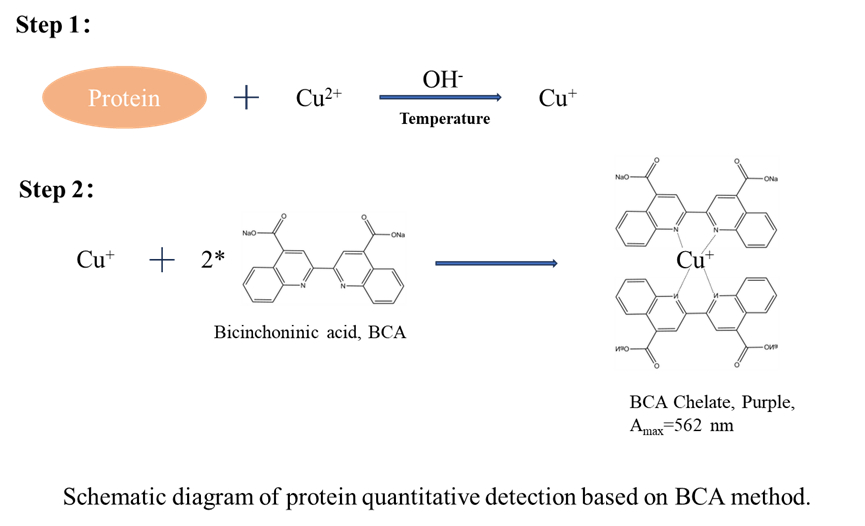
BCA (Bicinchoninic Acid) Assay is a protein quantification method based on the biuret reaction principle. Under alkaline conditions, peptide bonds in proteins reduce Cu²⁺ in copper sulfate to Cu⁺. BCA then chelates Cu⁺ to form a purple complex with a strong absorption peak at 562 nm. The color intensity of this chelate is correlated with the protein concentration. Since the decrease in Cu²⁺ or the amount of Cu⁺ generated is proportional to the amount of protein present in the solution, the protein concentration of a sample can be determined by measuring its absorbance. This method is widely used to determine the concentration of various biological samples, including cell lysates, tissue homogenates, purified proteins, subcellular fractions, and secreted proteins. It is an important sample preparation step for downstream applications such as enzyme activity assays, quantitative sample loading for electrophoresis, immunoblotting, and protein–protein interaction studies.
Compared with conventional BCA protein assay kits, this enhanced BCA kit offers three major advantages: (1) Higher sensitivity – the detection limit is as low as 10 μg/mL, with a minimal detectable protein amount of only 0.2 μg and a required sample volume of just 1–20 μL. This performance is significantly better than that of standard BCA kits, making it particularly suitable for accurate quantification of low-concentration or limited protein samples; (2) Faster color development – at the same protein concentration, the required incubation time is markedly reduced, enabling absorbance measurements to be completed in a shorter time and greatly improving experimental throughput and efficiency; (3) Improved linear range – a good linear relationship is maintained over a concentration range of 20–2000 μg/mL, ensuring the accuracy and reproducibility of quantitative results.
In terms of compatibility, this kit tolerates up to 5% SDS, 5% Triton X-100, and 5% Tween 20/60/80 in samples, and is therefore suitable for lysis buffers containing relatively high concentrations of detergents. However, chelating agents and reducing agents can interfere with the colorimetric reaction. It is recommended that EDTA be kept below 10 mM and that EGTA be avoided; DTT should be below 1 mM and β-mercaptoethanol below 0.01%. If such substances are present at relatively high levels in the samples, the Bradford Protein Assay Kit is recommended instead (e.g., the standard kit K4103 or the detergent-compatible kit K4104).
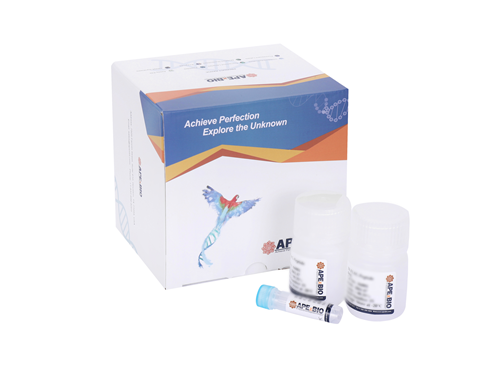
This kit contains all the components required to perform a complete BCA protein assay, including BCA Solution A (alkaline buffer), BCA Solution B (copper-containing color reagent), a protein standard, and the corresponding dilution buffer. To meet the needs of different experimental scales, the kit is available in three package sizes suitable for approximately 200, 500, or 5000 assays (the number of assays is estimated based on a 96-well plate format with a reaction volume of 200 μL per well).
|
Components |
200 Tests |
500 Tests |
5000 Tests |
Storage |
|
|
Reagent A |
40 mL |
100 mL |
2× 500 mL |
4°C |
|
|
Reagent B |
1.2 mL |
3 mL |
30 mL |
4°C |
|
|
Bovine serum albumin (BSA) |
20 mg |
30 mg |
2× 30 mg |
4°C |
|
|
BCA Protein Assay Reagent |
1 mL |
1.5 mL |
5 mL |
4°C |
|
|
Shipping: Blue ice |
Shelf life: 12 months |
||||
· High sensitivity: detection limit 10 μg/mL, min. 0.2 μg, sample 1–20 μL.
· Rapid color development: shorter incubation than conventional BCA kits.
· Broad linear range: 20–2000 μg/mL.
· Strong detergent compatibility: tolerates 5% SDS, 5% Triton X-100, 5% Tween 20/60/80.
· Stable product: purple complex stable for batch detection.
· Easy operation: two-component working solution (50:1), simple preparation.
· Wide applicability: cell lysates, tissue homogenates, purified proteins, serum, etc.
Q: What is the detection range of this kit?
A: When using a standard microplate assay, the detection range is 20–2000 μg/mL. If the sample concentration falls outside this range, it is recommended to dilute the sample and re-measure. For samples with very low protein concentrations, a more sensitive micro BCA assay kit is recommended.
Q: Which substances interfere with BCA measurements?
A: The main interfering substances fall into three categories:
·Reducing agents (e.g., DTT, β-mercaptoethanol): reduce Cu²⁺ and cause high background;
·Chelating agents (e.g., EDTA, EGTA): bind copper ions and prevent color development;
·High-concentration buffers: may affect the alkaline pH required for the reaction.
Specific compatibility limits are: EDTA < 10 mM, DTT < 1 mM, β-mercaptoethanol < 0.01%. EGTA is incompatible at any concentration.
Q: How should samples containing interfering substances be handled?
A: The following approaches can be used:
·Sample dilution: if the protein concentration is sufficiently high, dilute the sample until the interfering substances no longer affect the assay;
·Dialysis or desalting: exchange the buffer for a compatible system;
·Protein precipitation: precipitate proteins using cold acetone or trichloroacetic acid (TCA), discard the supernatant containing interfering substances, then resolubilize the protein pellet for measurement;
·Adjusting the working reagent: for interference caused by chelating agents, the amount of Reagent B can be increased appropriately.
Q: Is it necessary to prepare a new standard curve for each experiment?
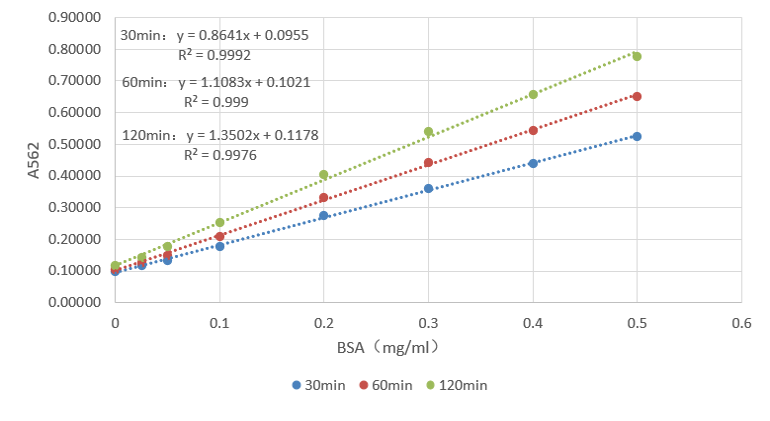
A: It is recommended to prepare a fresh standard curve for every experiment. Since the color development depends on temperature and incubation time, differences in absorbance readings may arise between runs even under seemingly well-controlled conditions. Preparing a new standard curve each time helps ensure the accuracy of quantification.
Q: Can the BCA assay be used to quantify peptides?
A: Peptides with a molecular weight below 2000 Da cannot be quantified reliably by the BCA assay. Color development depends on the number of peptide bonds and the presence of certain amino acid residues (such as cysteine, tryptophan, and tyrosine). For small peptides, it is recommended to use a fluorescence-based amine assay or other peptide-specific
quantification kits.
Q: If a 562 nm filter is not available, can other wavelengths be used?
A: Yes. The BCA–Cu⁺ complex has a maximum absorbance at 562 nm. If the instrument does not have a 562 nm filter, measurements can be taken within the 540–590 nm range. However, deviation from 562 nm will reduce the slope of the standard curve and may affect assay sensitivity.
Q: How long can the BCA working solution be stored?
A: The BCA working solution (Reagent A and Reagent B mixed at a 50:1 ratio) is stable for up to 24 hours at room temperature. It is recommended to prepare it fresh before use, and to prepare slightly more than needed (e.g., for 1–2 extra samples) to compensate for pipetting losses.
Q: Do different proteins react equally in the BCA assay?
A: Different proteins show some variation in their response to the BCA assay, mainly due to differences in amino acid composition (especially cysteine, tyrosine, and tryptophan content) and structure. However, protein-to-protein variation with the BCA method is smaller than with the Bradford assay, because the peptide backbone itself also contributes to color development. For applications requiring very high accuracy, it is recommended to prepare the standard curve using the purified target protein.
Q: Why is the color in the BCA reaction too strong or too weak?
A: Possible causes and solutions include:
·Sample concentration too high/too low: adjust the dilution factor so that the readings fall within the range of the standard curve;
·Interfering substances: check whether the sample contains reducing agents, chelating agents, or other interfering components;
·Inconsistent incubation conditions: ensure that temperature and incubation time are consistent between experiments;
·Combined effects of multiple interferents: even when each substance is within its compatible concentration range, their combination may still cause interference.
Q: For BCA protein quantification, if the sample is in aqueous solution, can BSA standards be prepared directly in pure water instead of the standard diluent provided in the kit?
A: BSA should still be initially dissolved in the protein standard diluent supplied with the kit. Subsequent dilutions of the standard can be made with water.
Q: What should be used to dilute the BSA standard in the kit?
A: Ideally, the standard diluent should match the protein sample buffer: in principle, the standard should be diluted in the same solution used to dissolve the test samples. Alternatively, 0.9% NaCl or 1× PBS can be used for dilution.
Q: Can the BSA standard provided in the kit be purchased separately?
A: Yes. We supply BSA standard as a standalone product: Bovine Serum Albumin Standard (5 mg/mL), catalog number K4105.
Q: Is it necessary to prepare a standard curve for each measurement?
A: Yes, it is recommended to prepare a standard curve for every measurement. In the BCA assay, the color continues to develop over time, and the rate of color development is affected by temperature. Unless reaction time and temperature are precisely controlled, a fresh standard curve should be prepared each time for accurate quantification.
-
-
 F4005 Prestained Protein Marker (Triple color, EDTA free, 10-250 kDa)
Starting at $50.00
-
-
-
-
-
-