Zelavespib
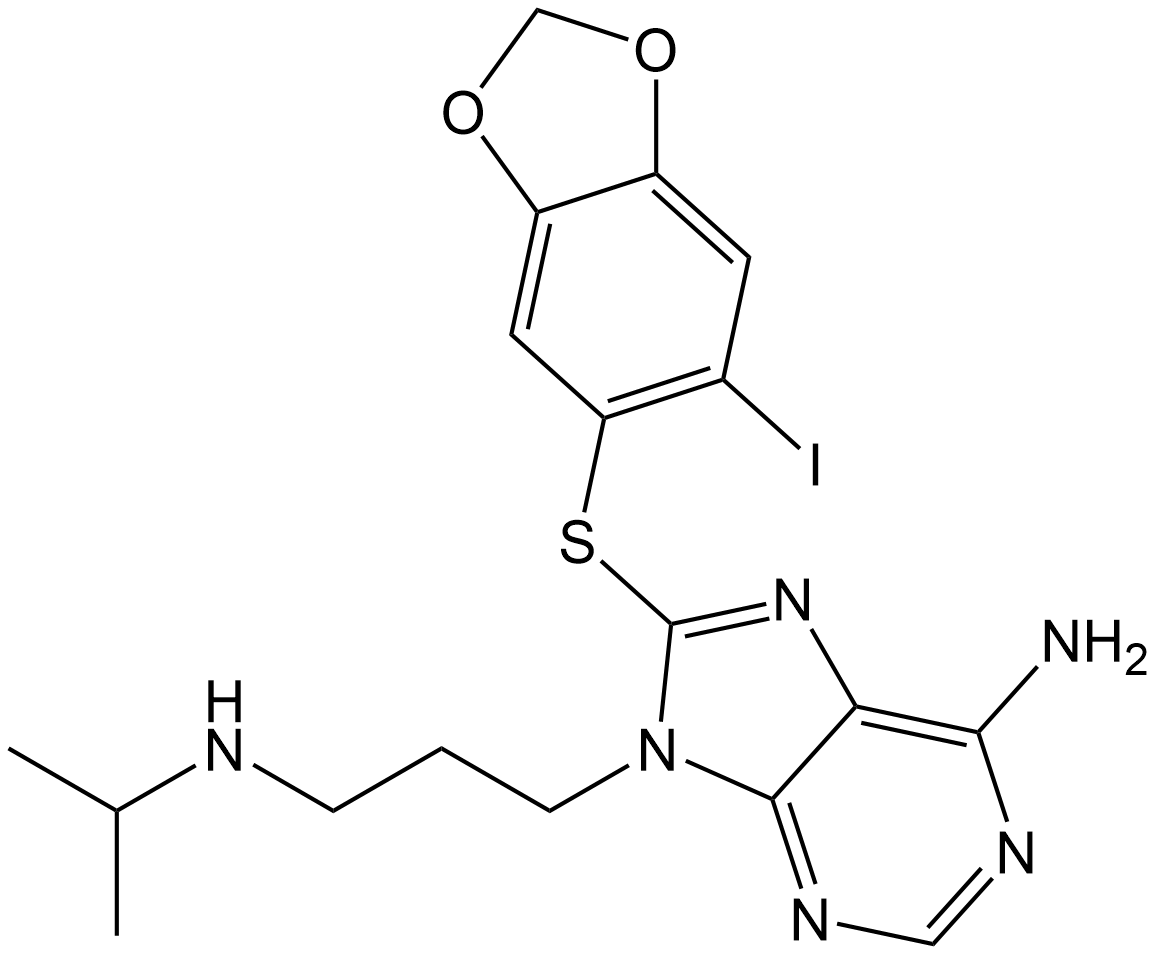





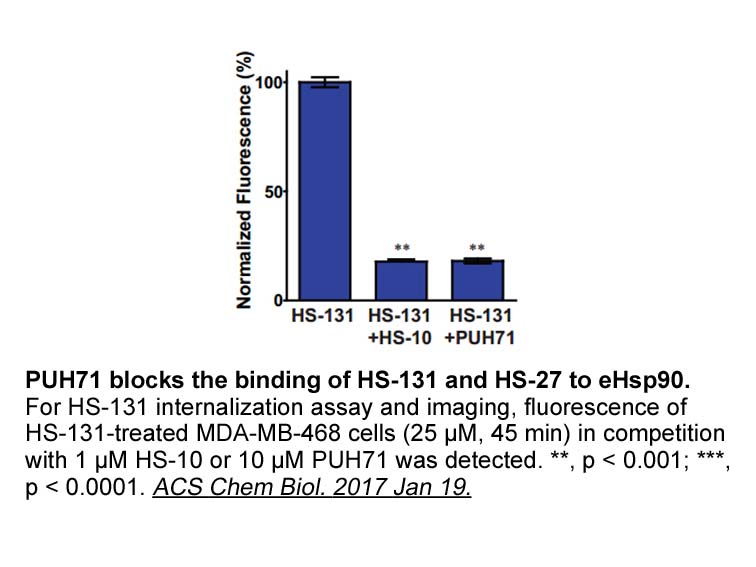
Zelavespib (CAS No.: 873436-91-0) is a potent Hsp90 inhibitor widely investigated within the domains of biomedical research and drug discovery. As a derivative in the class of purine-scaffold inhibitors, it exerts its function by binding to the ATP-binding pocket of the Hsp90 chaperone, impeding its activity which is crucial for the stabilization and function of various client proteins involved in cell growth and survival pathways. The compound is primarily studied for its ability to inhibit heat shock protein 90 (Hsp90) with an IC50 value of 51 nM reported in MDA-MB-468 cell lines, illustrating its efficacy in the nanomolar range. Zelavespib’s action disrupts a myriad of signaling cascades, potentially affecting pathways like PI3K/AKT and MAPK, which are pivotal in oncogenic processes. In vitro studies demonstrate its ability to modulate protein homeostasis, thus highlighting its use as a tool for elucidating molecular targets relevant to cancer biology. Application in cell models and animal models often involves a concentration-dependent framework where specific dosages are tailored to research design and objectives. This compound serves as a critical probe in the exploration of the chaperone-mediated protein folding landscape, offering insights into the development of novel therapeutic regimens by leveraging molecular chaperone biology's intricate roles.
| Physical Appearance | Solid |
| Storage | ﹣20°C |
| M.Wt | 512.37 |
| Cas No. | 873436-91-0 |
| Formula | C19H23IN6O4S |
| Synonyms | PU-H71, NSC 750424 |
| Solubility | Soluble in DMSO > 10 mM |
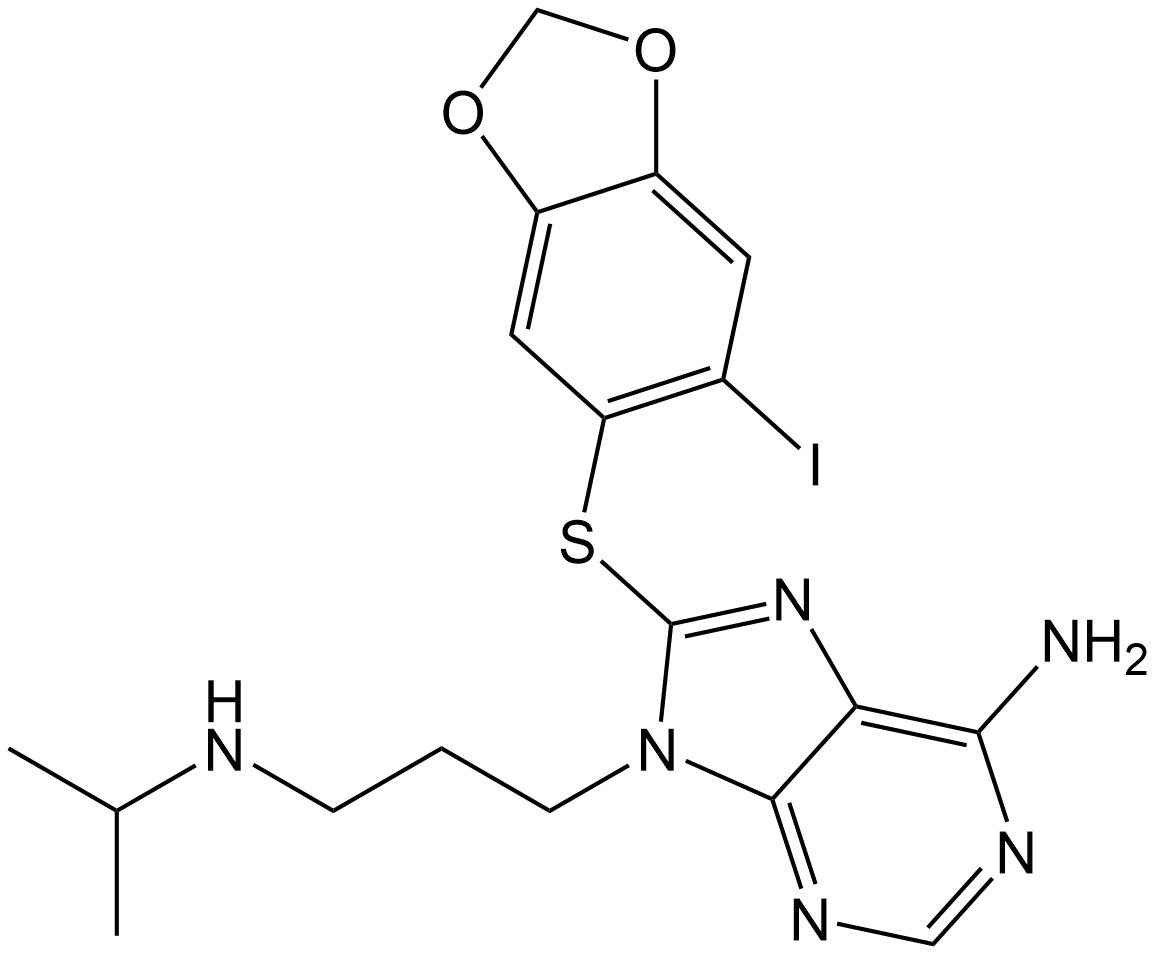
| Chemical Name | 8-((6-iodobenzo[d][1,3]dioxol-5-yl)thio)-9-(3-(isopropylamino)propyl)-9H-purin-6-amine |
| Canonical SMILES | CC(C)NCCCN1C(SC2=C(C=C3OCOC3=C2)I)=NC4=C(N=CN=C14)N |
| Shipping Condition | Small Molecules with Blue Ice, Modified Nucleotides with Dry Ice. |
| General tips | We do not recommend long-term storage for the solution, please use it up soon. |
| Kinase experiment [1]: | |
|
Hsp90 binding assay |
Measurements were performed in black 96-well microtiter plates. Cell lysates were prepared by rupturing cellular membranes by freezing at -70 ℃ and dissolving the cellular extract in HFB [20 mM Hepes (K), pH 7.3, 50 mM KCl, 5 mM MgCl2, 20 mM Na2MoO4, 0.01% Nonidet P-40] with added protease and phosphatase inhibitors. Saturation curves were recorded in which fluorescently labeled geldanamycin (Cy3B-GM) (3 nM) was treated with increasing amounts of cellular lysates. The amount of lysate that resulted in polarization (mP) readings corresponding to 90% ~ 99% bound ligand was chosen for the competition study. Here, each 96-well plate contained 3 nM Cy3B-GM, cellular lysate (amounts as determined and normalized to total Hsp90 as determined by Western blot analysis using Hsp90 purified from HeLa cells as standard) and tested Hsp90 inhibitor in a final volume of 100 μL. The plate was left for 24 hrs on a shaker at 4 ℃, and the fluorescence polarization (FP) values in mP were recorded. EC50 values were determined as the competitor concentrations at which 50% of the Cy3B-GM was displaced. FP measurements were performed on an Analyst GT microplate reader. |
| Cell experiment [1]: | |
|
Cell lines |
Human triple-negative breast cancers (TNBC) cell lines MDA-MB-468, MDA-MB-231 and HCC-1806 |
|
Preparation method |
The solubility of this compound in DMSO is >10 mM. General tips for obtaining a higher concentration: Please warm the tube at 37℃ for 10 minutes and/or shake it in the ultrasonic bath for a while. Stock solution can be stored below -20℃ for several months. |
|
Reaction Conditions |
0.01 ~ 10 μM; 72 hrs |
|
Applications |
In TNBC cell lines MDA-MB-468, MDA-MB-231 and HCC-1806, PU-H71 (1 μM) potently suppressed cell growth, with the IC50 values of 65, 140 and 87 nM, respectively. PU-H71 (1 μM) killed 80%, 65%, and 80% of the initial population of MDA-MB-468, MDA-MB-231 and HCC-1806 cells, respectively. |
| Animal experiment [1]: | |
|
Animal models |
Mice bearing MDA-MB-231 xenografted tumors |
|
Dosage form |
75 mg/kg; i.p.; on an alternate day schedule, for 50 days |
|
Applications |
In the MDA-MB-231 model, PU-H71 (75 mg/kg on an alternate day schedule) induced a 100% complete response, and tumors were reduced to scar tissue after 37 days of treatment, accompanied with reduction in many proliferative and anti-apoptotic molecules, namely 80%, 95%, 99%, 80% and 65% decreases in EGFR, HER3, Raf-1 Akt, and p-Akt, respectively. |
|
Other notes |
Please test the solubility of all compounds indoor, and the actual solubility may slightly differ with the theoretical value. This is caused by an experimental system error and it is normal. |
|
References: [1]. Caldas-Lopes E, Cerchietti L, Ahn J H, et al. Hsp90 inhibitor PU-H71, a multimodal inhibitor of malignancy, induces complete responses in triple-negative breast cancer models. Proceedings of the National Academy of Sciences, 2009, 106(20): 8368-8373. | |
| Description | Zelavespib is a potent inhibitor of heat shock protein 90 (Hsp90) with IC50 value of 51 nM in MDA-MB-468 cells. | |||||
| Targets | Hsp90 | |||||
| IC50 | 51 nM (in MDA-MB-468 cell line) | |||||
Quality Control & MSDS
- View current batch:
Chemical structure
Related Biological Data