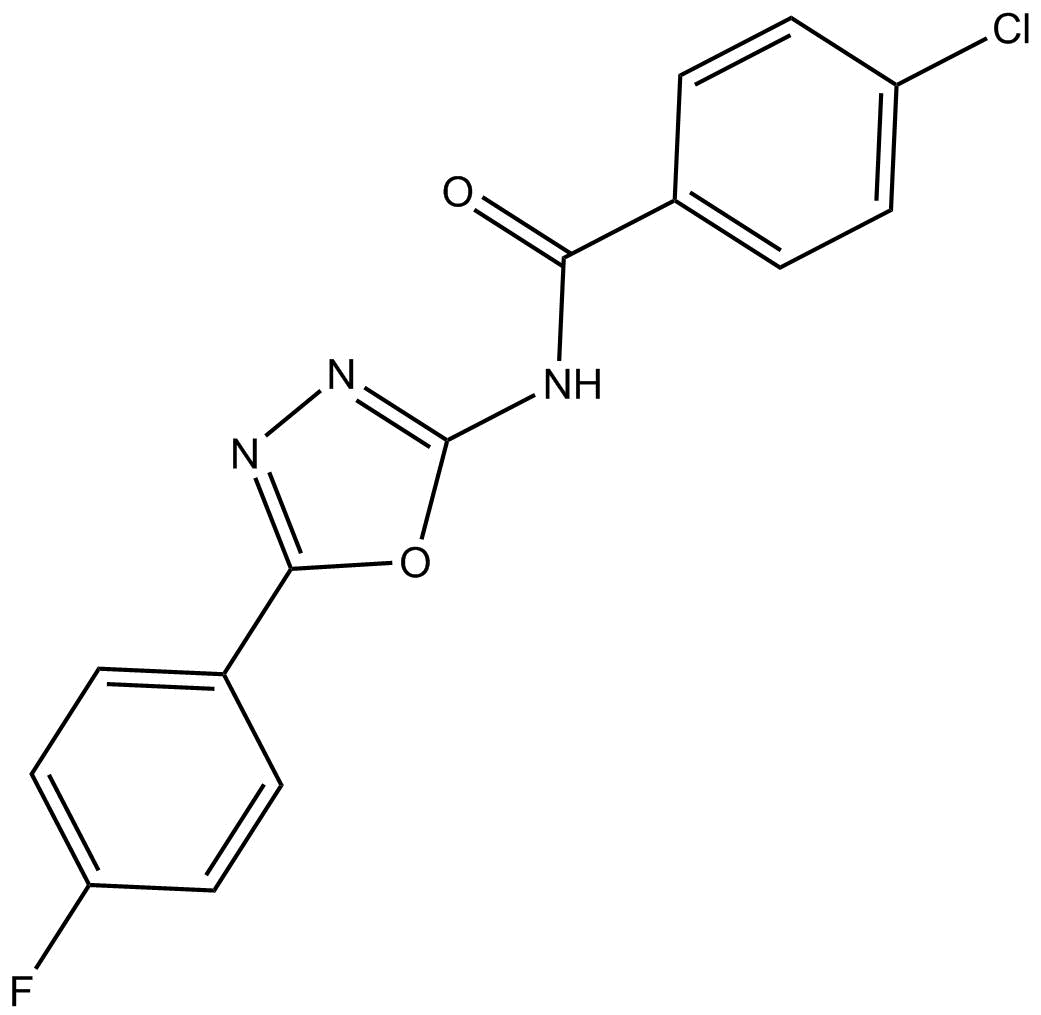
KKL-35
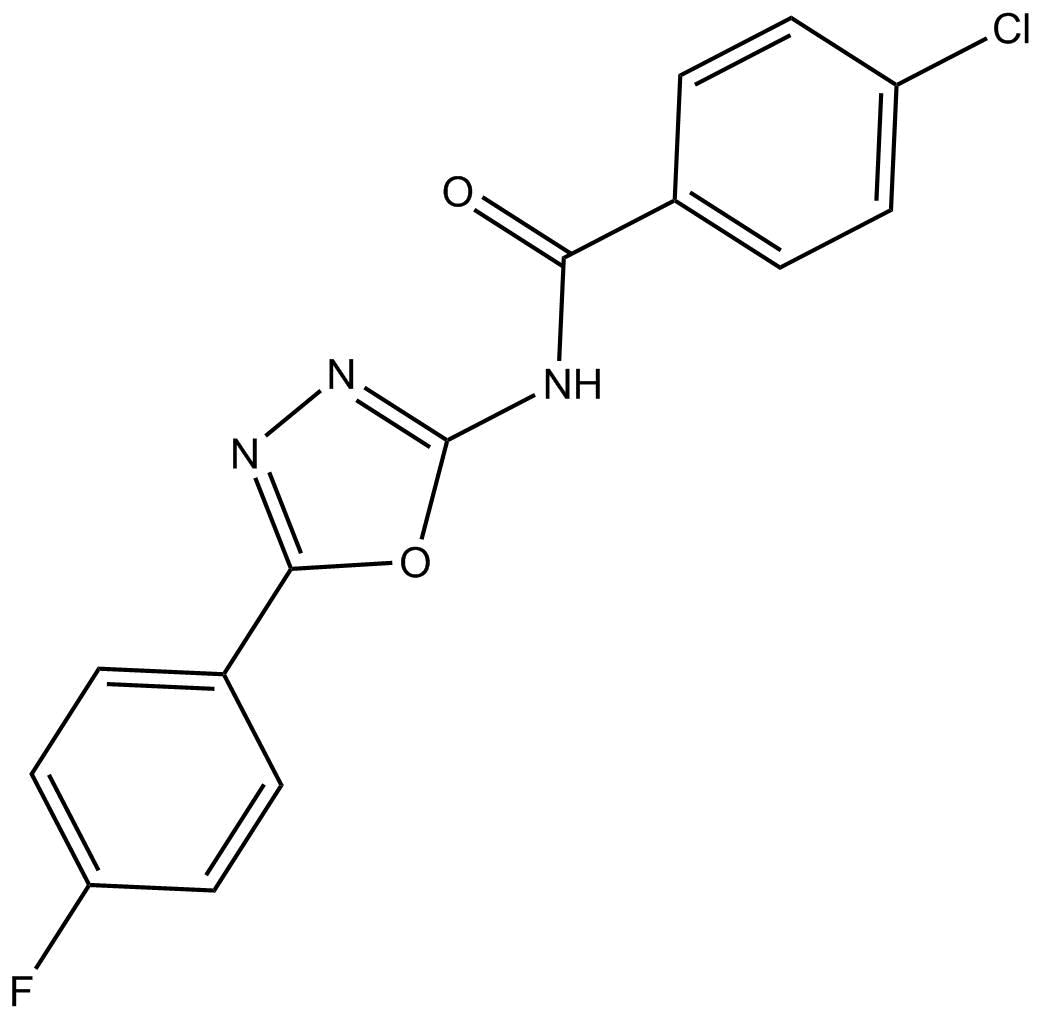





KKL-35 (CAS No.: 865285-29-6) is a small-molecule inhibitor of trans-translation, a bacterial ribosome rescue pathway essential for resolving stalled translation complexes, and is widely used as a research tool in microbiology and antibacterial drug discovery. By inhibiting the trans-translation tagging reaction with activity in the low micromolar range (IC50 approximately 0.9 μM), KKL-35 disrupts the release of non-stop translation complexes, leading to accumulation of stalled ribosomes and impaired protein synthesis. This mechanism underlies its broad-spectrum antibacterial activity observed in vitro, including growth inhibition of organisms such as Shigella flexneri at low micromolar concentrations, where it effectively halts bacterial proliferation in culture. As trans-translation is absent in eukaryotic cells, KKL-35 provides a valuable probe for studying bacterial-specific translational quality control pathways and their role in cell viability. It is commonly applied in biochemical assays, bacterial culture studies, and target validation experiments aimed at identifying novel antibacterial strategies, with experimental concentrations tailored to specific assay conditions and research objectives.
| Physical Appearance | Solid |
| Storage | -20°C |
| M.Wt | 317.7 |
| Cas No. | 865285-29-6 |
| Formula | C15H9ClFN3O2 |
| Solubility | ≥16.3 mg/mL in DMSO |
| Chemical Name | 4-chloro-N-(5-(4-fluorophenyl)-1,3,4-oxadiazol-2-yl)benzamide |
| Canonical SMILES | O=C(NC1=NN=C(C2=CC=C(F)C=C2)O1)C3=CC=C(Cl)C=C3 |
| Shipping Condition | Small Molecules with Blue Ice, Modified Nucleotides with Dry Ice. |
| General tips | We do not recommend long-term storage for the solution, please use it up soon. |
Quality Control & MSDS
- View current batch:
Chemical structure