Direct Mouse Genotyping Kit Plus
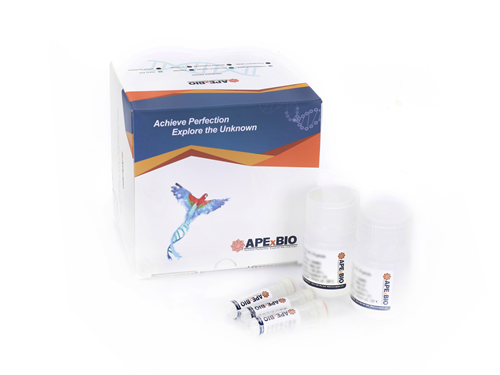
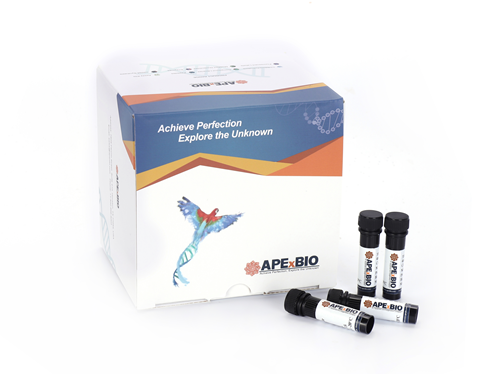
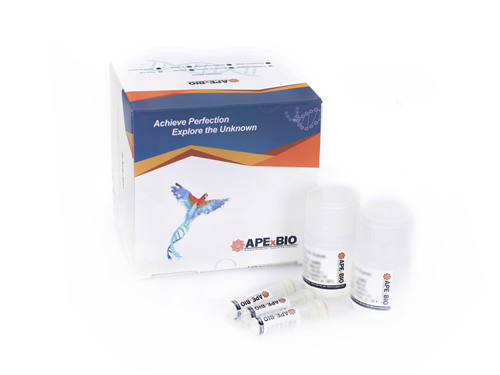
The Direct Mouse Genotyping Kit Plus is designed for rapid extraction and direct PCR amplification of genomic DNA from mouse tissues. It combines optimized tissue lysis buffer and neutralization agents to release genomic DNA efficiently without requiring further purification or precipitation steps, allowing researchers to directly utilize the lysate as a ready template for PCR reactions. By simplifying the workflow, this kit facilitates routine mouse genotyping assays, transgene detection, gene knockout validation, and animal colony screening in biomedical and genetic research laboratories. Additionally, the kit includes a pre-mixed PCR master solution containing dye reagents, providing convenience and increased accuracy for PCR amplification and gel electrophoresis analyses.
- 1. Le-Wen Chen, Yan-Hua Lian, et al. "Intermittent Theta-Burst Stimulation (iTBS) Improves Motor Coordination and Modulates Neuroinflammation and Autophagy in SCA3/MJD Mice." Cerebellum. 2026 May 25;25(4):86. PMID: 42183960
- 2. Xinyu Tang, Qian Chen, et al. "Macrophage EP4 Deficiency Drives Atherosclerosis Progression via CD36-Mediated Lipid Uptake and M1 Polarization." Cells. 2025 Jul 4;14(13):1021. PMID: 40643540
- 3. Han-Ying Huang, Yan-Zhou Chen, et al. "Availability of an inflammatory macrophage niche drives phenotypic and functional alterations in Kupffer cells." Nat Commun. 2024 Oct 29;15(1):9337. PMID: 39472435
| Components | 200 rxns | 500 rxns |
| Lysis buffer | 20 mL | 50 mL |
| Balance buffer | 20 mL | 50 mL |
| 2X HyperFusion™ High-Fidelity Master Mix (With dye) | 1 mL x 2 | 1 mL x 5 |
| Proteinase K | 200 μL | 500 μL |
1. Lysis buffer and Balance buffer should be stored at 4°C. 2. 2X HyperFusion™ High-Fidelity Master Mix (With dye) and Proteinase K could be stored at -20°C for 1-2 years. | ||
1. Q: What are the applications of the Genotyping Kits?
A: The Direct Mouse Genotyping Kit (Cat. No. K1025), Genotyping Kit (Cat. No. K1026), Direct Mouse Genotyping Kit Plus (Cat. No. K1027), and Direct Genotyping Kit Plus (Cat. No. K1504) can be used for genotyping mice, insects, fish, cells, and other samples. For example, you can use mouse tail, toes, ears, or other tissues for genotyping to quickly determine the genotype of the mice.
2. Q: What are the advantages of the Genotyping Kits?
A: The Master Mix in these kits contains loading dye, so the PCR products can be directly loaded for electrophoresis, making PCR more convenient. The lysis buffer and reaction buffer in the kits can rapidly digest tissues and release intact genomic DNA, without the need for overnight digestion, phenol/chloroform extraction, manual purification, or expensive DNA purification columns. The Genotyping Kits ensure stable and accurate amplification results.
3. Q: Why isn’t the tissue fully digested after lysis with the lysis buffer?
A: For most tissue samples, incubation with Proteinase K at 56°C for 15 minutes is sufficient to extract genomic DNA. The tissue may still appear intact, but lysis has already occurred, and the DNA obtained from partially digested tissue is usually adequate for PCR analysis.
4. Q: There are non-specific amplification bands when using the kit. What might be the reason?
A: Possible reasons include: improperly designed PCR primers; incorrect PCR reaction setup (e.g., DNA template concentration too high); inappropriate PCR cycling conditions (e.g., annealing temperature too low); or excessive ambient temperature during PCR mixture preparation.
5. Q: There is no target band in the PCR product. What could be the cause and how to solve it?
A: Possible causes and solutions include:
a) The tissue sample is not sufficiently digested; extend the digestion time.
b) Proteinase K is not fully inactivated; appropriately extend the incubation time at 95°C.
c) Primer quality issues; redesign the primers.
d) The target fragment has high GC content or is long; use the Direct Mouse Genotyping Kit Plus (Cat. No. K1027), which contains a genetically engineered Taq polymerase.
e) Inappropriate annealing temperature, insufficient extension time, or too few cycles; optimize the PCR conditions.
f) Template concentration is too low; increase the amount of template appropriately.