


Immunology/Inflammation
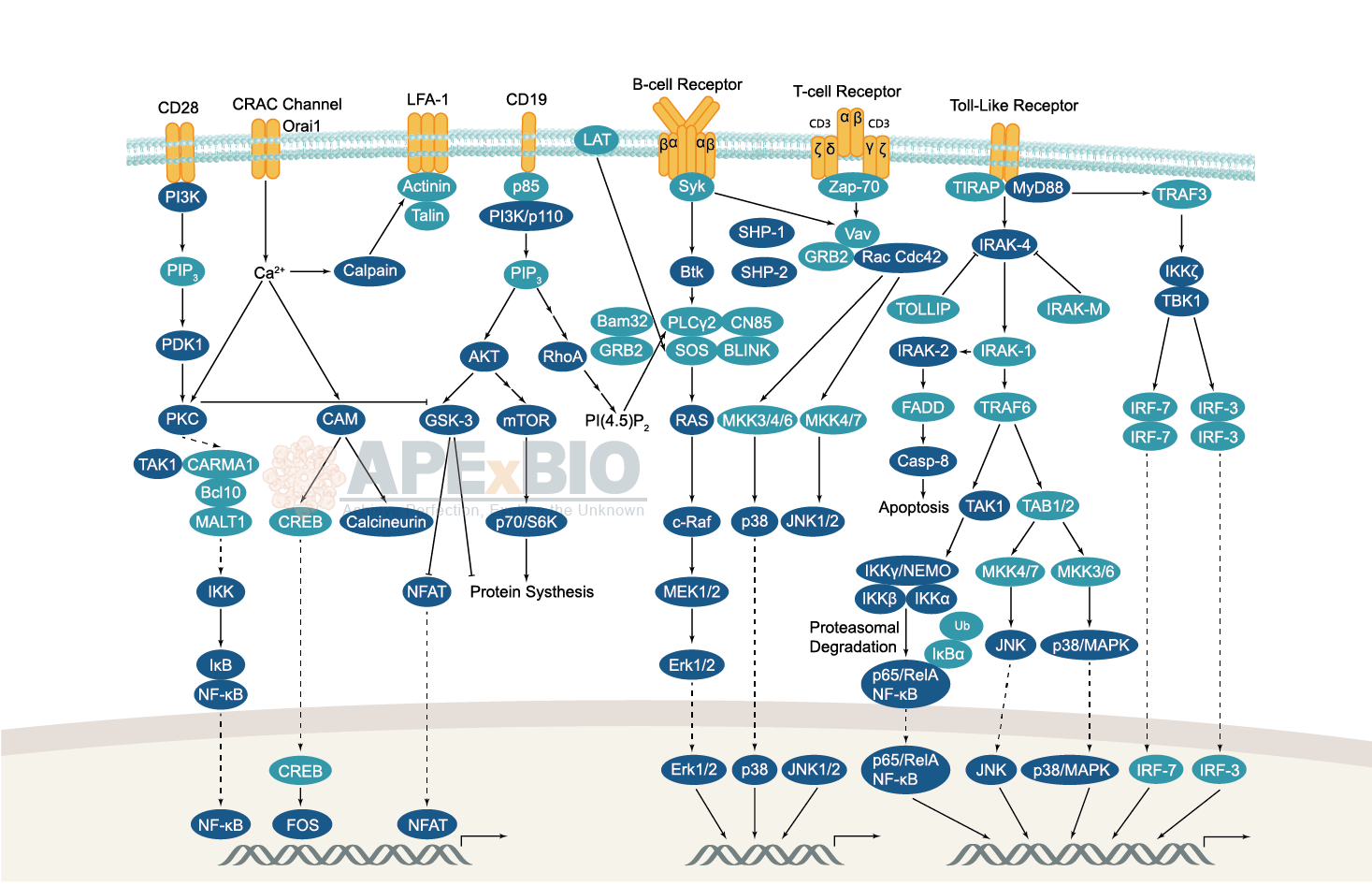
The adaptive immune system consists of B and T lymphocytes which mediate humoral immunity (e.g. antibody response) and cell-mediated immunity, respectively. B cell receptor and T cell receptor signaling is responsible for activation of Src family tyrosine kinases, such as Blk, Fyn, and Lyn in B cells and Fyn and Lck in T cells, resulting phosphorylation of the receptor-associated ITAM motifs. Phosphorylated ITAMs serve as the docking sites for Syk family tyrosine kinases, e.g. Syk in B cells and Zap-70 in T cells. Activated Syk kinases then propagate the signals via phosphorylation of downstream proteins. Furthermore, lymphocyte receptor signaling facilitates B and T cell development, differentiation, proliferation and survival.
-
 C8918 Ritlecitinib (PF-06651600)Summary: Ritlecitinib (PF-06651600; CAS 1792180-81-4) is a selective covalent JAK3/TEC family kinase inhibitor used to investigate cytokine signaling and immune-cell pathway biology.
 -
C8920 Tofogliflozin(CSG 452)Summary: Tofogliflozin (CSG 452) is a potent, selective sodium-glucose cotransporter 2 inhibitor targeting renal glucose transport, widely utilized in metabolic and diabetes mechanism research.
-
C8941 Pimethixene maleateSummary: Pimethixene maleate is a phenothiazine derivative with antihistaminic and anticholinergic activity, widely utilized as a reference compound in neuropharmacology and receptor-signaling research.
-
C9003 Nylidrin HydrochlorideSummary: Nylidrin Hydrochloride is a β-adrenergic receptor agonist used as a pharmacological tool for investigating adrenergic signaling pathways in cardiovascular and smooth muscle research.
-
C9022 Glafenine HClSummary: Glafenine HCl is a fenamate-derived nonsteroidal anti-inflammatory compound used as a pharmacological tool in cyclooxygenase signaling and inflammation-related biochemical research.
-
C9023 SuxibuzoneSummary: Suxibuzone is a nonsteroidal anti-inflammatory prodrug of phenylbutazone that modulates cyclooxygenase-mediated prostaglandin pathways and is utilized in inflammation and pharmacology research.
-
C9030 FosfosalSummary: Fosfosal (CAS 6064-83-1) is a salicylate derivative and prodrug-like anti-inflammatory compound used as a reference standard in biochemical and pharmacological research.
-
C9037 3'-Fluoro-3'-deoxythymidine (Alovudine)Summary: 3'-Fluoro-3'-deoxythymidine (Alovudine) is a fluorinated thymidine nucleoside analog that inhibits reverse transcriptase and is utilized in antiviral mechanism and nucleoside metabolism research.
-
C9043 Methyl methanesulfonateSummary: Methyl methanesulfonate is a DNA-alkylating mutagen that induces genotoxic stress and is widely utilized in DNA damage response and repair research.
-
N2912 Bornyl acetateSummary: Bornyl acetate is a bicyclic monoterpene ester used as a reference compound in natural product chemistry, olfactory receptor studies, and phytochemical research.