


xanthosine
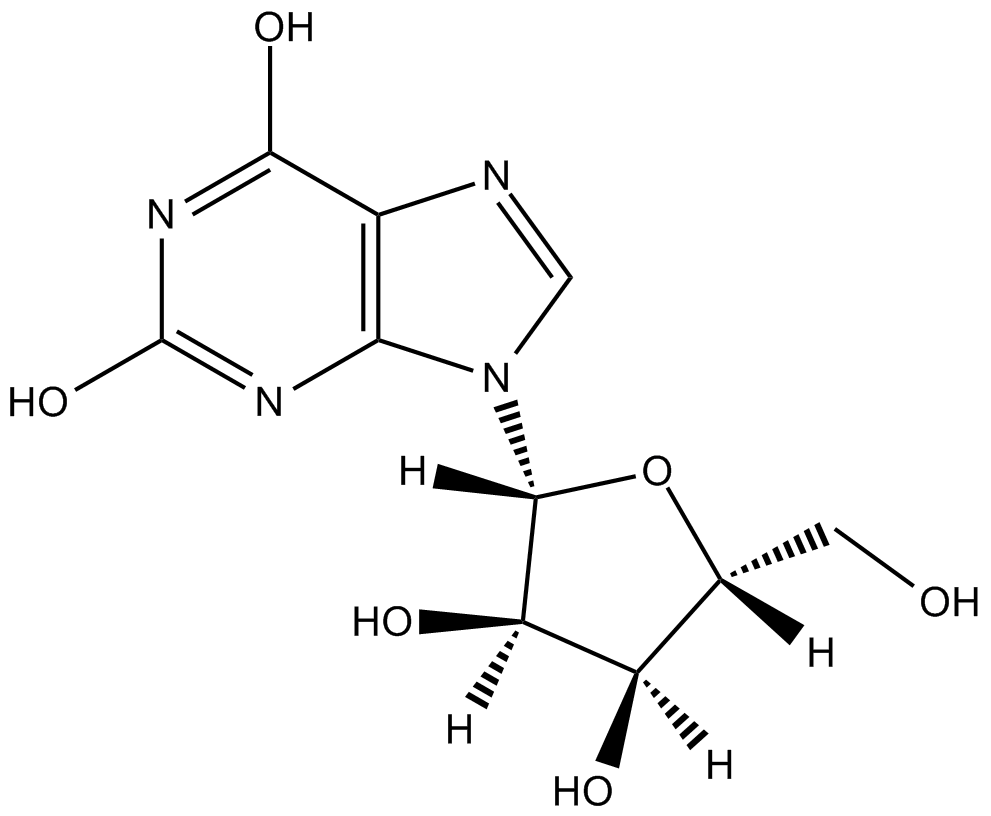
xanthosine (CAS No.: 146-80-5) is a naturally occurring purine nucleoside derived from xanthine and ribose, widely utilized as a biochemical tool in studies of cellular metabolism, stem cell biology, and signal transduction. It has been shown to modulate key intracellular signaling pathways, including activation of the AMPK/FoxO1/AKT/GSK3β cascade, thereby influencing cellular proliferation, differentiation, and metabolic regulation, particularly in the context of glucose homeostasis. In experimental models, xanthosine promotes the expansion of mammary stem cell populations and enhances lactation output in ruminant species, supporting its relevance in studies of mammary gland development and tissue regeneration. Its biological activity is typically observed in the nanomolar to micromolar concentration range depending on the assay system, reflecting its role as a metabolic regulator and signaling modulator. Xanthosine is commonly applied in in vitro cell-based assays and in vivo animal studies to investigate stem cell dynamics, metabolic signaling networks, and physiological regulation, with dosing and exposure conditions varying according to specific experimental objectives.
| Physical Appearance | Solid |
| Storage | -20°C |
| M.Wt | 284.23 |
| Cas No. | 146-80-5 |
| Formula | C10H12N4O6 |
| Solubility | insoluble in EtOH; insoluble in H2O; ≥8.6 mg/mL in DMSO with ultrasonic |
| Chemical Name | 9-((2R,3R,4S,5R)-3,4-dihydroxy-5-(hydroxymethyl)tetrahydrofuran-2-yl)-9H-purine-2,6-diol |
| Canonical SMILES | OC[C@](O1)([H])[C@](O)([H])[C@](O)([H])[C@]1([H])N2C=NC3=C2N=C(O)N=C3O |
| Shipping Condition | Small Molecules with Blue Ice, Modified Nucleotides with Dry Ice. |
| General tips | We do not recommend long-term storage for the solution, please use it up soon. |