xanthine
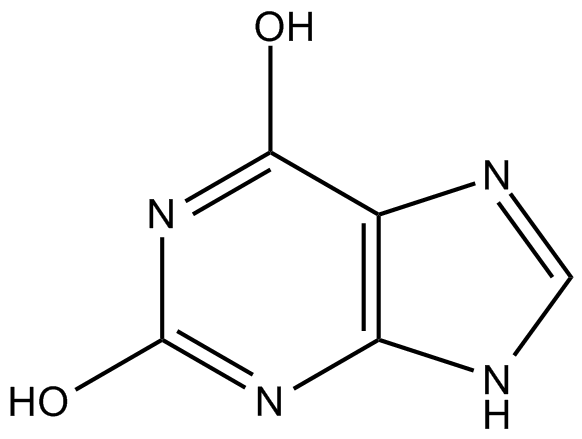





xanthine (CAS No.: 69-89-6) is a naturally occurring purine base widely distributed in mammalian tissues and fluids, as well as in plants and various dietary sources, where it functions as a key intermediate in purine catabolism and uric acid biosynthesis. Formed primarily through the oxidation of hypoxanthine by xanthine oxidase in the liver, xanthine is further metabolized by the same enzyme to generate uric acid, positioning it centrally within purine degradation pathways and redox-associated metabolic processes. In addition to its endogenous role, xanthine is structurally related to methylxanthines such as caffeine, theobromine, and theophylline, which are well-characterized modulators of phosphodiesterases and adenosine receptors, conferring bronchodilatory and central nervous system stimulant effects; however, xanthine itself exhibits comparatively modest biological activity. Its relevance in biomedical research includes its use as a substrate for studying xanthine oxidase function, oxidative stress mechanisms, and purine metabolism disorders, including gout, where altered xanthine levels may be observed. In vitro, xanthine is frequently employed in enzymatic assays and cell-based systems to model reactive oxygen species generation or to evaluate enzyme inhibitors, typically at concentrations ranging from low micromolar to millimolar levels depending on assay design. Furthermore, xanthine serves as a foundational scaffold in medicinal chemistry for the synthesis of bioactive derivatives with anticancer, anti-inflammatory, or neuromodulatory properties, making it a valuable tool compound in drug discovery and pharmacological research.
| Physical Appearance | A solid |
| Storage | -20°C |
| M.Wt | 152.11 |
| Cas No. | 69-89-6 |
| Formula | C5H4N4O2 |
| Synonyms | 2,6-Dihydroxypurine; NSC 14664 |
| Solubility | insoluble in H2O; insoluble in EtOH; ≥1.17 mg/mL in DMSO with gentle warming and ultrasonic |
| Chemical Name | 9H-purine-2,6-diol |
| Canonical SMILES | OC1=NC(O)=NC2=C1N=CN2 |
| Shipping Condition | Small Molecules with Blue Ice, Modified Nucleotides with Dry Ice. |
| General tips | We do not recommend long-term storage for the solution, please use it up soon. |