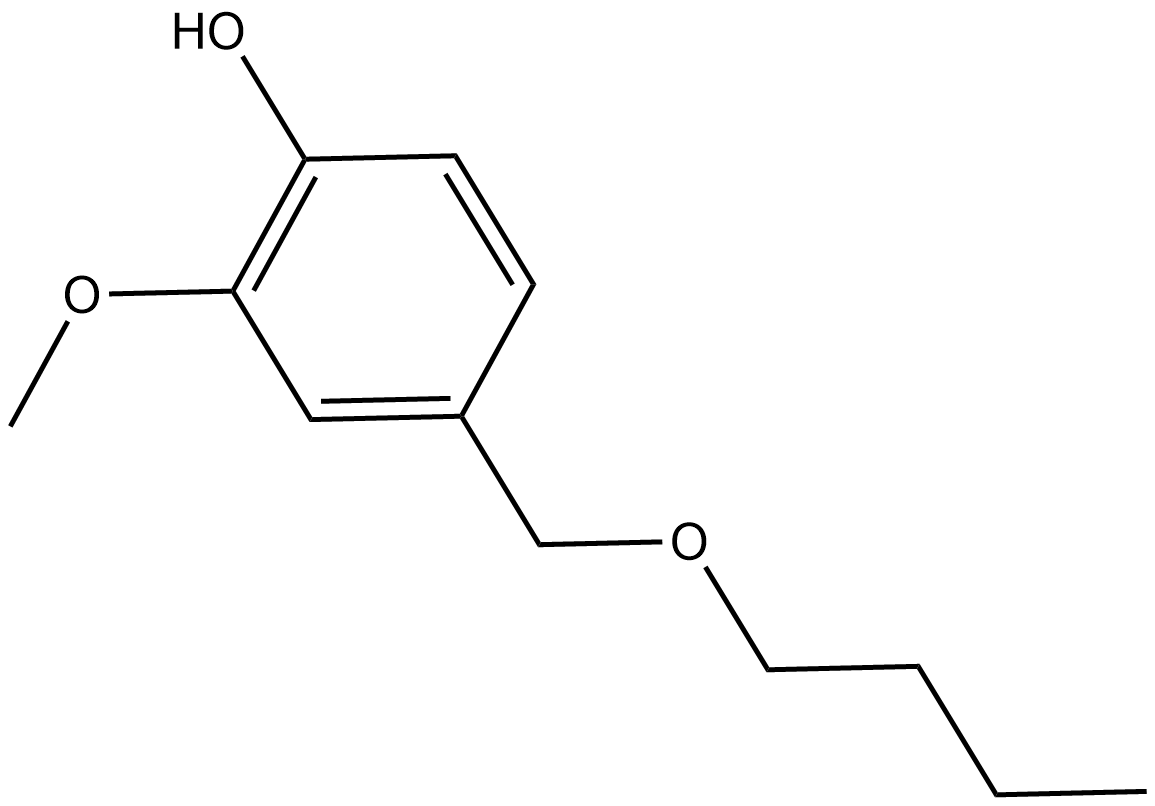
Vanillyl Butyl Ether
Vanillyl Butyl Ether (CAS No.: 82654-98-6) is a synthetic vanilloid derivative and alkoxy substituted aromatic ether that is commonly classified as a sensory modulator for chemical biology, neurophysiology, and translational pharmacology research, with functional relevance as a capsaicin analogue and as a fragrance or flavor associated compound in nonclinical industrial contexts, and current evidence indicates that its primary biological activity involves modulation of thermo sensitive transient receptor potential channels, particularly reciprocal functional effects on mammalian TRPV1 and TRPM8 signaling that are associated with sensory irritation and warming perception pathways, making it a useful probe for studying nociceptive transduction, chemesthetic signaling, peripheral sensory neuron activation, and receptor cross desensitization mechanisms; reported in vitro characterization in the literature is largely qualitative or semi quantitative, and where activity magnitudes are discussed they are generally described within nanomolar to micromolar range paradigms typical for vanilloid receptor modulators rather than consistently standardized potency datasets, so this molecule is primarily positioned as a research tool for target engagement studies, phenotypic assays, and comparative profiling against related sensory agonists in cell based systems, while broader experimental programs have also examined its repellent related bioactivity in selected invertebrate species to investigate chemosensory ecology and receptor driven behavioral responses, and in practical laboratory use it is typically incorporated into mechanistic workflows involving receptor expressing cell models, sensory neuron preparations, and exploratory animal studies of stimulus evoked responses, where the concentrations or doses used in experiments typically depend on specific experimental designs and research objectives.
| Storage | -20°C for 2 years |
| M.Wt | 210.27 |
| Cas No. | 82654-98-6 |
| Formula | C12H18O3 |
| Solubility | ≥43.4 mg/mL in DMSO; ≥38.1 mg/mL in EtOH; ≥38.8 mg/mL in H2O |
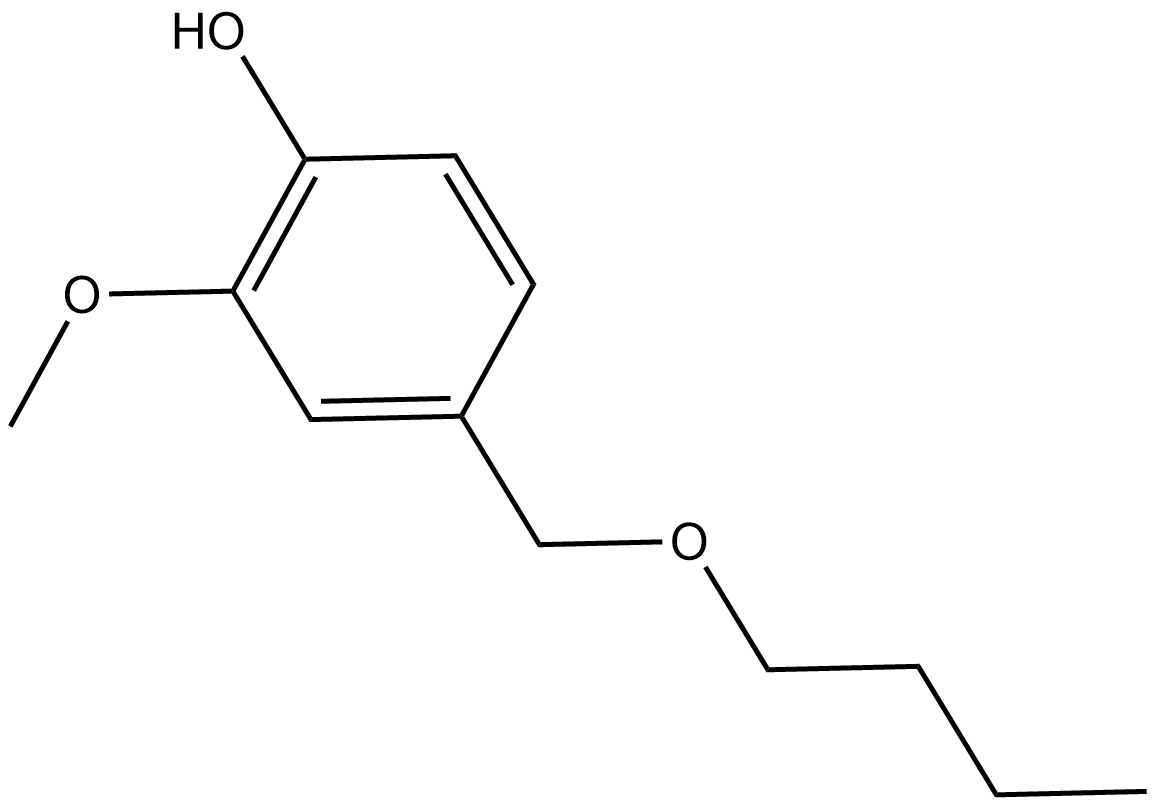
| Chemical Name | 4-(butoxymethyl)-2-methoxyphenol |
| Canonical SMILES | OC1=CC=C(C=C1OC)COCCCC |
| Shipping Condition | Small Molecules with Blue Ice, Modified Nucleotides with Dry Ice. |
| General tips | We do not recommend long-term storage for the solution, please use it up soon. |
Quality Control & MSDS
- View current batch:
Chemical structure