


UMP
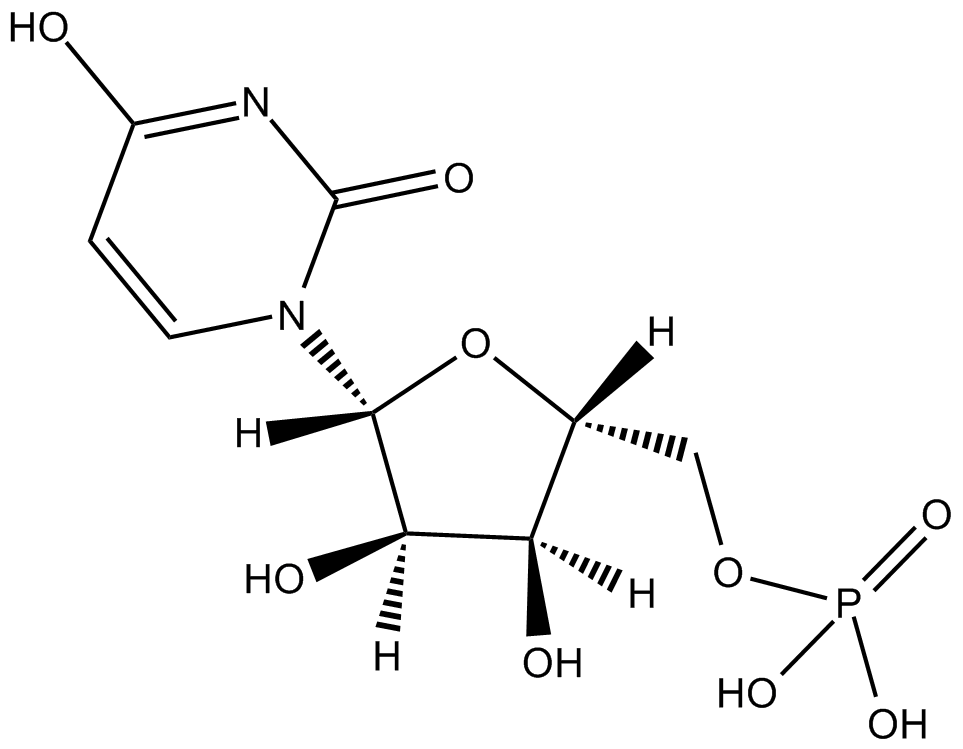





UMP (CAS No.: 58-97-9) is a naturally occurring pyrimidine ribonucleotide, also known as uridine 5′-monophosphate or 5′-uridylic acid, that serves as a fundamental intermediate in nucleotide metabolism and nucleic acid biosynthesis. It is generated via decarboxylation of orotidine monophosphate by OMP decarboxylase and is subsequently phosphorylated to yield higher-order uridine nucleotides that participate in RNA synthesis and cellular energy transfer processes. As a bioactive metabolite, UMP has been characterized as an activator of mitochondrial ATP-dependent potassium channels, implicating it in cytoprotective signaling pathways, particularly in cardiac tissue under stress conditions. Additionally, it contributes to phospholipid metabolism by promoting CDP-choline synthesis and has been reported to influence intestinal epithelial cell turnover, including induction of apoptosis in specific contexts relevant to gut development and barrier function. In vitro and cellular studies typically evaluate UMP activity across low micromolar to millimolar concentrations depending on the biological system and endpoint measured, reflecting its role as both a metabolic substrate and signaling modulator. UMP is widely utilized in biochemical and pharmacological research to investigate nucleotide metabolism, mitochondrial function, and cell differentiation, and it is also incorporated into nutritional and supplementation studies exploring its effects on tissue homeostasis and metabolic regulation.
| Physical Appearance | A solid |
| Storage | -20°C |
| M.Wt | 324.18 |
| Cas No. | 58-97-9 |
| Formula | C9H13N2O9P |
| Synonyms | UMP; 5′-UMP |
| Solubility | insoluble in EtOH; ≥25.95 mg/mL in H2O; ≥33.2 mg/mL in DMSO with ultrasonic |
| Chemical Name | ((2R,3S,4R,5R)-3,4-dihydroxy-5-(4-hydroxy-2-oxopyrimidin-1(2H)-yl)tetrahydrofuran-2-yl)methyl dihydrogen phosphate |
| Canonical SMILES | OC(C=CN1[C@@]2([H])[C@@](O)([H])[C@@](O)([H])[C@@](O2)([H])COP(O)(O)=O)=NC1=O |
| Shipping Condition | Small Molecules with Blue Ice, Modified Nucleotides with Dry Ice. |
| General tips | We do not recommend long-term storage for the solution, please use it up soon. |