Tyramine
Tyramine (CAS No.: 51-67-2) is a naturally occurring, tyrosine-derived monoamine and trace amine that functions as an endogenous neuromodulator and dietary bioactive compound with significant relevance in cardiovascular and neuropharmacological research. As an agonist of trace amine-associated receptor 1, tyramine modulates intracellular signaling pathways linked to monoaminergic neurotransmission and exerts indirect sympathomimetic effects primarily by promoting the release of catecholamines such as norepinephrine and dopamine, while also demonstrating inhibitory effects on their release in certain neuronal preparations at nanomolar to micromolar concentrations. Due to its limited ability to cross the blood-brain barrier, its activity is largely restricted to peripheral systems, where it contributes to vascular tone regulation and blood pressure modulation. Tyramine is widely used in experimental models to investigate monoamine metabolism, receptor pharmacology, and drug interactions, particularly in the context of monoamine oxidase inhibition, where elevated tyramine levels can precipitate hypertensive responses. In vitro and in vivo studies commonly employ tyramine to probe mechanisms of neurotransmitter release, receptor activation, and cardiovascular responses, with concentrations or dosing regimens tailored to specific assay conditions and research objectives in drug discovery and translational studies.
| Physical Appearance | A solid |
| Storage | -20°C |
| M.Wt | 137.18 |
| Cas No. | 51-67-2 |
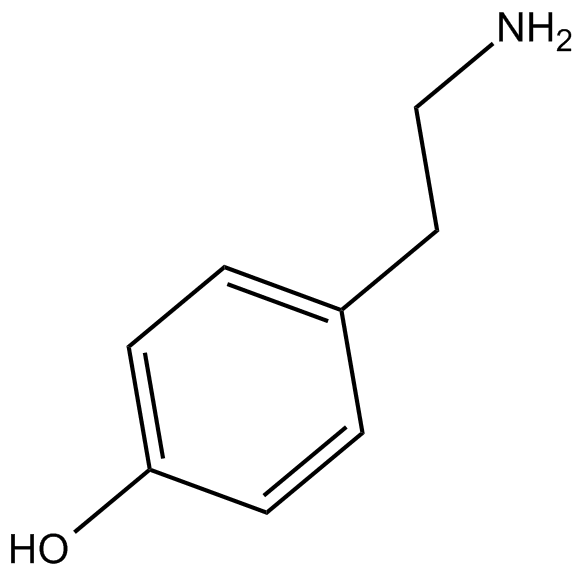
| Formula | C8H11NO |
| Synonyms | 2-(4-Hydroxyphenyl)ethylamine; NSC 249188; p -Tyramine; Uteramine |
| Solubility | insoluble in EtOH; insoluble in H2O; ≥17.57 mg/mL in DMSO |
| Chemical Name | 4-(2-aminoethyl)phenol |
| Canonical SMILES | OC1=CC=C(CCN)C=C1 |
| Shipping Condition | Small Molecules with Blue Ice, Modified Nucleotides with Dry Ice. |
| General tips | We do not recommend long-term storage for the solution, please use it up soon. |