


Tryptamine
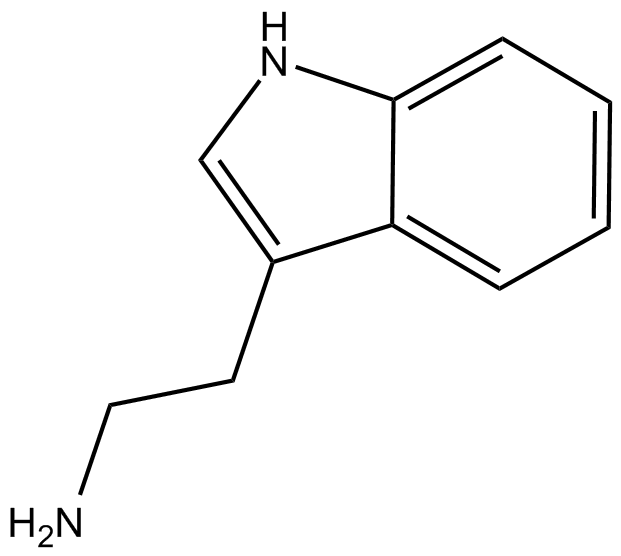
Tryptamine (CAS No.: 61-54-1) is an endogenous indole alkaloid belonging to the class of tryptamines, widely distributed in mammals and plants as a metabolic product of tryptophan and a key intermediate in the biosynthesis of serotonin and melatonin, making it highly relevant to neurochemical and endocrine research. Functionally, tryptamine acts as a blood–brain barrier-permeable neuromodulator with activity at serotonergic systems, including selective agonism at 5-HT4 receptors with effects observed in the low millimolar range, and serves as an endogenous ligand of the aryl hydrocarbon receptor with binding affinity in the nanomolar range, linking it to both neurotransmission and immune regulation pathways. Through activation of G protein-coupled receptors, tryptamine promotes intestinal anion secretion and enhances gastrointestinal motility, while in immune contexts it modulates the Th17/Treg balance, contributing to the suppression of neuroinflammatory processes. Additionally, it competitively interacts with multiple 5-HT receptor subtypes to influence central nervous system activity, thermoregulation, and spinal reflexes. In plant systems, tryptamine functions as a biosynthetic precursor for diverse indole alkaloids, supporting its relevance in natural product and metabolic engineering studies. Due to these multifaceted biological roles, tryptamine is widely used in studies of gut-brain axis signaling, neuroinflammation, receptor pharmacology, and intestinal motility disorders, as well as in screening paradigms investigating serotonergic and AHR-mediated pathways, with experimental concentrations typically optimized according to specific cellular or in vivo model requirements.
| Physical Appearance | A solid |
| Storage | -20°C |
| M.Wt | 160.22 |
| Cas No. | 61-54-1 |
| Formula | C10H12N2 |
| Synonyms | 3-Indoleethylamine; NSC 165212 |
| Solubility | insoluble in H2O; ≥28.1 mg/mL in EtOH; ≥31.4 mg/mL in DMSO |
| Chemical Name | 2-(1H-indol-3-yl)ethanamine |
| Canonical SMILES | NCCC1=CNC2=CC=CC=C21 |
| Shipping Condition | Small Molecules with Blue Ice, Modified Nucleotides with Dry Ice. |
| General tips | We do not recommend long-term storage for the solution, please use it up soon. |