


Tridecanoic Acid
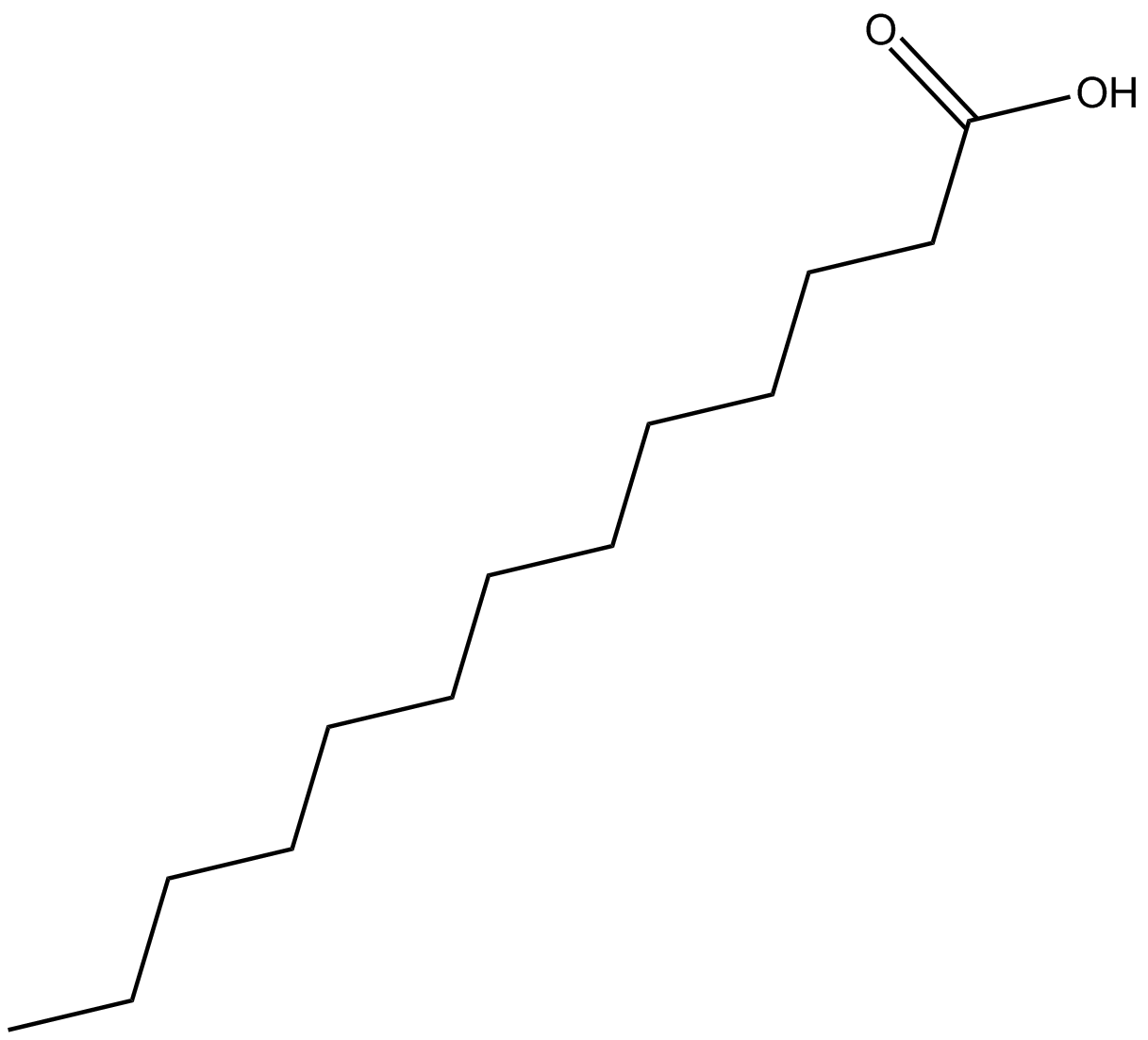
Tridecanoic Acid (CAS No.: 638-53-9) is a saturated fatty acid belonging to the class of long-chain fatty acids, characterized by an aliphatic chain length within the biologically relevant range for lipid metabolism and membrane interactions. It is naturally found in dairy products and can also arise from the anaerobic biodegradation of hydrocarbons, reflecting its relevance in both physiological and environmental lipid processes. Functionally, tridecanoic acid has been identified as a substrate of phospholipase A2, implicating it in phospholipid remodeling and inflammatory signaling pathways. In microbiological research, it exhibits modulatory rather than direct antibacterial activity, notably suppressing persister cell formation in exponentially growing Escherichia coli and enterohemorrhagic E. coli when used in combination with antibiotics such as ciprofloxacin or ampicillin, while showing no effect under certain conditions such as kanamycin-induced persistence or stationary-phase cells. Additionally, it inhibits biofilm formation, highlighting its utility in studies of bacterial virulence and persistence mechanisms. Its activity is generally observed in low to moderate micromolar ranges typical of fatty acid-mediated biological effects, although precise potency depends on experimental context. Tridecanoic acid is therefore widely used in studies of host–microbe interactions, lipid enzymology, and antimicrobial adjuvant screening, with experimental concentrations or dosing regimens tailored to specific cellular systems or in vivo models.
| Physical Appearance | A solid |
| Storage | -20°C |
| M.Wt | 214.34 |
| Cas No. | 638-53-9 |
| Formula | C13H26O2 |
| Synonyms | FA 13:0; NSC 25955; NSC 69131; n-Tridecanoic Acid; n-Tridecoic Acid; Tridecylic Acid |
| Solubility | insoluble in H2O; ≥75.4 mg/mL in DMSO; ≥88.8 mg/mL in EtOH |
| Chemical Name | tridecanoic acid |
| Canonical SMILES | OC(CCCCCCCCCCCC)=O |
| Shipping Condition | Small Molecules with Blue Ice, Modified Nucleotides with Dry Ice. |
| General tips | We do not recommend long-term storage for the solution, please use it up soon. |