


Triadimefon
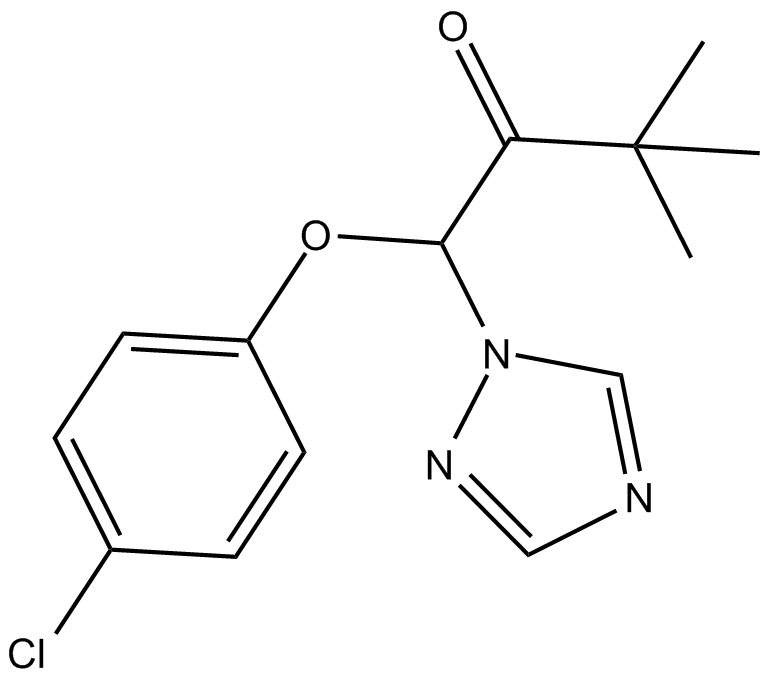
Triadimefon (CAS No.: 43121-43-3) is a triazole-class fungicide widely utilized as a biochemical tool in studies of sterol biosynthesis, endocrine regulation, and cellular signaling, characterized by its inhibition of lanosterol 14α-demethylase, a key enzyme in the ergosterol biosynthetic pathway of fungi, thereby disrupting membrane integrity and fungal growth through interference with oxidative demethylation reactions. In addition to its antifungal activity against organisms such as Saccharomyces cerevisiae, Triadimefon has been shown to modulate mammalian signaling pathways, including suppression of AKT1 and ERK1/2 phosphorylation and activation of AMPK, indicating broader effects on cellular metabolism and stress responses. It also interferes with gibberellin biosynthesis and has been reported to perturb hormone homeostasis, including steroidogenesis, and to influence developmental and neurobehavioral outcomes in animal models, making it relevant for toxicological and endocrine disruption research. In vitro activity is typically observed in the low micromolar range, consistent with its role as a metabolic enzyme inhibitor, although potency may vary depending on the biological system and assay conditions. Triadimefon is commonly applied in cell-based assays to investigate sterol metabolism, kinase signaling, and hepatocellular metabolic shifts, as well as in in vivo models to assess developmental toxicity and neuroendocrine effects, with experimental concentrations or doses adjusted according to specific study designs and endpoints.
| Physical Appearance | A solid |
| Storage | -20°C |
| M.Wt | 293.75 |
| Cas No. | 43121-43-3 |
| Formula | C14H16ClN3O2 |
| Synonyms | BAY6681F; BAY-MED 6447; NSC 303303; Triadimeform |
| Solubility | insoluble in H2O; ≥20.4 mg/mL in EtOH; ≥37 mg/mL in DMSO |
| Chemical Name | 1-(4-chlorophenoxy)-3,3-dimethyl-1-(1H-1,2,4-triazol-1-yl)butan-2-one |
| Canonical SMILES | ClC1=CC=C(OC(N2C=NC=N2)C(C(C)(C)C)=O)C=C1 |
| Shipping Condition | Small Molecules with Blue Ice, Modified Nucleotides with Dry Ice. |
| General tips | We do not recommend long-term storage for the solution, please use it up soon. |