trans-Zeatin
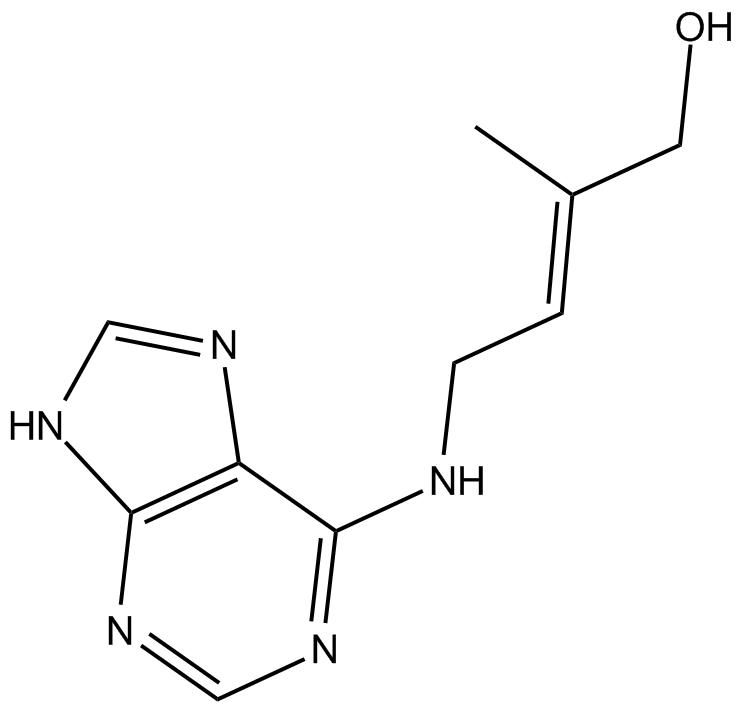
trans-Zeatin (CAS No.: 1637-39-4) is a naturally occurring aminopurine cytokinin widely distributed in plant extracts and recognized as a key regulator of plant cell division, growth, and differentiation, making it a valuable tool in both plant biology and translational biomedical research. As a high-affinity ligand for cytokinin receptors such as Arabidopsis histidine kinase 3, trans-zeatin activates cytokinin signaling pathways that modulate gene expression and developmental processes, while also demonstrating the ability to interfere with UV-induced MEK/ERK pathway activation, suggesting broader relevance to conserved eukaryotic signaling mechanisms. In vitro studies indicate biological activity spanning nanomolar to micromolar ranges, including promotion of chlorophyll biosynthesis, stimulation of callus proliferation and shoot regeneration in plant tissue cultures, and attenuation of oxidative stress through reduction of reactive oxygen species in neuronal-like cell models exposed to amyloidogenic peptides. Additionally, emerging evidence supports antioxidant and neuroprotective properties, with behavioral improvements observed in rodent models of cognitive impairment, positioning trans-zeatin as a candidate for investigating neurodegenerative disease mechanisms and redox biology. Its dual relevance to plant physiology and mammalian cell signaling makes it a versatile reagent for studies of cell cycle regulation, stress responses, and pathway-targeted screening, with experimental concentrations or dosing regimens typically optimized according to specific cellular or in vivo research objectives.
| Physical Appearance | A solid |
| Storage | -20°C |
| M.Wt | 219.24 |
| Cas No. | 1637-39-4 |
| Formula | C10H13N5O |
| Solubility | insoluble in H2O; insoluble in EtOH; ≥8.06 mg/mL in DMSO with ultrasonic |
| Chemical Name | (E)-4-((9H-purin-6-yl)amino)-2-methylbut-2-en-1-ol |
| Canonical SMILES | OC/C(C)=C/CNC1=NC=NC2=C1N=CN2 |
| Shipping Condition | Small Molecules with Blue Ice, Modified Nucleotides with Dry Ice. |
| General tips | We do not recommend long-term storage for the solution, please use it up soon. |