


Tetrazolium (chloride)
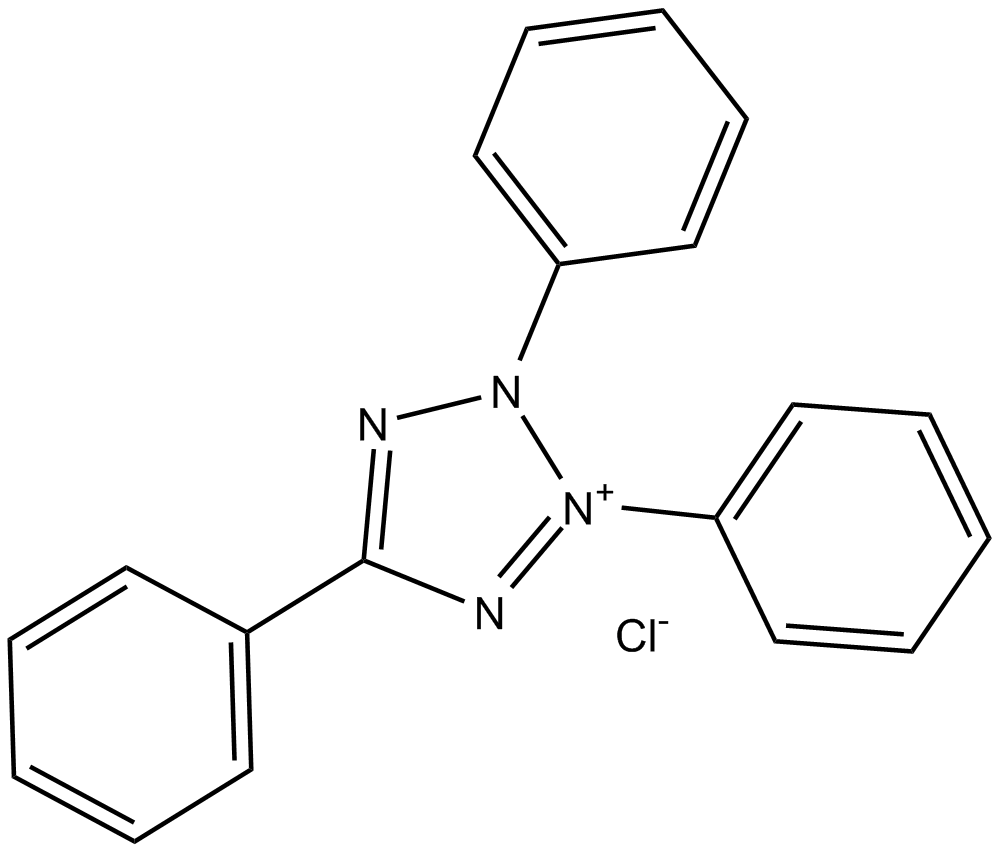
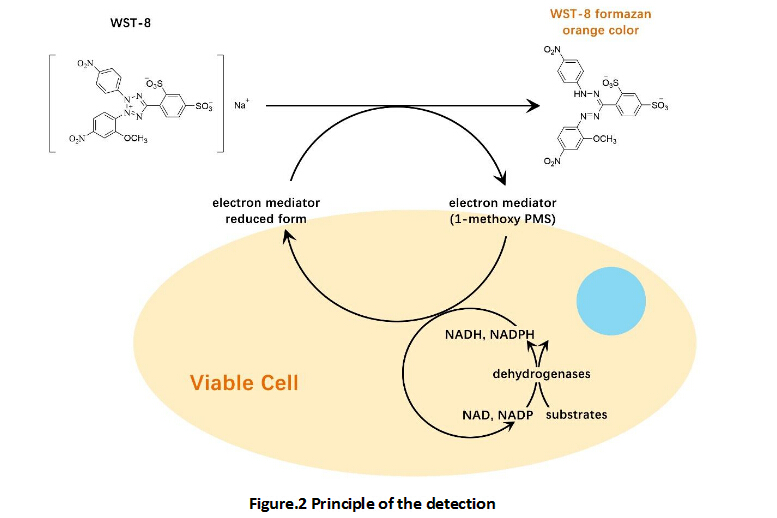
Tetrazolium (chloride) (CAS No.: 298-96-4) is a classical tetrazolium salt and redox indicator widely used in biomedical research to assess mitochondrial function, cellular respiration, and tissue viability. This compound is a colorless, water-soluble dye that undergoes enzymatic reduction primarily by mitochondrial dehydrogenases, particularly those associated with Complex I of the electron transport chain, to form a deep red, water-insoluble formazan product within viable cells. This conversion provides a direct functional readout of mitochondrial enzymatic activity and cellular metabolic integrity, making it a valuable tool for probing mitochondrial redox potential and cell viability. Tetrazolium (chloride) is extensively applied in studies of ischemic injury, where it enables clear discrimination between viable and necrotic tissues, especially in brain and cardiac models following stroke or infarction, and is commonly used to quantify lesion size and assess therapeutic interventions. With a characteristic absorbance at 570 nm, it is also employed in spectrophotometric and imaging-based assays of dehydrogenase activity in cell-based systems. While not penetrating intact blood–brain barriers in vivo, it is broadly utilized in ex vivo tissue staining and in vitro cellular assays, where experimental concentrations typically fall within micromolar ranges depending on assay conditions. Overall, Tetrazolium (chloride) serves as a robust and reliable indicator of mitochondrial activity and cellular viability in both basic research and preclinical drug discovery settings.
| Physical Appearance | A solid |
| Storage | -20°C |
| M.Wt | 334.8 |
| Cas No. | 298-96-4 |
| Formula | C19H15ClN4 |
| Synonyms | Tetrazolium Red; 2,3,5-Triphenyl Tetrazolium Chloride; TTC |
| Solubility | ≥53.2 mg/mL in DMSO; ≥58.9 mg/mL in EtOH; ≥86.2 mg/mL in H2O |
| Chemical Name | 2,3,5-triphenyl-2H-tetrazol-3-ium chloride |
| Canonical SMILES | C1([N+]2=NC(C3=CC=CC=C3)=NN2C4=CC=CC=C4)=CC=CC=C1.[Cl-] |
| Shipping Condition | Small Molecules with Blue Ice, Modified Nucleotides with Dry Ice. |
| General tips | We do not recommend long-term storage for the solution, please use it up soon. |