


Temoporfin
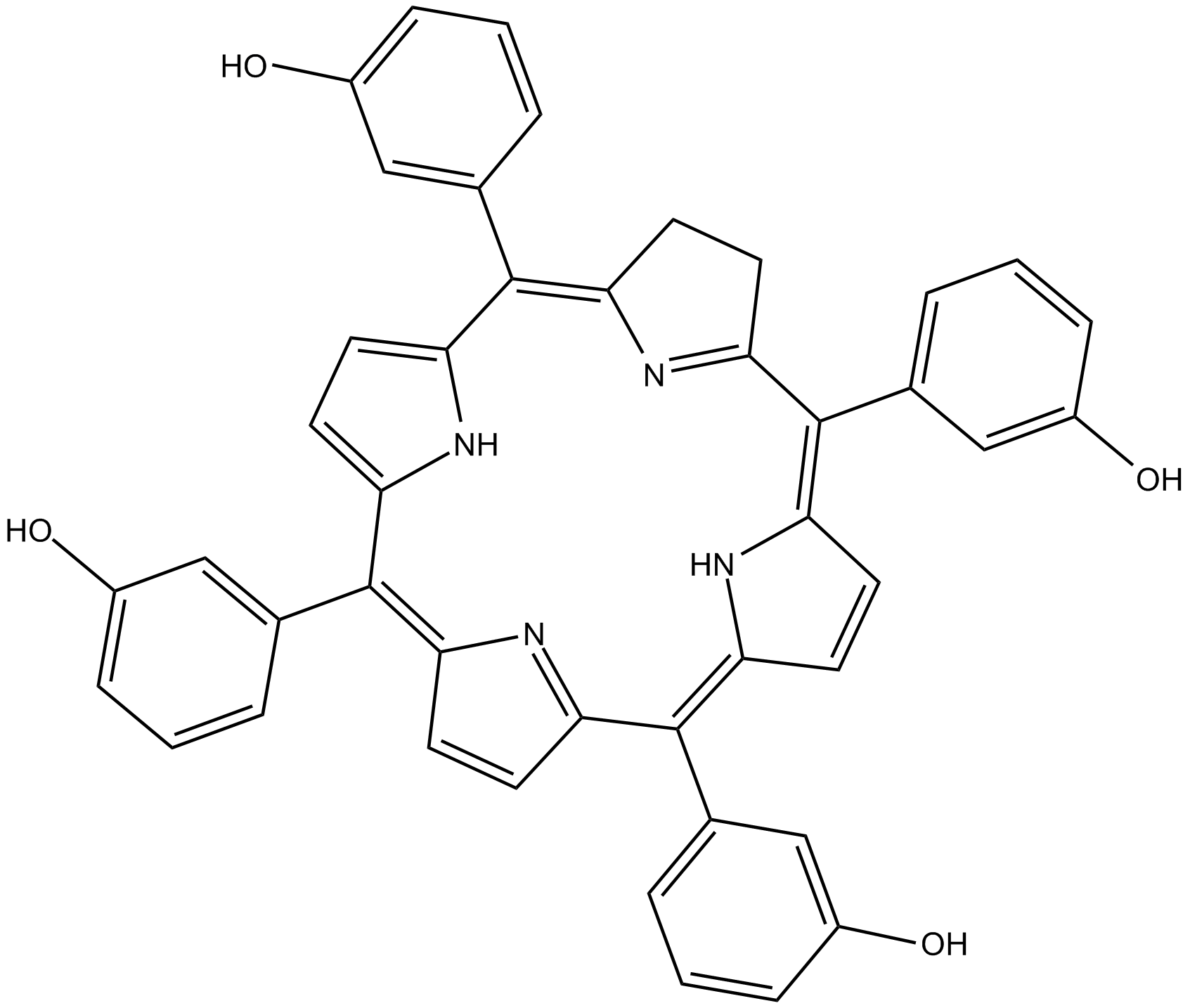
Temoporfin (CAS No.: 122341-38-2) is a second-generation photosensitizing agent belonging to the reduced porphyrin class, widely utilized in photodynamic therapy research, particularly for head and neck malignancies. Originally developed for oncologic applications and approved in Europe for the treatment of squamous cell carcinoma of the head and neck, temoporfin functions by generating reactive oxygen species upon activation with specific wavelengths of light, leading to localized oxidative damage, cellular apoptosis, and vascular shutdown in targeted tissues. Its mechanism of action primarily involves photoactivation-dependent cytotoxicity mediated through singlet oxygen production, influencing pathways associated with oxidative stress, mitochondrial dysfunction, and cell death signaling. In vitro studies typically demonstrate potent activity in the nanomolar to low micromolar range depending on light exposure parameters and cellular context. In research settings, temoporfin is extensively applied in cancer cell lines and preclinical animal models to investigate photodynamic therapy efficacy, tumor selectivity, and combination strategies with other therapeutic modalities. Experimental dosing and irradiation conditions vary according to study design, with careful optimization required to balance phototoxic effects and tissue specificity.
| Physical Appearance | A solid |
| Storage | -20°C |
| M.Wt | 680.75 |
| Cas No. | 122341-38-2 |
| Formula | C44H32N4O4 |
| Synonyms | Foscan; KW 2345; m -THPC |
| Solubility | ≥24.95 mg/mL in DMSO; ≥9.7 mg/mL in EtOH; insoluble in H2O |
| Canonical SMILES | OC1=CC(/C2=C3N/C(C=C/3)=C(C4=N/C(C=C4)=C(C5=CC=C(N5)/C(C6=CC(O)=CC=C6)=C7N=C2CC\7)/C8=CC(O)=CC=C8)/C9=CC=CC(O)=C9)=CC=C1 |
| Shipping Condition | Small Molecules with Blue Ice, Modified Nucleotides with Dry Ice. |
| General tips | We do not recommend long-term storage for the solution, please use it up soon. |