


Sesamol
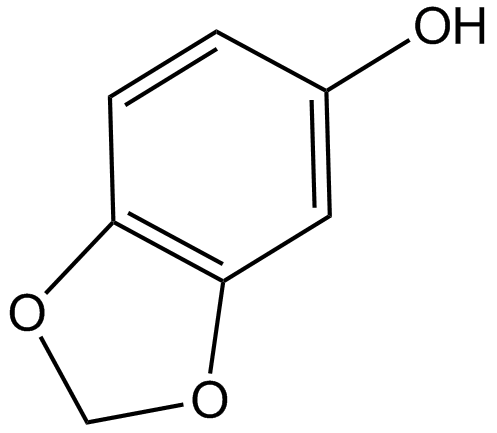
Sesamol (CAS No.: 533-31-3) is a naturally occurring phenolic lignan derived from sesame oil (Sesamum indicum) that is widely utilized in biomedical research due to its multifaceted biological activities, particularly its potent antioxidant properties. It exhibits strong free radical scavenging capacity, as demonstrated in cell-free systems such as the DPPH assay where it shows activity in the low micromolar range, and it effectively attenuates intracellular oxidative stress by modulating redox-sensitive pathways. Mechanistically, sesamol is reported to interfere with reactive oxygen species-mediated signaling cascades, thereby influencing pathways associated with cell survival, apoptosis, and proliferation, which underlies its observed anticancer effects in various tumor cell models, including hepatocellular carcinoma cells. In addition to its antioxidant and anticancer activities, sesamol displays antibacterial effects against certain Gram-positive organisms and has been implicated in metabolic regulation, as evidenced by its ability to reduce lipid accumulation and hepatic steatosis in diet-induced obesity models. Owing to these properties, sesamol serves as a valuable tool compound in studies of oxidative stress, cancer biology, inflammation, and metabolic disorders, and is frequently employed in both in vitro and in vivo experimental systems, with concentrations or dosing regimens varying according to specific study designs and therapeutic investigation objectives.
| Physical Appearance | A solid |
| Storage | -20°C |
| M.Wt | 138.12 |
| Cas No. | 533-31-3 |
| Formula | C7H6O3 |
| Synonyms | NSC 59256 |
| Solubility | ≥109.6 mg/mL in EtOH; ≥4.78 mg/mL in H2O; ≥92 mg/mL in DMSO |
| Chemical Name | benzo[d][1,3]dioxol-5-ol |
| Canonical SMILES | OC1=CC2=C(OCO2)C=C1 |
| Shipping Condition | Small Molecules with Blue Ice, Modified Nucleotides with Dry Ice. |
| General tips | We do not recommend long-term storage for the solution, please use it up soon. |