


sebacate (decanedioate)
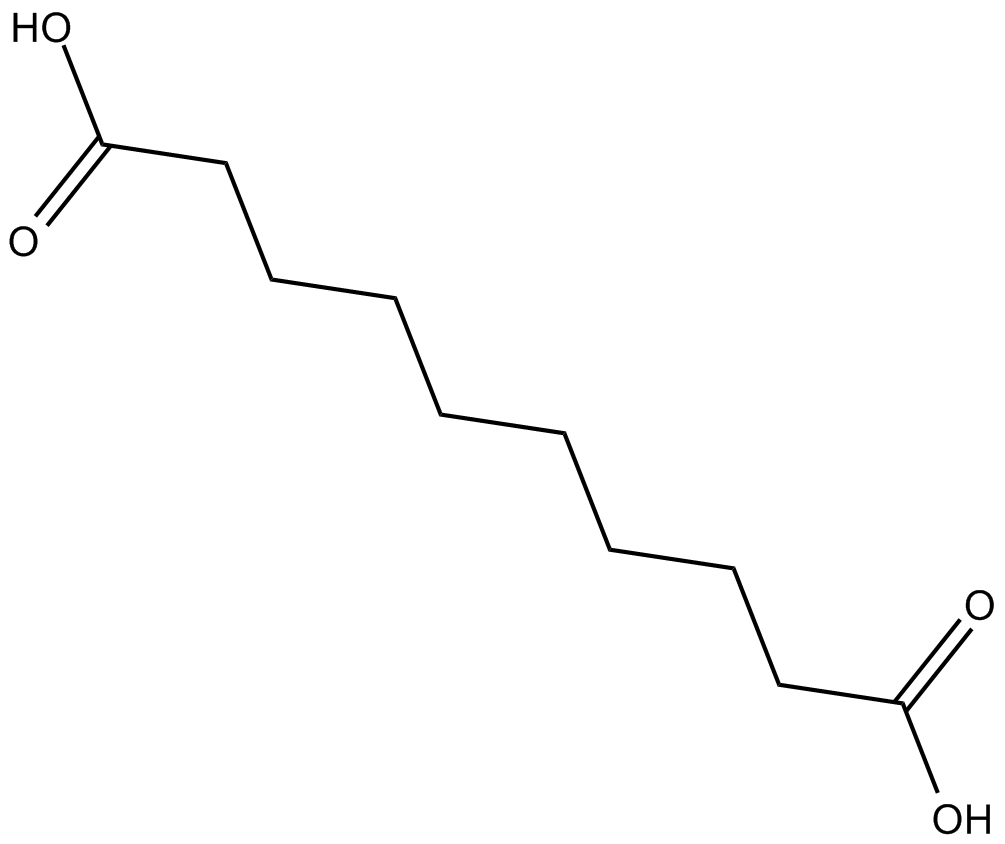
sebacate (decanedioate) (CAS No.: 111-20-6) is a naturally occurring, saturated, straight-chain dicarboxylic acid belonging to the class of medium-chain fatty acids, characterized by its aliphatic structure and involvement in intermediary metabolism. This compound is commonly detected as a metabolic intermediate derived from ω-oxidation pathways and is closely associated with mitochondrial fatty acid β-oxidation processes, making it relevant to studies of cellular energy homeostasis and metabolic flexibility. Sebacate has been implicated in biochemical pathways involving acylcarnitine transport and mitochondrial enzyme systems, including carnitine-acylcarnitine translocase and medium-chain acyl-CoA dehydrogenase, and is therefore frequently utilized as a probe in investigations of metabolic dysfunction and lipid utilization. In experimental systems, it has been shown to modulate lipid metabolism and mitochondrial activity, with reported bioactivity typically observed in the micromolar concentration range depending on the model context. Sebacate is widely applied in in vitro and in vivo research models to examine mechanisms underlying metabolic-associated disorders, including alterations in hepatic lipid accumulation and systemic energy balance, as well as in screening platforms for compounds targeting fatty acid oxidation pathways; the concentrations or doses used in experiments typically depend on specific experimental designs and research objectives.
| Physical Appearance | Solid |
| Storage | -20°C |
| M.Wt | 202.25 |
| Cas No. | 111-20-6 |
| Formula | C10H18O4 |
| Solubility | insoluble in H2O; ≥25.8 mg/mL in EtOH; ≥42.2 mg/mL in DMSO |
| Chemical Name | decanedioic acid |
| Canonical SMILES | O=C(O)CCCCCCCCC(O)=O |
| Shipping Condition | Small Molecules with Blue Ice, Modified Nucleotides with Dry Ice. |
| General tips | We do not recommend long-term storage for the solution, please use it up soon. |