


scyllo-inositol
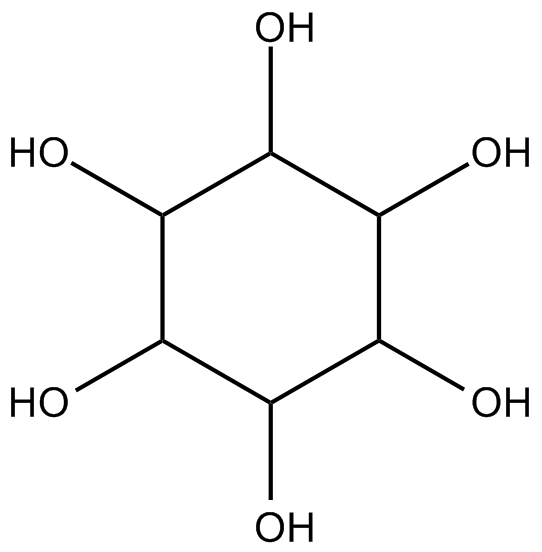





scyllo-inositol (CAS No.: 488-59-5) is a naturally occurring stereoisomer of inositol, historically regarded as a putative member of the B vitamin complex, and is widely studied for its role in cellular signaling and neurodegenerative disease modulation. As a small, bioactive polyol associated with inositol phospholipid-mediated signal transduction pathways, scyllo-inositol has gained prominence as a modulator of protein misfolding and aggregation, particularly targeting pathogenic species such as amyloid-β and α-synuclein. Mechanistically, it interacts with hydrophobic regions of misfolded proteins, stabilizing non-toxic oligomeric forms and preventing their conversion into fibrillar aggregates, while also promoting clearance through lysosomal and proteasomal degradation pathways, thereby contributing to protein homeostasis and neuroprotection. In vitro studies indicate activity in the low micromolar to millimolar range depending on assay conditions, including inhibition of amyloid fibril formation and protection against peptide-induced cytotoxicity in neuronal cell models. In vivo, it has demonstrated the ability to penetrate the blood-brain barrier and reduce soluble and insoluble amyloid burden, as well as improve cognitive performance and survival in transgenic models of Alzheimer’s disease. These properties make scyllo-inositol a valuable tool compound for investigating aggregation-related pathologies and for evaluating therapeutic strategies targeting neurodegenerative disorders such as Alzheimer’s, Parkinson’s, and Huntington’s diseases, with experimental dosing and application conditions varying according to specific study designs.
| Physical Appearance | A solid |
| Storage | -20°C |
| M.Wt | 180.16 |
| Cas No. | 488-59-5 |
| Formula | C6H12O6 |
| Synonyms | ELND 005; scyllo -Cyclohexanehexol |
| Solubility | insoluble in EtOH; insoluble in DMSO; ≥22.15 mg/mL in H2O |
| Chemical Name | (1r,2r,3r,4r,5r,6r)-cyclohexane-1,2,3,4,5,6-hexaol |
| Canonical SMILES | O[C@@H]1[C@@H](O)[C@H](O)[C@@H](O)[C@H](O)[C@H]1O |
| Shipping Condition | Small Molecules with Blue Ice, Modified Nucleotides with Dry Ice. |
| General tips | We do not recommend long-term storage for the solution, please use it up soon. |