


Salicylamide
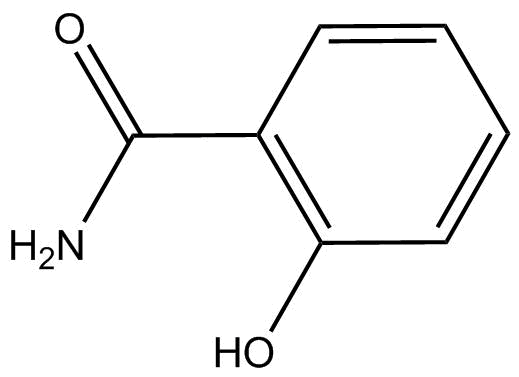
Salicylamide (CAS No.: 65-45-2) is a salicylic acid–derived small molecule widely utilized in biochemical and pharmacological research as a reference compound for investigating inflammatory signaling and xenobiotic metabolism. It is characterized as an inhibitor of cyclooxygenase-mediated prostaglandin biosynthesis and has also been reported to interfere with microsomal UDP-glucuronosyltransferase activity, thereby influencing both inflammatory mediator production and phase II metabolic pathways. Through modulation of the COX pathway, Salicylamide serves as a useful tool for studying mechanisms underlying inflammatory responses, nociceptive signaling, and thermoregulatory processes in cellular and preclinical models. In vitro studies typically demonstrate activity in the low micromolar to higher concentration ranges depending on assay conditions and target systems. In research settings, it is frequently employed as a comparator molecule in structure–activity relationship analyses of salicylate analogs and in screening workflows aimed at identifying modulators of prostaglandin synthesis or conjugative metabolism. Experimental applications span enzyme assays, cultured cell systems, and animal models of inflammation, with concentrations or dosing regimens adjusted according to specific experimental objectives and design parameters.
| Physical Appearance | A solid |
| Storage | -20°C |
| M.Wt | 137.14 |
| Cas No. | 65-45-2 |
| Formula | C7H7NO2 |
| Solubility | insoluble in H2O; ≥21.4 mg/mL in EtOH; ≥36.4 mg/mL in DMSO |
| Chemical Name | 2-hydroxybenzamide |
| Canonical SMILES | O=C(N)C1=C(O)C=CC=C1 |
| Shipping Condition | Small Molecules with Blue Ice, Modified Nucleotides with Dry Ice. |
| General tips | We do not recommend long-term storage for the solution, please use it up soon. |