


Ritalinic Acid
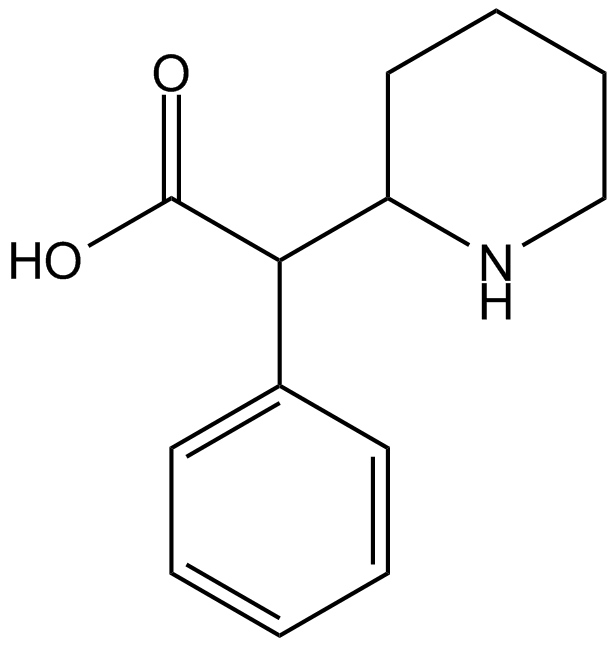





Ritalinic Acid (CAS No.: 19395-41-6) is the principal inactive metabolite of methylphenidate, a centrally acting psychostimulant widely used in research related to attention-deficit hyperactivity disorder and narcolepsy, and is formed predominantly through hepatic metabolism followed by urinary excretion. Lacking intrinsic central nervous system stimulant activity, ritalinic acid does not significantly inhibit dopamine or norepinephrine transporters, distinguishing it functionally from its parent compound while making it a valuable biomarker for metabolic profiling. It is commonly detected at plasma concentrations substantially higher than those of methylphenidate and serves as a key analyte in pharmacokinetic studies, therapeutic drug monitoring, and forensic investigations assessing drug exposure and compliance. In biomedical research, ritalinic acid is primarily utilized as an analytical reference standard for the development and validation of bioanalytical assays, as well as for studying metabolic pathways and disposition of methylphenidate in vitro and in vivo. While it does not exhibit notable activity across canonical neurotransmitter-related targets, it supports investigations into drug metabolism and elimination processes, with experimental concentrations typically selected according to assay sensitivity and study design requirements.
| Physical Appearance | A solid |
| Storage | -20°C |
| M.Wt | 219.28 |
| Cas No. | 19395-41-6 |
| Formula | C13H17NO2 |
| Solubility | insoluble in EtOH; insoluble in DMSO; insoluble in H2O |
| Chemical Name | 2-phenyl-2-(piperidin-2-yl)acetic acid |
| Canonical SMILES | OC(C(C1=CC=CC=C1)C2CCCCN2)=O |
| Shipping Condition | Small Molecules with Blue Ice, Modified Nucleotides with Dry Ice. |
| General tips | We do not recommend long-term storage for the solution, please use it up soon. |