


Recombinant Human KGF-2/FGF-10, Tag Free
Fibroblast growth factor 10 belongs to the fibroblast growth factor (FGF) family which is involved in a variety of biological processes such as embryonic development, cell growth, morphogenesis, tissue repair, tumor growth and invasion. Like most other FGF family members, FGF-10 also has a heparin-binding domain and it plays an important role in the regulation of embryonic development, cell proliferation and cell differentiation. In addition, FGF-10 may play a role in wound healing and is required for normal branching morphogenesis. Recombinant human FGF-10 contains a 208 amino acids and it shares 92 % and 95 % amino acid sequence identity with murine and rat FGF-10. Defects in FGF-10 are the cause of autosomal dominant aplasia of lacrimal and salivary glands and lacrimo-auriculo-dento-digital syndrome.
Reference:
1. Emoto H, Tagashira S, Mattei MG, et al. 1997. J Biol Chem. 272:23191-4.
2. Tagashira S, Harada H, Katsumata T, et al. 1997. Gene. 197:399-404.
3. Carninci P, Kasukawa T, Katayama S, et al. 2005. Science. 309:1559-63.
4. Igarashi M, Finch PW, Aaronson SA. 1998. J Biol Chem. 273:13230-5.
5. Entesarian M, Matsson H, Klar J, et al. 2005. Nat Genet. 37:125-7.
| Gene ID | 2255 |
| Accession # | O15520 |
| Alternate Names | FGF10;?FGF-10;?fibroblast?growth?factor?10;?Keratinocyte?growth?factor?2;?KGF2;?KGF-2 |
| Source | E.coli |
| Protein sequence | MCQALGQDMV SPEATNSSSS SFSSPSSAGR HVRSYNHLQG DVRWRKLFSF TKYFLKIEKN GKVSGTKKEN CPYSILEITS VEIGVVAVKA INSNYYLAMN KKGKLYGSKE FNNDCKLKER IEENGYNTYA SFNWQHNGRQ MYVALNGKGA PRRGQKTRRK NTSAHFLPMV VHS |
| M.Wt | The protein has a calculated MW of 19.5 KDa. |
| Appearance | Solution protein |
| Stability & Storage | Use a manual defrost freezer and avoid repeated freeze-thaw cycles - 36 months from date of receipt, -20 to -70°C as supplied |
| Concentration | 1 mg/mL |
| Formulation | Supplied as a 0.2 μm filtered solution in PBS, pH7.4. |
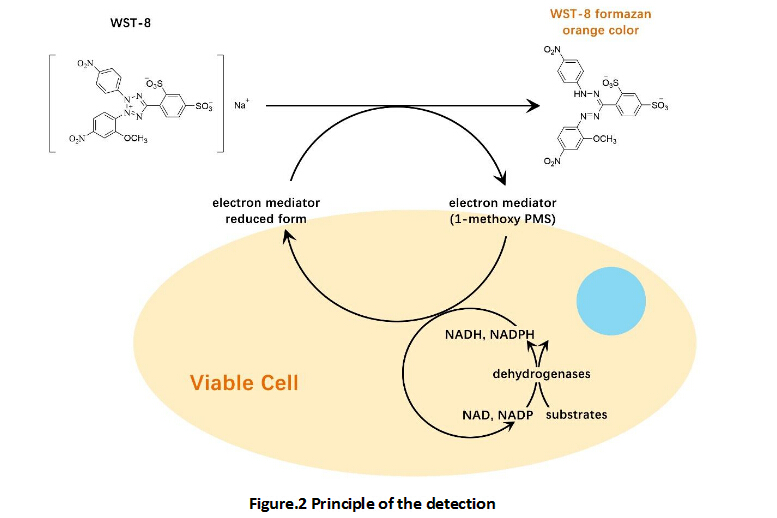
| Biological Activity | Fully biologically active as determined by a cell proliferation assay using MCF-7 cells. The EC50 for this effect is 20-100 ng/mL. |
| Shipping Condition | Shipping with dry ice. |
| Usage | For Research Use Only! Not to be used in humans. |