Reactive Oxygen Species (ROS) Assay Kit (DHE)
Reactive oxygen species (ROS), including superoxide anion, hydrogen peroxide and hydroxyl radicals, are natural by-products of cellular metabolism of oxygen. Physiological levels of ROS are involved in cell signaling, but excess ROS can exceed the antioxidant capacity of cells, cause DNA, protein and lipid damage, and disrupt the thiol redox balance, leading to apoptosis, necrosis, or abnormal signaling.
This kit can be used to detect superoxide in living cells. The principle is based on the fact that DHE can enter living cells and react with intracellular superoxide to produce ethidium, which binds DNA or RNA and shows red fluorescence. The fluorescent signal is proportional to the ROS level.
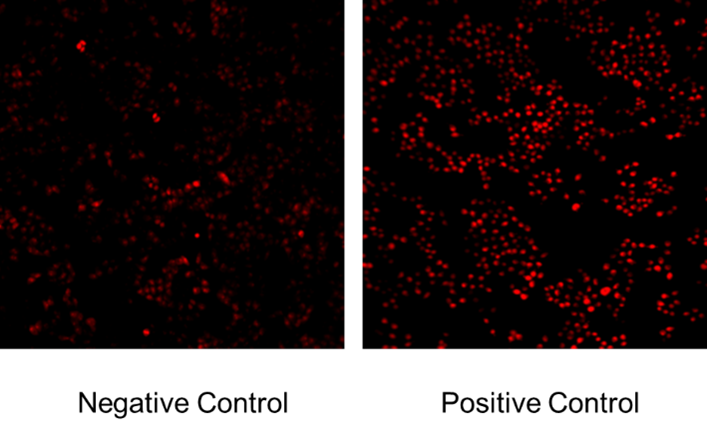
Figure 1: Detection of ROS in Hela cells
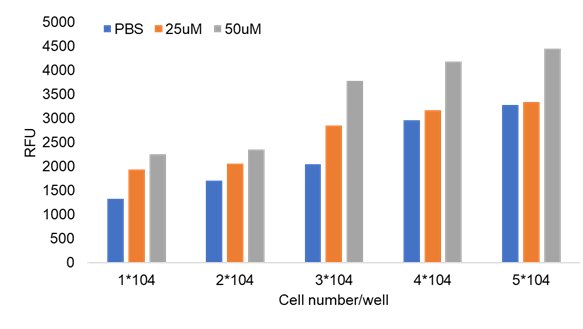
Figure 2: Relative fluorescence of ROS induced in various number of HeLa cells at various concentrations of Positive Control
- 1. Qi Xue, Yueqiang Gu, et al. "Pyrroloquinoline quinone alleviates age-related osteoarthritis via nuclear factor erythroid 2–related factor 2-mediated stress response and insulin-like growth factor 1 receptor upregulation." Phytomedicine. 2026 Apr:153:157996. PMID: 41763140
- 2. Yijia Su, Qiang Fu, et al. "Shionone ameliorates pulmonary fibrosis by activating mitophagy via PINK1-Parkin pathway." Toxicology and Applied Pharmacology Volume 507, February 2026, 117693. PMID: 41421587
- 3. Wandi Bu, Xinyao Wu, et al. "Epmedin C Alleviates Deoxynivalenol-Induced Immunotoxicity by Inhibiting Caspase-1 Activation in Chicken Macrophages." J Agric Food Chem. 2025 Sep 17;73(37):23617-23632. PMID: 40908127
|
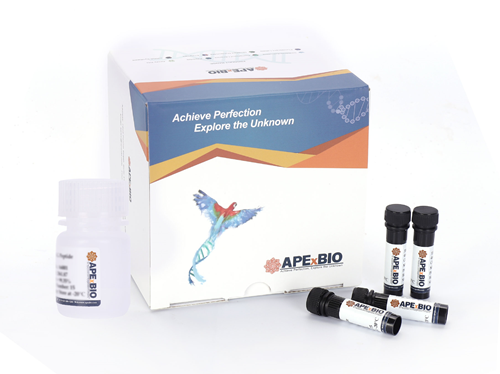
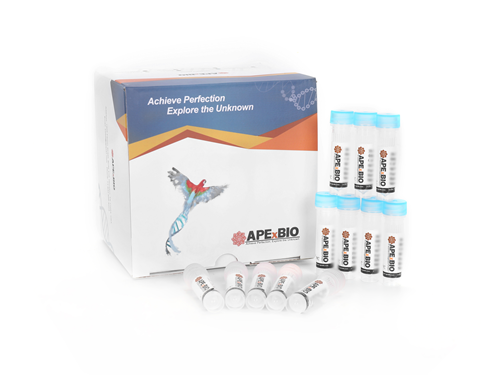
Components |
96 Assays |
Storage |
|
10X Assay buffer |
2 x 50 mL |
-20°C |
|
Probe (10 mM) |
0.15 mL |
-20°C away from light |
|
Positive control (100 mM) |
0.2 mL |
-20°C away from light |
|
Shipping: Blue ice shelf life: 6 months |
||