


Ranitidine
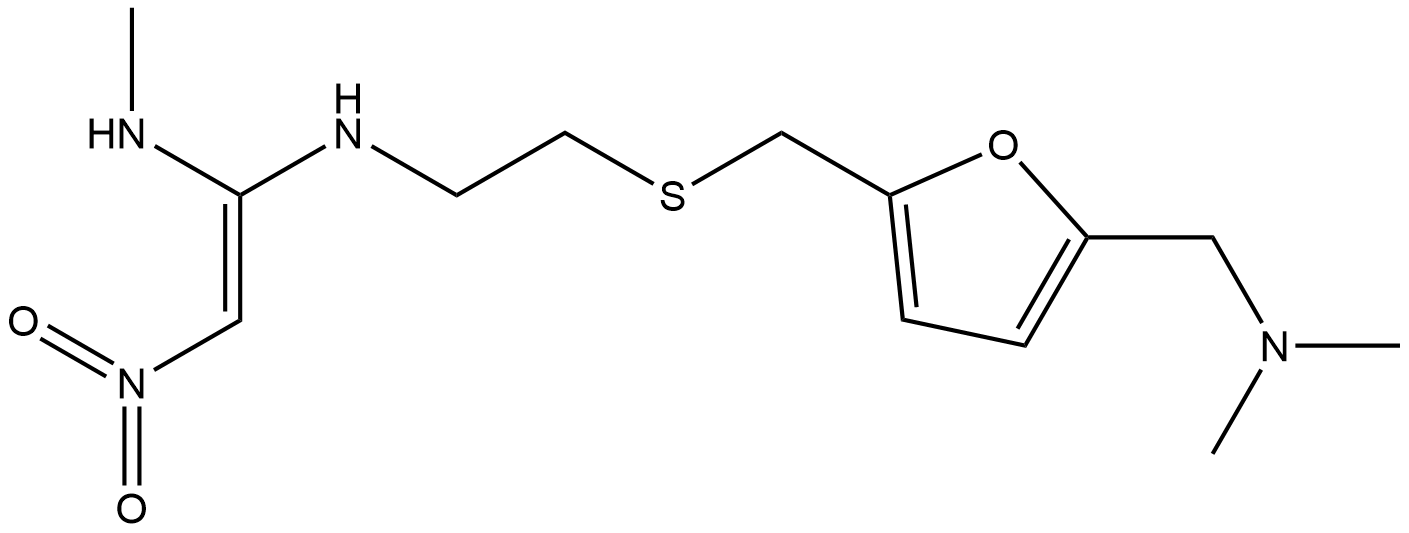
Ranitidine (CAS No.: 66357-35-5) is a selective and competitive histamine H2 receptor antagonist widely utilized as a pharmacological tool in studies of gastric acid secretion and histamine-mediated signaling. As a non-imidazole H2 receptor blocker, it acts by inhibiting histamine binding to receptors on gastric parietal cells, thereby suppressing downstream signaling pathways associated with acid secretion, including cAMP-mediated processes. In vitro, ranitidine exhibits activity in the low micromolar range, with reported IC50 values around 3.3 μM, and demonstrates functional antagonism in isolated tissue systems such as guinea pig atrium and rat uterine horn, reflecting its ability to modulate histamine-induced physiological responses. Beyond gastric models, it has also been employed in experimental oncology settings, where modulation of histamine signaling pathways contributes to investigations of tumor progression and metastasis in animal models. Ranitidine is commonly applied in cell-based assays and in vivo studies to dissect receptor pharmacology, evaluate histamine-dependent biological effects, and support drug discovery efforts targeting H2 receptor-associated pathways, with experimental concentrations or dosing regimens adjusted according to specific study designs and objectives.
| Physical Appearance | A solid |
| Storage | -20°C |
| M.Wt | 314.40 |
| Cas No. | 66357-35-5 |
| Formula | C13H22N4O3S |
| Synonyms | Ranitidin, HSDB 3925 |
| Solubility | ≥52.6 mg/mL in DMSO; ≥53.3 mg/mL in EtOH; ≥25.3 mg/mL in H2O |
| Chemical Name | (E)-N-(2-(((5-((dimethylamino)methyl)furan-2-yl)methyl)thio)ethyl)-N'-methyl-2-nitroethene-1,1-diamine |
| Canonical SMILES | O=N(/C=C(NCCSCC1=CC=C(CN(C)C)O1)\NC)=O |
| Shipping Condition | Small Molecules with Blue Ice, Modified Nucleotides with Dry Ice. |
| General tips | We do not recommend long-term storage for the solution, please use it up soon. |