(Rac)-Antineoplaston A10
(Rac)-Antineoplaston A10 (CAS No.: 77658-84-5) is the racemic form of Antineoplaston A10, a naturally derived small molecule originally identified as one of the first chemically characterized antineoplastons in human biological systems, and is widely utilized as a research compound in oncology-focused studies. It is reported to modulate Ras-associated signaling pathways, contributing to the regulation of cell proliferation and apoptosis, and has demonstrated inhibitory effects on the growth of multiple cancer cell lines, including hepatocellular carcinoma models, in a time- and dose-dependent manner. In vitro studies indicate that its antiproliferative activity generally occurs within low to moderate concentration ranges, consistent with modulation of intracellular signaling cascades rather than direct cytotoxicity. This compound is commonly employed in mechanistic investigations of Ras pathway regulation, apoptosis induction, and tumor cell biology, as well as in screening platforms evaluating agents that influence oncogenic signaling networks. Experimental concentrations and treatment regimens vary depending on the cellular system and assay design, making it a flexible tool for probing cancer-related molecular processes in preclinical research settings.
| Physical Appearance | A solid |
| Storage | -20°C |
| M.Wt | 246.26 |
| Cas No. | 77658-84-5 |
| Formula | C13H14N2O3 |
| Synonyms | Antineoplaston A10 |
| Solubility | ≥26.8 mg/mL in DMSO |
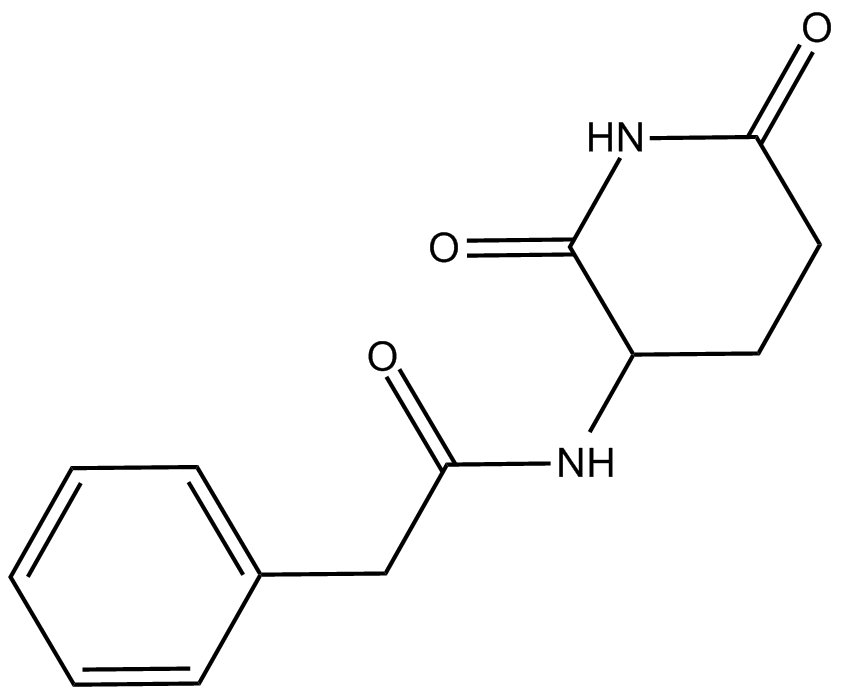
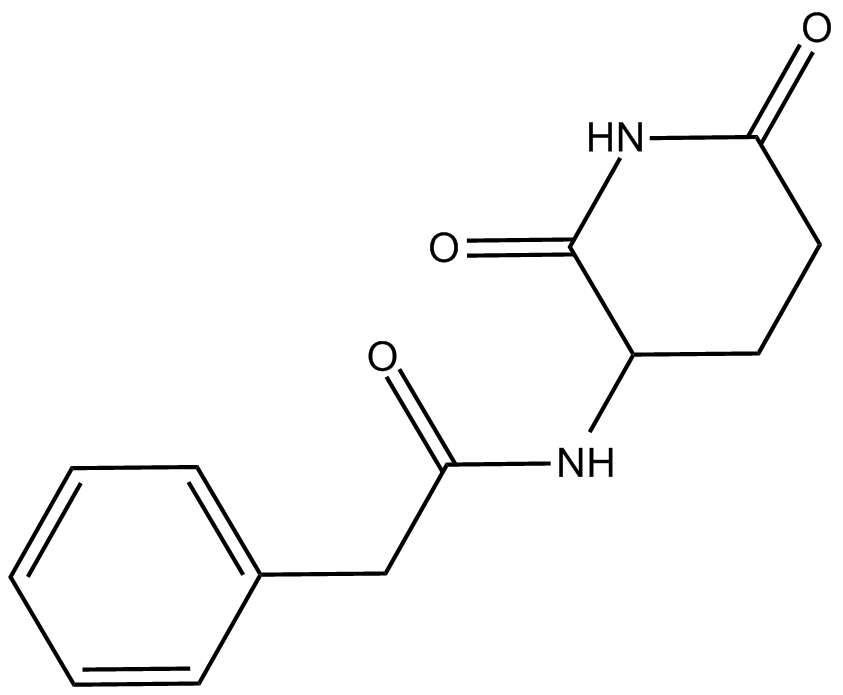
| Chemical Name | N-(2,6-dioxopiperidin-3-yl)-2-phenylacetamide |
| Canonical SMILES | O=C(CC1=CC=CC=C1)NC(C(N2)=O)CCC2=O |
| Shipping Condition | Small Molecules with Blue Ice, Modified Nucleotides with Dry Ice. |
| General tips | We do not recommend long-term storage for the solution, please use it up soon. |
Quality Control & MSDS
- View current batch:
Chemical structure