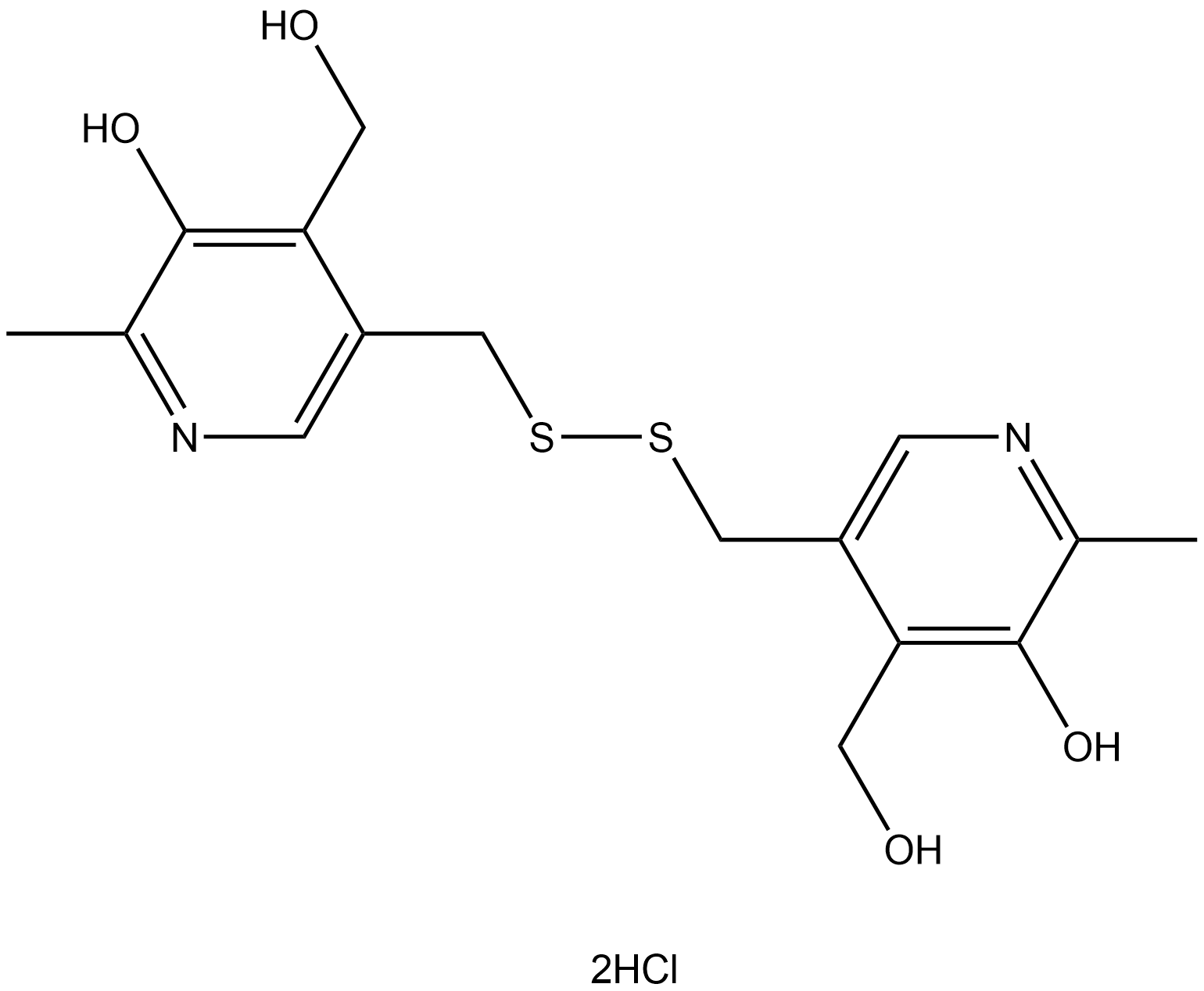
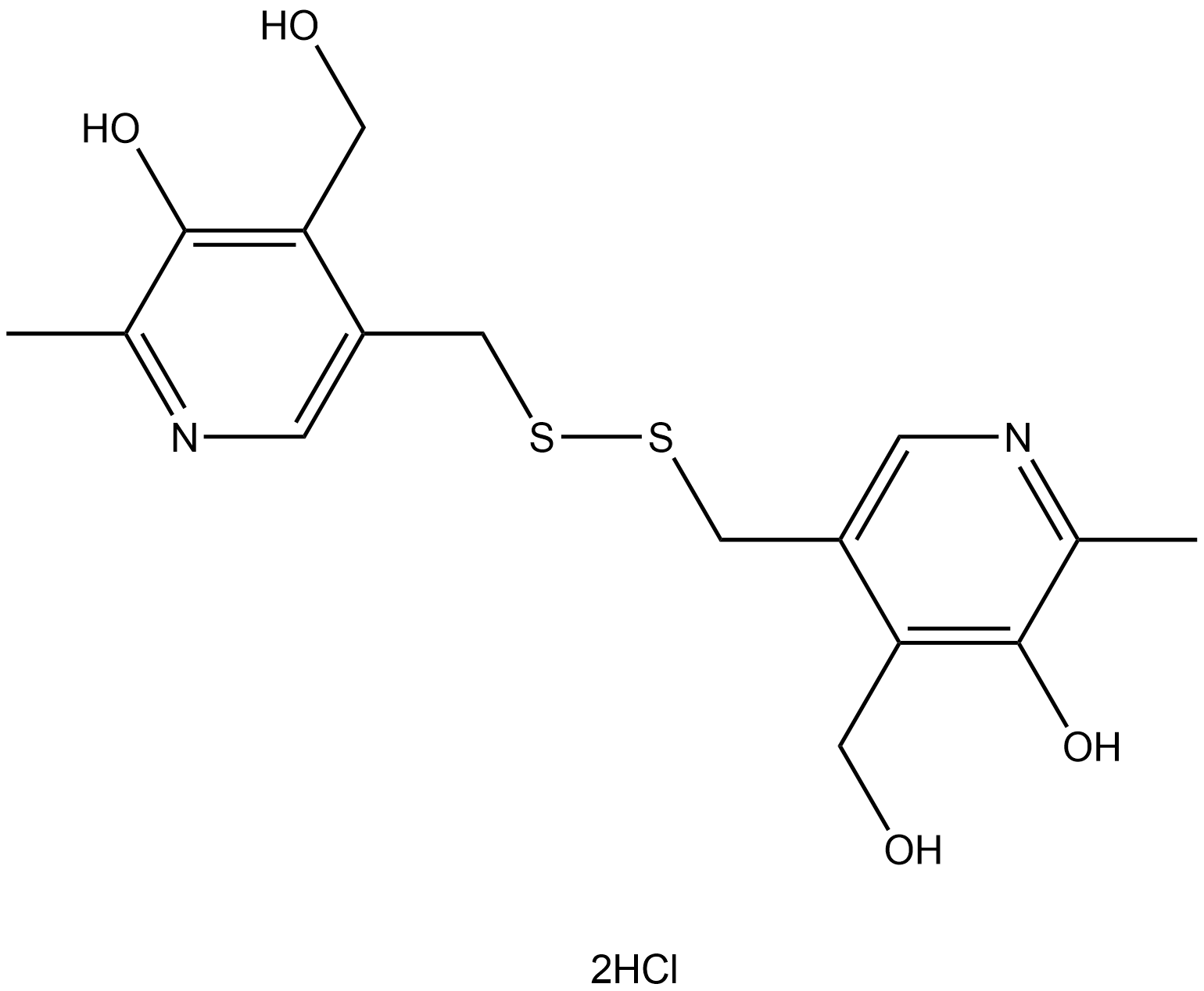
Pyrithioxin Dihydrochloride
Pyrithioxin Dihydrochloride (CAS No.: 10049-83-9) is a synthetic small molecule and salt form of pyrithioxin that is broadly categorized as a neuroactive metabolic modulator for biomedical research, with primary use in neuroscience, inflammation biology, and exploratory oncology or immunology workflows where cellular energetics and stress responses are relevant; mechanistically, available preclinical literature indicates that it influences cerebral glucose and amino acid utilization, modulates blood brain barrier associated transport properties, and alters neurovascular and neuroinflammatory states, while reported systems level effects include anti nociceptive, anti allodynic, and cytoprotective phenotypes that are generally interpreted as network level rather than single target pharmacology, so it is commonly positioned as a pathway probing tool for metabolism linked signaling, inflammatory mediator regulation, and neural injury response cascades rather than as a highly selective ligand for one defined receptor; direct quantitative potency constants are not consistently established across standardized assay panels, and in vitro characterization is therefore typically described in qualitative to semi quantitative terms with test windows commonly spanning nanomolar to micromolar range concentrations depending on endpoint sensitivity, cell type, and exposure time, and when used in translational research settings it is applied in neuronal, glial, endothelial, and mixed brain relevant cell systems as well as rodent models of neurofunctional impairment, inflammatory challenge, or tissue injury, with concentrations or doses used in experiments typically depending on specific experimental designs and research objectives, alongside routine safety profiling because high exposure contexts have been associated in nonclinical reports with hepatobiliary liability signals including severe cholestatic hepatitis.
| Storage | -20°C for 3 years |
| M.Wt | 441.39 |
| Cas No. | 10049-83-9 |
| Formula | C16H22Cl2N2O4S2 |
| Synonyms | Pyritinol dihydrochloride; Pyridoxine disulfide dihydrochloride; Vitamin B6 disulfide dihydrochloride |
| Solubility | ≥51.2 mg/mL in DMSO; ≥12.9 mg/mL in EtOH with ultrasonic; ≥50.3 mg/mL in H2O |
| Canonical SMILES | Cl.OC=1C(=NC=C(C1CO)CSSCC2=CN=C(C(O)=C2CO)C)C |
| Shipping Condition | Small Molecules with Blue Ice, Modified Nucleotides with Dry Ice. |
| General tips | We do not recommend long-term storage for the solution, please use it up soon. |
Quality Control & MSDS
- View current batch:
Chemical structure