


Pyrithiamine (hydrobromide)
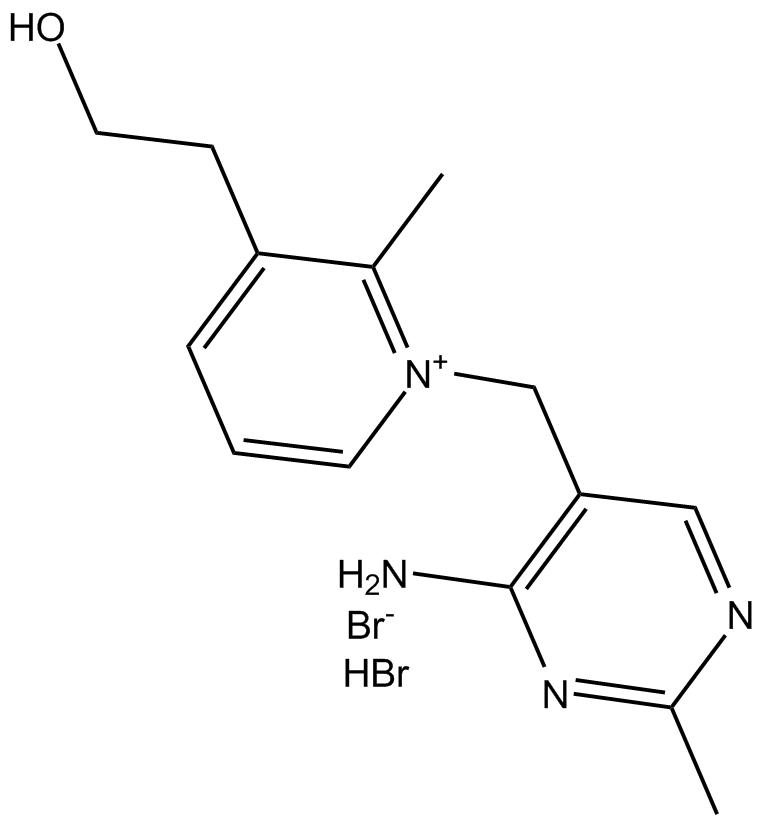
Pyrithiamine (hydrobromide) (CAS No.: 534-64-5) is a synthetic pyridine analog of thiamine (vitamin B1) that functions as a competitive inhibitor of thiamine metabolism, primarily targeting thiamine-dependent enzymatic processes. Acting as an alternative substrate for thiamine pyrophosphokinase, it interferes with the phosphorylation of thiamine and consequently reduces the formation of thiamine pyrophosphate, a critical cofactor in central metabolic pathways including carbohydrate metabolism and neurotransmitter synthesis. This disruption leads to decreased bioavailability of thiamine-derived cofactors and impairs enzymatic reactions essential for neuronal function, ultimately inducing biochemical and physiological features of thiamine deficiency. Pyrithiamine exhibits inhibitory effects on microbial growth in systems dependent on intact thiamine and demonstrates dose-dependent suppression of cocarboxylase formation in biological matrices, with activity typically observed in the low micromolar to micromolar range depending on assay conditions. Widely used in biomedical research, it serves as a tool compound for establishing in vitro and in vivo models of thiamine deficiency, including rodent models of neurodegeneration, alcoholism-associated brain injury, and diencephalic amnesia, thereby facilitating investigation of the relationship between vitamin B1 dysregulation and nervous system disorders. Experimental concentrations or dosing regimens vary according to specific study designs and endpoints, particularly in studies examining metabolic stress, neuronal dysfunction, and therapeutic intervention strategies.
| Physical Appearance | A solid |
| Storage | -20°C |
| M.Wt | 420.14 |
| Cas No. | 534-64-5 |
| Formula | C14H20Br2N4O |
| Solubility | Soluble in DMSO |
| Chemical Name | 1-((4-amino-2-methylpyrimidin-5-yl)methyl)-3-(2-hydroxyethyl)-2-methylpyridin-1-ium bromide hydrobromide |
| Canonical SMILES | CC1=[N+](CC2=C(N)N=C(C)N=C2)C=CC=C1CCO.[Br-].Br |
| Shipping Condition | Small Molecules with Blue Ice, Modified Nucleotides with Dry Ice. |
| General tips | We do not recommend long-term storage for the solution, please use it up soon. |